Akhtar Nazneen, Khan Sehresh, Rehman Shafiq Ur, Rehman Zia Ur, Khatoon Amana, Rha Eui Shik, Jamil Muhammad
Department of Biotechnology and Genetic Engineering, Kohat University of Science & Technology (KUST), Kohat 26000, Pakistan.
Department of Biology, University of Haripur, Haripur 22620, Pakistan.
Toxics. 2021 May 20;9(5):113. doi: 10.3390/toxics9050113.
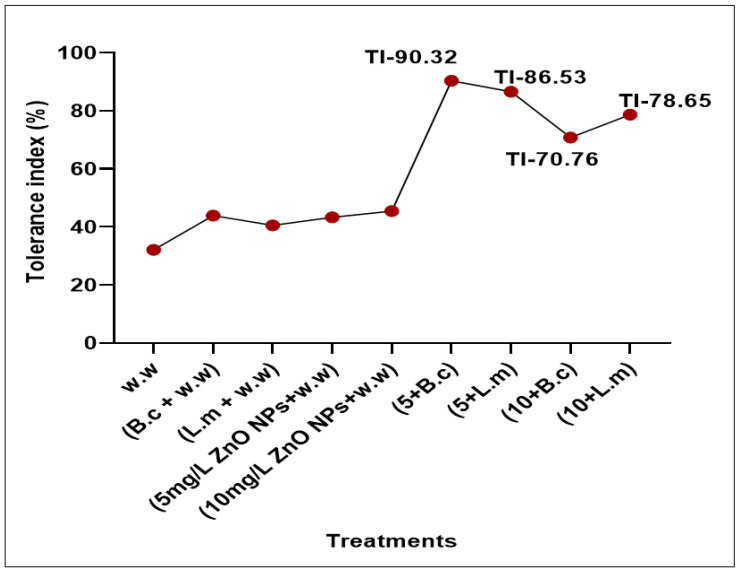
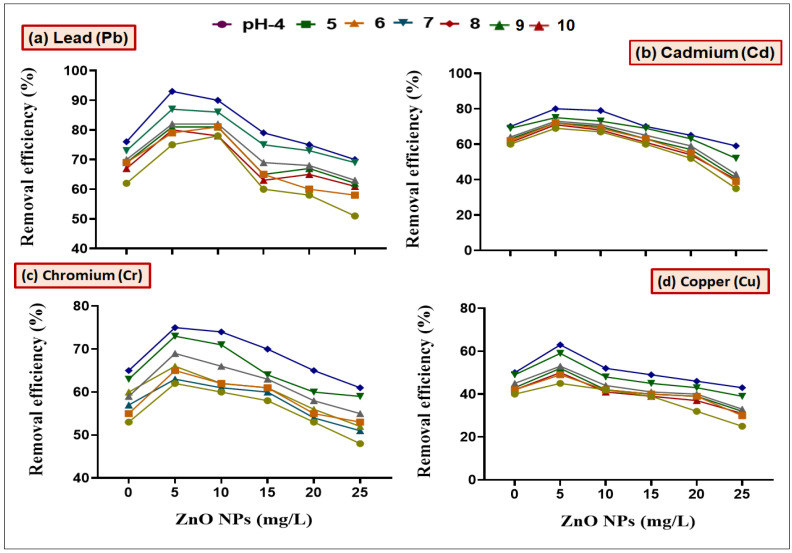
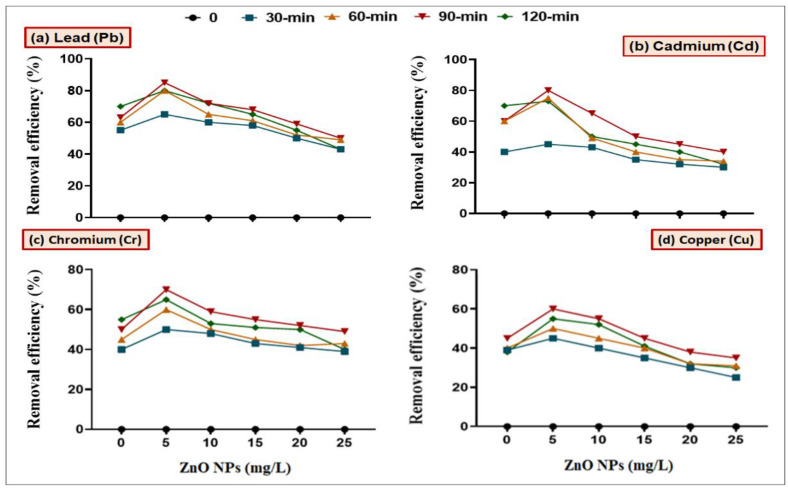
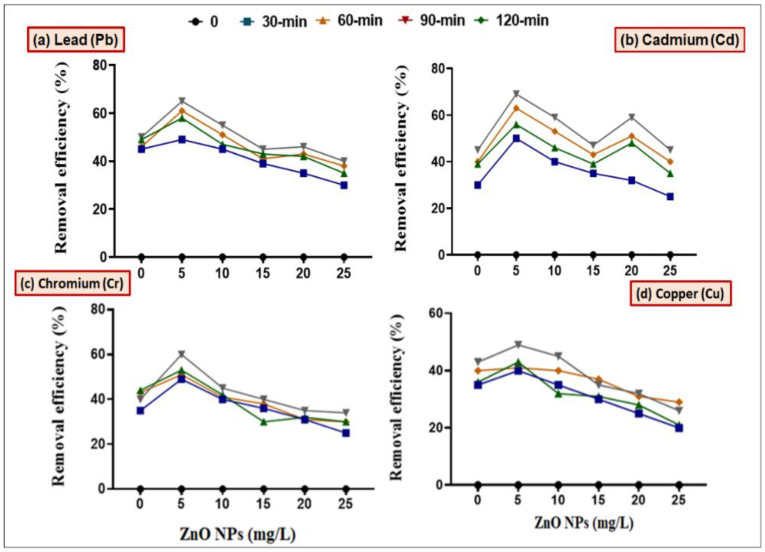
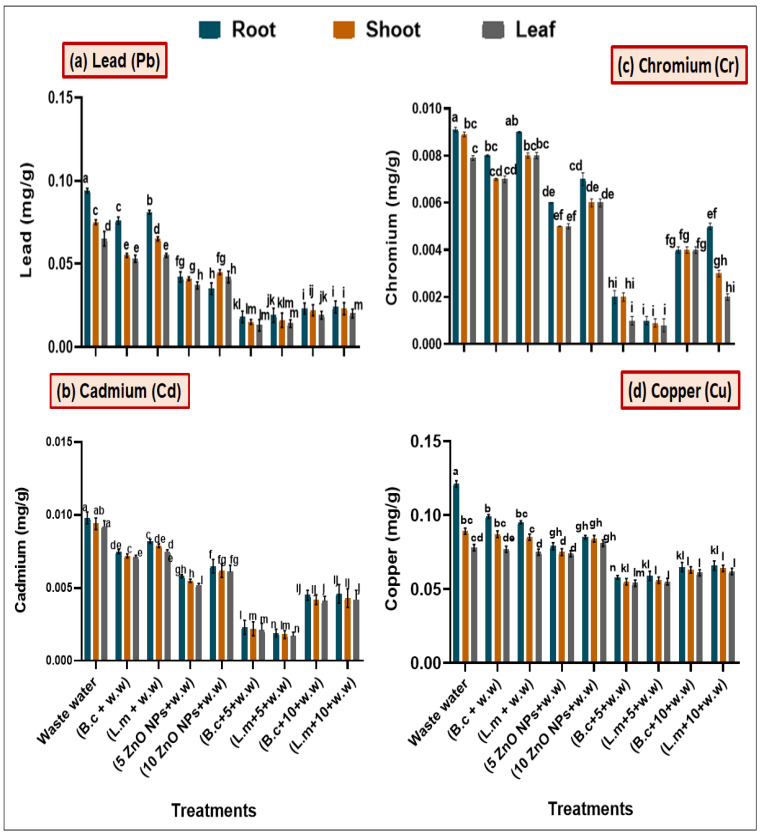
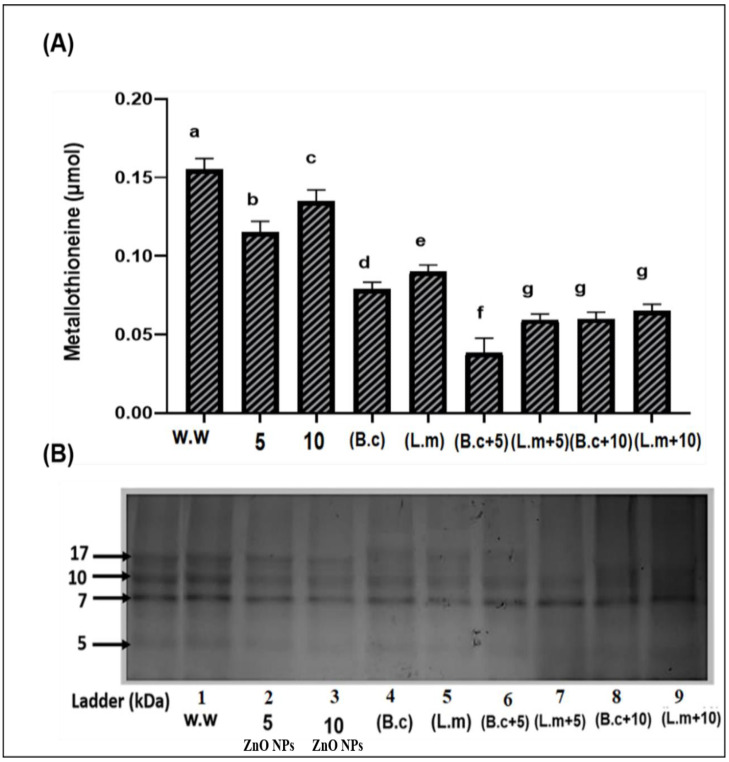
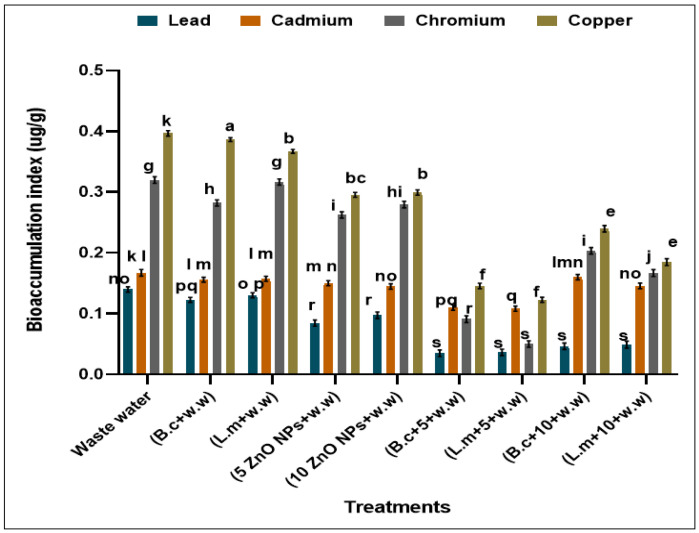
Heavy metals (HMs) are toxic elements which contaminate the water bodies in developing countries because of their excessive discharge from industrial zones. Rice ( L) crops are submerged for a longer period of time in water, so irrigation with HMs polluted water possesses toxic effects on plant growth. This study was initiated to observe the synergistic effect of bacteria ( and and zinc oxide nanoparticles (ZnO NPs) (5, 10, 15, 20 and 25 mg/L) on the rice that were grown in HMs contaminated water. Current findings have revealed that bacteria, along with ZnO NPs at lower concentration, showed maximum removal of HMs from polluted water at pH 8 (90 min) as compared with higher concentrations. Seeds primed with bacteria grown in HM polluted water containing ZnO NPs (5 mg/L) showed reduced uptake of HMs in root, shoot and leaf, thus resulting in increased plant growth. Furthermore, their combined effects also reduced the bioaccumulation index and metallothionine (MTs) content and enhanced the tolerance index of plants. This study suggested that synergistic treatment of bacteria with lower concentrations of ZnO NPs helped plants to reduce heavy metal toxicity, especially Pb and Cu, and enhanced plant growth.
重金属(HMs)是有毒元素,由于其从工业区的过量排放,污染了发展中国家的水体。水稻作物会在水中长时间浸泡,因此用重金属污染的水进行灌溉会对植物生长产生毒性作用。本研究旨在观察细菌([具体细菌名称1]和[具体细菌名称2])和氧化锌纳米颗粒(ZnO NPs)(5、10、15、20和25毫克/升)对在重金属污染水中生长的水稻的协同作用。目前的研究结果表明,与较高浓度相比,细菌与较低浓度的ZnO NPs一起,在pH值为8(90分钟)时能从污染水中最大程度地去除重金属。用在含有ZnO NPs(5毫克/升)的重金属污染水中生长的细菌引发的种子,其根、茎和叶中重金属的吸收减少,从而导致植物生长增加。此外,它们的联合作用还降低了生物累积指数和金属硫蛋白(MTs)含量,并提高了植物的耐受指数。本研究表明,用较低浓度的ZnO NPs对细菌进行协同处理有助于植物降低重金属毒性,尤其是铅和铜,并促进植物生长。