Memon Shafique Ul Rehman, Pawase Vijayanta Ramesh, Pavase Tushar Ramesh, Soomro Maqsood Ahmed
College of Management, Ocean University of China, Qingdao 266100, China.
Institute for Technology and Management (ITM) Business School, Navi Mumbai 410210, India.
Foods. 2021 May 12;10(5):1069. doi: 10.3390/foods10051069.
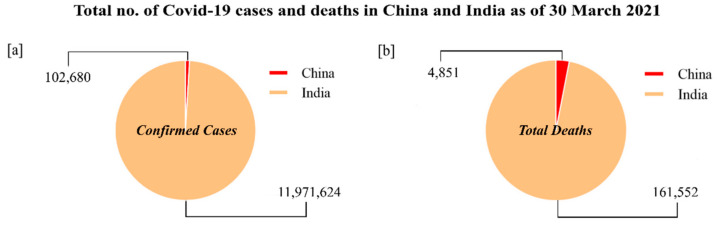
The sudden breakout of coronavirus disease (COVID-19) rapidly spread across the globe, leaving no country behind in being affected by the global pandemic in the year 2019-20. As COVID-19 commenced, within months two major Asian giants initiated the norms of social distancing and lockdowns in their societies. The indiscriminate nature of the current pandemic has not only impacted the health and quality of life of people but has also disrupted the global economy, supply chains, and countries all over the world. In food and beverage manufacturing industries, the unanticipated disruption has encumbered its lock on the global food supply chain and service sector as major cities shut down for several months in China and India. Human existence is dependent upon food, which renders energy for activity, growth, and all functions of the body. Although both China and India have shown eminent response to tackle the ongoing pandemic, the food supply chain remains vastly exposed to significant COVID-19 risks. This research primarily investigates the ongoing COVID-19 scenario in two major economies (China and India), delivering insight into the pandemic's impact within the food and beverage manufacturing sectors, and explores the policies adopted and strategies undertaken for sustainability in food supply chains.
冠状病毒病(COVID-19)的突然爆发迅速在全球蔓延,在2019 - 20年期间,没有一个国家能幸免于这场全球大流行的影响。随着COVID-19的爆发,在几个月内,亚洲的两个主要大国就在其社会中启动了社交距离规范和封锁措施。当前这场大流行的不加区分的性质不仅影响了人们的健康和生活质量,还扰乱了全球经济、供应链以及世界各国。在食品和饮料制造业,由于中国和印度的主要城市关闭了数月,这种意外的干扰阻碍了其对全球食品供应链和服务业的控制。人类的生存依赖于食物,食物为身体的活动、生长和所有功能提供能量。尽管中国和印度都对应对当前的大流行表现出了卓越的反应,但食品供应链仍然极易受到重大的COVID-19风险的影响。本研究主要调查两个主要经济体(中国和印度)当前的COVID-19情况,深入了解大流行对食品和饮料制造业的影响,并探讨为实现食品供应链可持续性而采取的政策和战略。