Zhang Leilei, Rocchetti Gabriele, Zengin Gökhan, Ak Gunes, Saber Fatema R, Montesano Domenico, Lucini Luigi
Department for Sustainable Food Process, Università Cattolica del Sacro Cuore, Via Emilia Parmense 84, 29122 Piacenza, Italy.
Department of Biology, Science Faculty, Selcuk University, Campus, Konya 42130, Turkey.
Foods. 2021 May 28;10(6):1230. doi: 10.3390/foods10061230.
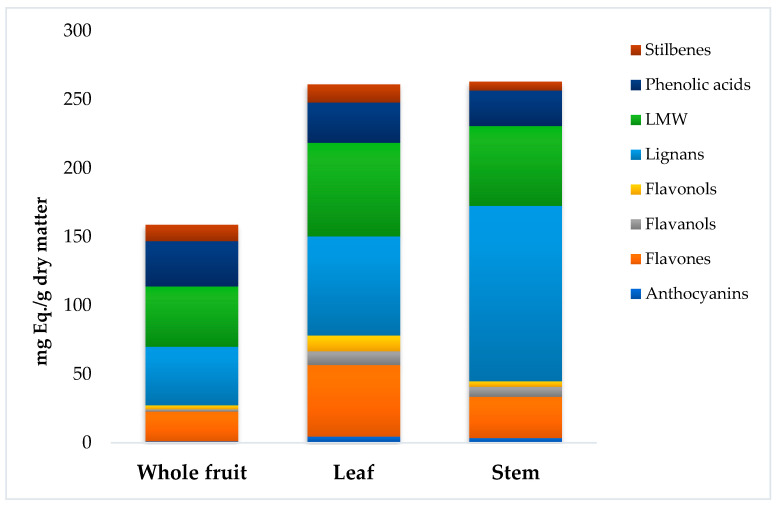
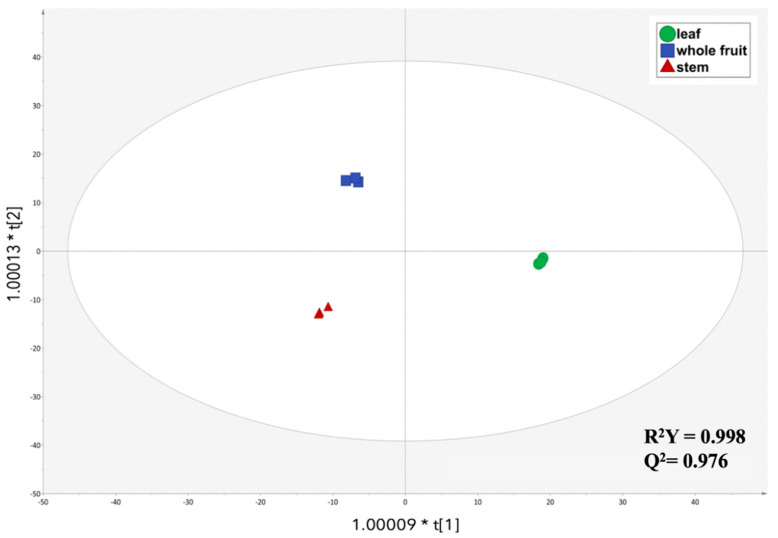
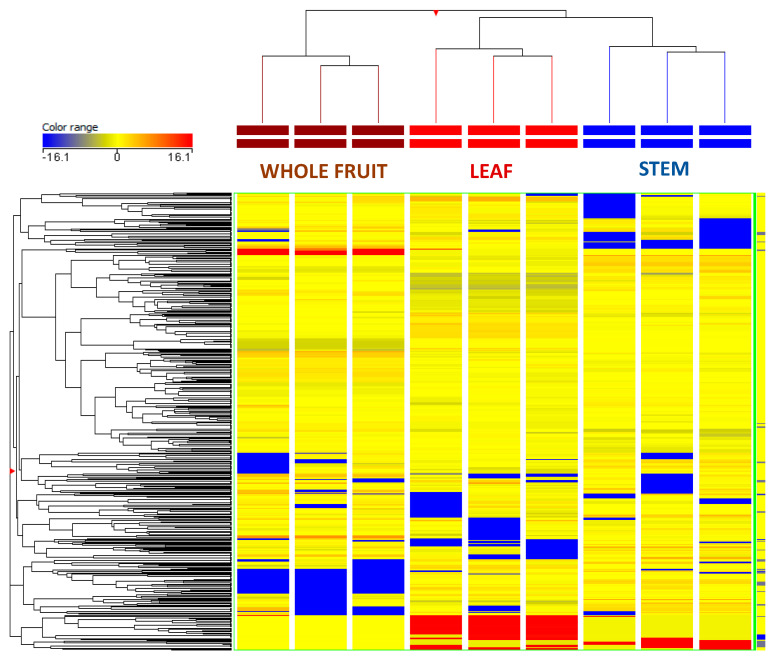
Mill., normally known as the quince fruit, has been widely used in agro-food industries mainly to produce jams and jellies. However, other parts of the plants are still underutilized and not completely assessed for their nutraceutical profile. Therefore, in this work, the polyphenolic profile of was investigated using an untargeted metabolomics approach based on high-resolution mass spectrometry. Several compounds were identified in the different parts of the plants, including flavonoids (i.e., anthocyanins, flavones, flavan-3-ols, and flavonols), phenolic acids (both hydroxycinnamics and hydroxybenzoics), low-molecular-weight phenolics (tyrosol equivalents), lignans, and stilbenes. Overall, leaves showed the highest in vitro antioxidant potential, as revealed by 2,2-difenil-1-picrylhydrazyl (DPPH), 2,2'-Azino-bis(3-ethylbenzthiazoline-6-sulfonic acid) (ABTS), ferric reducing antioxidant power (FRAP), and cupric ion reducing antioxidant capacity (CUPRAC) assays, being 189.5, 285.6, 158.9, and 348.8 mg Trolox Equivalent/g, respectively. The enzymes acetyl- and butyryl-cholinesterases were both inhibited by the different plant parts of , with stems showing the higher inhibitory potential. Interestingly, the fruit extracts were the only parts inhibiting the α-glucosidase, with a value of 1.36 mmol acarbose equivalents (ACAE)/g. On the other hand, strong tyrosinase inhibition was found for stems and leaves, being 72.11 and 68.32 mg Kojic acid Equivalent/g, respectively. Finally, a high number of significant (0.05 < < 0.01) correlations were outlined between phenolics (mainly anthocyanins, flava-3-ols, and tyrosol equivalents) and the different biological assays. Taken together, our findings suggest a potential exploitation of leaves and stems for the food, pharmaceutical, and cosmetic industries.
榅桲,通常被称为温柏果,已在农业食品工业中广泛应用,主要用于生产果酱和果冻。然而,该植物的其他部分仍未得到充分利用,其营养成分也未得到全面评估。因此,在这项研究中,我们采用基于高分辨率质谱的非靶向代谢组学方法,对榅桲的多酚谱进行了研究。在该植物的不同部位鉴定出了几种化合物,包括黄酮类化合物(即花青素、黄酮、黄烷 - 3 - 醇和黄酮醇)、酚酸(羟基肉桂酸和羟基苯甲酸)、低分子量酚类(酪醇当量)、木脂素和芪类化合物。总体而言,榅桲叶表现出最高的体外抗氧化潜力,通过2,2 - 二苯基 - 1 - 苦基肼(DPPH)、2,2'-联氮 - 双 -(3 - 乙基苯并噻唑啉 - 6 - 磺酸)(ABTS)、铁还原抗氧化能力(FRAP)和铜离子还原抗氧化能力(CUPRAC)测定,其抗氧化能力分别为189.5、285.6、158.9和348.8毫克 Trolox 当量/克。乙酰胆碱酯酶和丁酰胆碱酯酶均受到榅桲不同植物部位的抑制,其中茎表现出较高的抑制潜力。有趣的是,果实提取物是唯一能抑制α - 葡萄糖苷酶的部位,其抑制值为1.36毫摩尔阿卡波糖当量(ACAE)/克。另一方面,茎和叶对酪氨酸酶有较强的抑制作用,分别为72.11和68.32毫克曲酸当量/克。最后,酚类化合物(主要是花青素、黄烷 - 3 - 醇和酪醇当量)与不同的生物学测定之间存在大量显著(0.05 < < 0.01)的相关性。综上所述,我们的研究结果表明,榅桲的叶和茎在食品、制药和化妆品工业中具有潜在的开发价值。