Department of Orthopaedic Surgery, School of Medicine, Shinshu University, 3-1-1 Asahi, Matsumoto, Nagano 390-8621, Japan.
Nutrients. 2021 May 27;13(6):1814. doi: 10.3390/nu13061814.
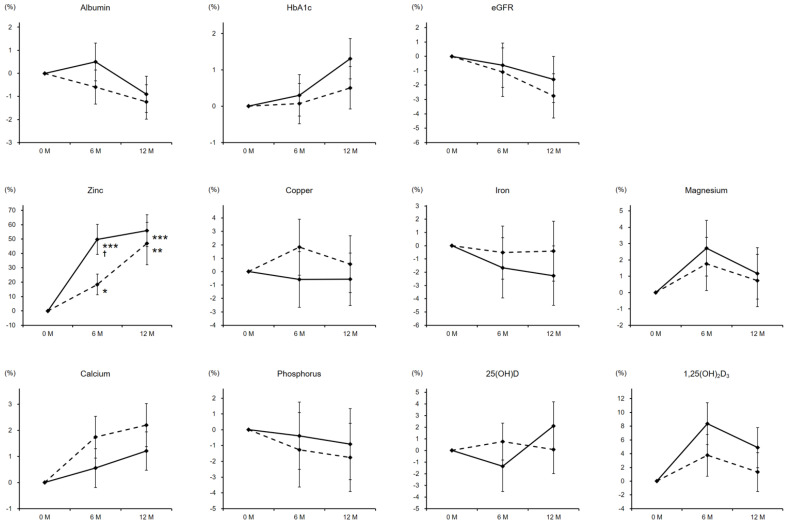
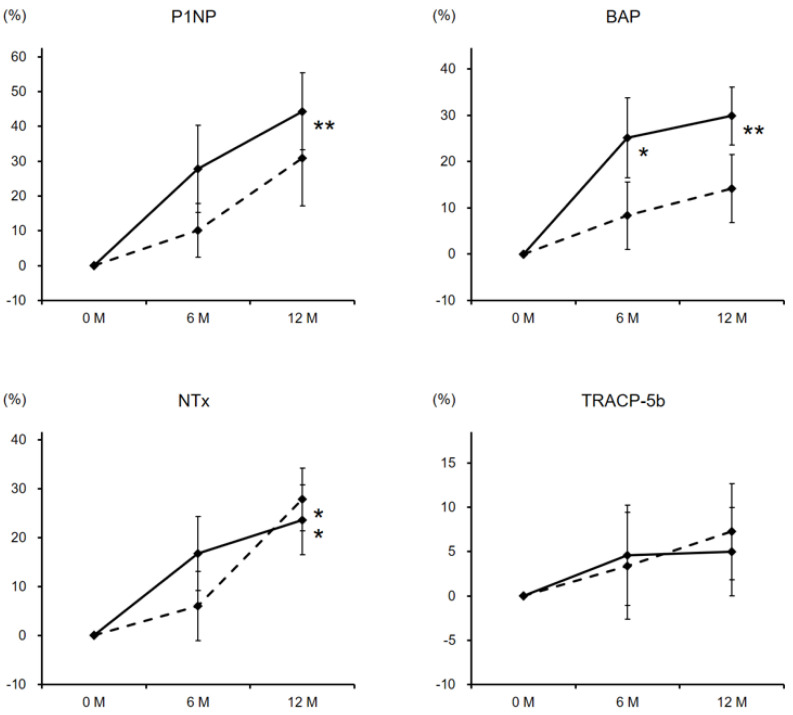
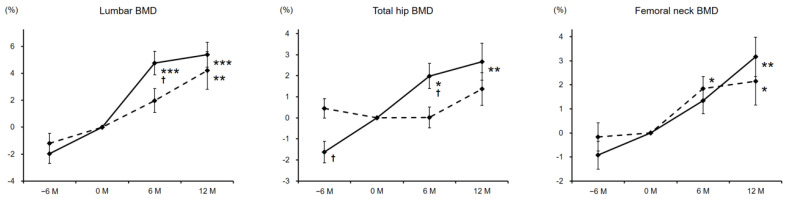
Although there have been reported associations between zinc and bone mineral density (BMD), no reports exist on the effect of zinc treatment in osteoporotic patients. Therefore, we investigated the efficacy and safety of zinc pharmacotherapy in Japanese elderly patients. The present investigation included 122 osteoporotic patients with zinc deficiency, aged ≥65 years, who completed 12 months of follow-up. In addition to standard therapy for osteoporosis in a clinical setting, the subjects received oral administration of 25 mg zinc (NOBELZIN, an only approved drug for zinc deficiency in Japan) twice a day. BMD and laboratory data including bone turnover markers were collected at 0 (baseline), 6, and 12 months of zinc treatment. Neither serious adverse effects nor incident fractures were seen during the observation period. Serum zinc levels were successfully elevated by zinc administration. BMD increased significantly from baseline at 6 and 12 months of zinc treatment. Percentage changes of serum zinc showed significantly positive associations with those of BMD. Bone formation markers rose markedly from the baseline values, whereas bone resorption markers displayed moderate or no characteristic changes. Additive zinc supplementation may contribute to BMD augmentation ensuing the prevention of fracture occurrence in elderly osteoporotic patients with zinc deficiency.
虽然有报道称锌与骨密度(BMD)之间存在关联,但尚无关于锌治疗骨质疏松症患者的效果的报告。因此,我们研究了锌药物治疗在日本老年骨质疏松症患者中的疗效和安全性。本研究纳入了 122 例锌缺乏的骨质疏松症患者,年龄≥65 岁,完成了 12 个月的随访。除了在临床环境中进行骨质疏松症的标准治疗外,这些患者还接受了口服 25mg 锌(NOBELZIN,日本唯一批准用于锌缺乏的药物),每天两次。在锌治疗的 0(基线)、6 和 12 个月时收集 BMD 和包括骨转换标志物在内的实验室数据。在观察期间未发生严重不良事件或骨折事件。锌治疗可成功提高血清锌水平。BMD 在锌治疗 6 个月和 12 个月时均较基线显著增加。血清锌的百分比变化与 BMD 的百分比变化呈显著正相关。骨形成标志物从基线值显著升高,而骨吸收标志物则显示出中度或无特征性变化。补充额外的锌可能有助于增加 BMD,从而预防有锌缺乏的老年骨质疏松症患者发生骨折。