Pace Ryan M, Williams Janet E, Robertson Bianca, Lackey Kimberly A, Meehan Courtney L, Price William J, Foster James A, Sellen Daniel W, Kamau-Mbuthia Elizabeth W, Kamundia Egidioh W, Mbugua Samwel, Moore Sophie E, Prentice Andrew M, Kita Debela G, Kvist Linda J, Otoo Gloria E, Ruiz Lorena, Rodríguez Juan M, Pareja Rossina G, McGuire Mark A, Bode Lars, McGuire Michelle K
Margaret Ritchie School of Family and Consumer Sciences, University of Idaho, Moscow, ID 83844, USA.
Department of Animal, Veterinary and Food Sciences, University of Idaho, Moscow, ID 83844, USA.
Microorganisms. 2021 May 27;9(6):1153. doi: 10.3390/microorganisms9061153.
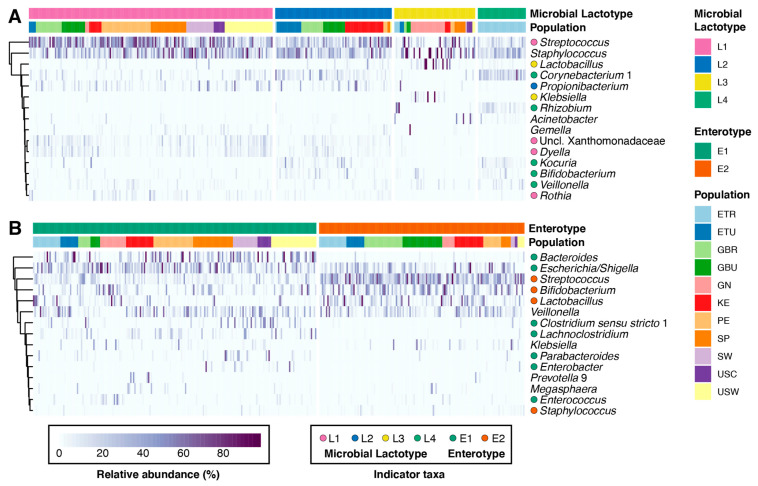
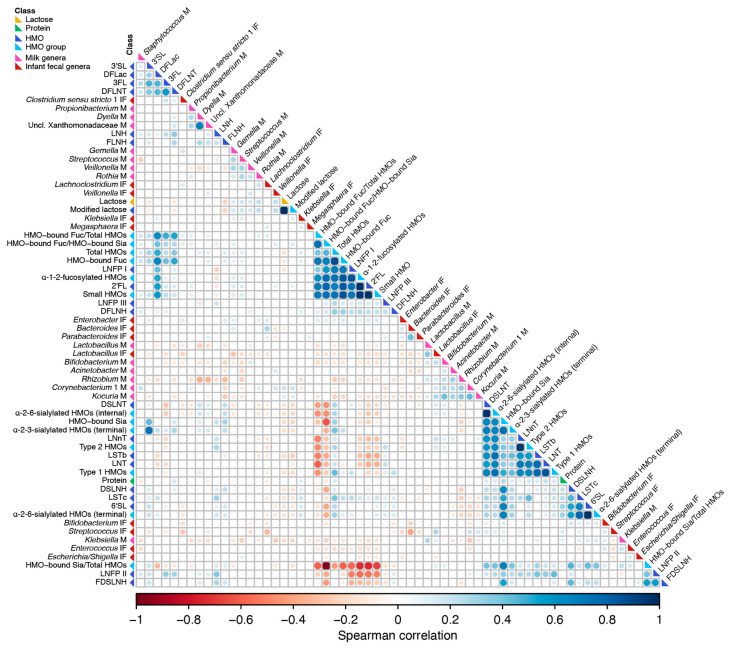
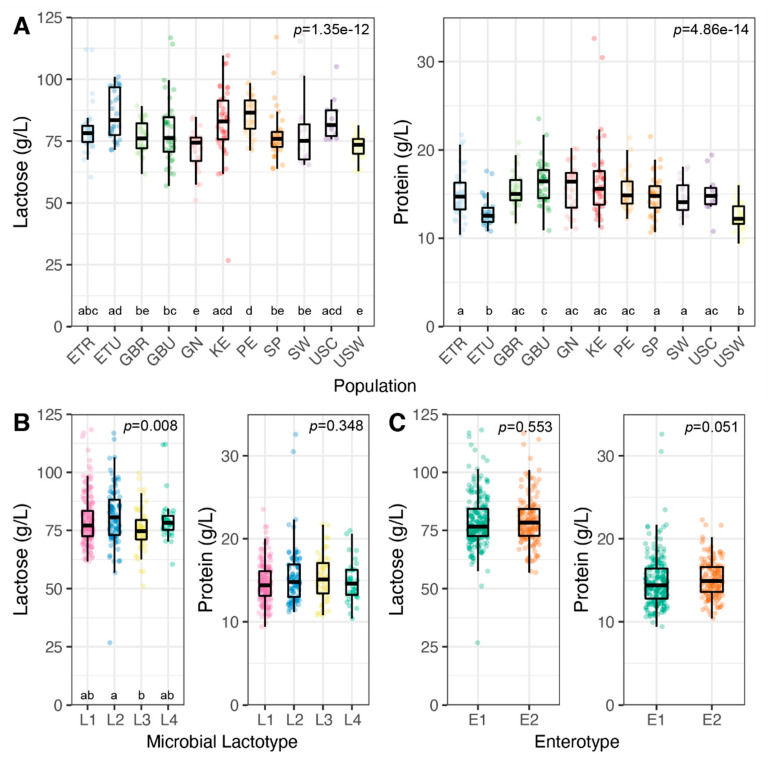
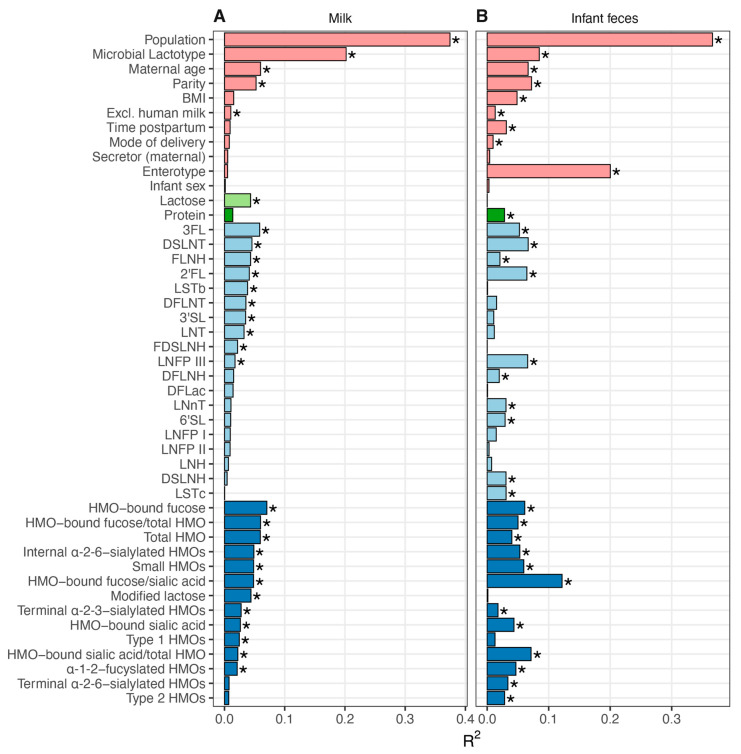
Previously published data from our group and others demonstrate that human milk oligosaccharide (HMOs), as well as milk and infant fecal microbial profiles, vary by geography. However, little is known about the geographical variation of other milk-borne factors, such as lactose and protein, as well as the associations among these factors and microbial community structures in milk and infant feces. Here, we characterized and contrasted concentrations of milk-borne lactose, protein, and HMOs, and examined their associations with milk and infant fecal microbiomes in samples collected in 11 geographically diverse sites. Although geographical site was strongly associated with milk and infant fecal microbiomes, both sample types assorted into a smaller number of community state types based on shared microbial profiles. Similar to HMOs, concentrations of lactose and protein also varied by geography. Concentrations of HMOs, lactose, and protein were associated with differences in the microbial community structures of milk and infant feces and in the abundance of specific taxa. Taken together, these data suggest that the composition of human milk, even when produced by relatively healthy women, differs based on geographical boundaries and that concentrations of HMOs, lactose, and protein in milk are related to variation in milk and infant fecal microbial communities.
我们团队及其他团队之前发表的数据表明,人乳寡糖(HMOs)以及乳汁和婴儿粪便中的微生物谱会因地理位置而异。然而,对于其他乳汁携带因子(如乳糖和蛋白质)的地理差异,以及这些因子与乳汁和婴儿粪便中微生物群落结构之间的关联,我们知之甚少。在此,我们对来自11个地理位置各异的地点所采集样本中的乳汁携带的乳糖、蛋白质和HMOs浓度进行了表征和对比,并研究了它们与乳汁和婴儿粪便微生物群的关联。尽管地理位置与乳汁和婴儿粪便微生物群密切相关,但基于共同的微生物谱,这两种样本类型都被归为数量较少的群落状态类型。与HMOs类似,乳糖和蛋白质的浓度也因地理位置而异。HMOs、乳糖和蛋白质的浓度与乳汁和婴儿粪便的微生物群落结构差异以及特定分类群的丰度有关。综上所述,这些数据表明,即使是由相对健康的女性分泌的人乳成分,也会因地理边界而有所不同,并且乳汁中HMOs、乳糖和蛋白质的浓度与乳汁和婴儿粪便微生物群落的变化有关。