de Dios-Figueroa Guadalupe Tonantzin, Aguilera-Marquez Janette Del Rocío, Camacho-Villegas Tanya A, Lugo-Fabres Pavel H
Department of Medical and Pharmaceutical Biotechnology, Centro de Investigación y Asistencia en Tecnología y Diseño del Estado de Jalisco A.C. (CIATEJ), Av. Normalistas 800, Colinas de las Normal, Guadalajara, Jalisco 44270, Mexico.
CONACYT-Department of Medical and Pharmaceutical Biotechnology, Centro de Investigación y Asistencia en Tecnología y Diseño del Estado de Jalisco A.C. (CIATEJ), Av. Normalistas 800, Colinas de las Normal, Guadalajara, Jalisco 44270, Mexico.
Biomedicines. 2021 May 26;9(6):602. doi: 10.3390/biomedicines9060602.
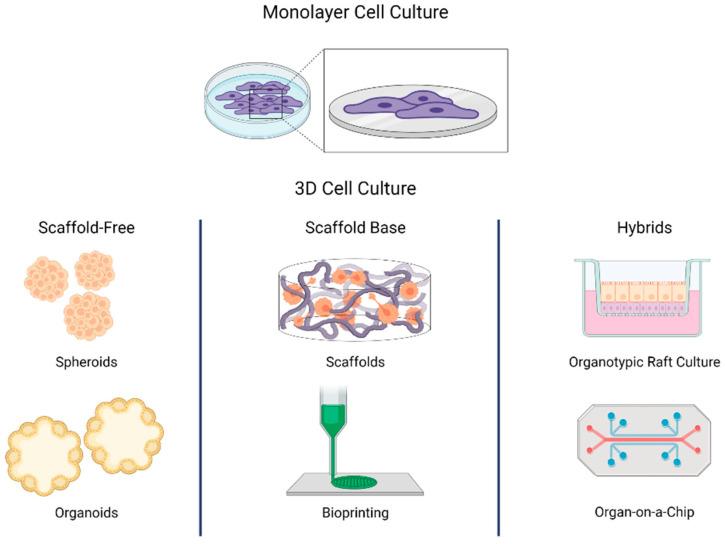
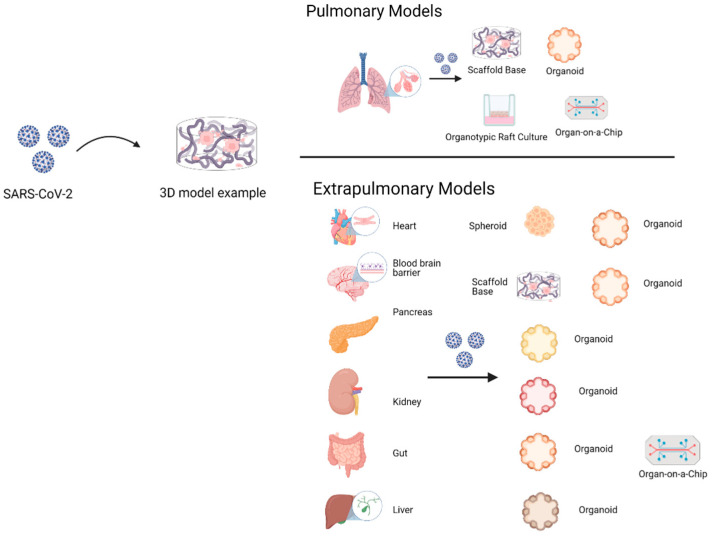
In the last decades, emerging viruses have become a worldwide concern. The fast and extensive spread of the disease caused by SARS-CoV-2 (COVID-19) has impacted the economy and human activity worldwide, highlighting the human vulnerability to infectious diseases and the need to develop and optimize technologies to tackle them. The three-dimensional (3D) cell culture models emulate major tissue characteristics such as the in vivo virus-host interactions. These systems may help to generate a quick response to confront new viruses, establish a reliable evaluation of the pathophysiology, and contribute to therapeutic drug evaluation in pandemic situations such as the one that humanity is living through today. This review describes different types of 3D cell culture models, such as spheroids, scaffolds, organoids, and organs-on-a-chip, that are used in virus research, including those used to understand the new severe acute respiratory syndrome-coronavirus 2 (SARS-CoV-2).
在过去几十年里,新兴病毒已成为全球关注的问题。由严重急性呼吸综合征冠状病毒2(SARS-CoV-2,即新冠病毒)引起的疾病迅速广泛传播,影响了全球经济和人类活动,凸显了人类对传染病的脆弱性以及开发和优化应对传染病技术的必要性。三维(3D)细胞培养模型模拟了主要的组织特征,如体内病毒与宿主的相互作用。这些系统可能有助于对新出现的病毒做出快速反应,建立对病理生理学的可靠评估,并有助于在当今人类正在经历的大流行情况下进行治疗药物评估。本综述描述了用于病毒研究的不同类型的3D细胞培养模型,如球体、支架、类器官和芯片器官,包括用于了解新型严重急性呼吸综合征冠状病毒2(SARS-CoV-2)的模型。