Department of Psychiatry, McGill University, Montreal, Quebec, Canada.
Department of Epidemiology, Biostatistics, and Occupational Health, McGill University, Montreal, Quebec, Canada.
Am J Health Promot. 2021 Nov;35(8):1095-1104. doi: 10.1177/08901171211020997. Epub 2021 Jun 2.
The objective of this study is to identify the relationship between COVID-19 experiences, perceived COVID-19 behavioral control, social norms and attitudes, and future intention to follow social distancing guidelines.
This is a cross-sectional study.
Participants responded to an on-line survey in June 2020.
The study included 3,183 residents within Quebec, Canada aged 18 and over.
Measures include perceived COVID-19 related discrimination, fear of COVID-19 infection, prior exposure to COVID-19, and prior social distancing behavior. Participants self-reported attitudes, perceived behavioral control, and perceived norms related to social distancing. Finally, we measured social distancing behavioral intention.
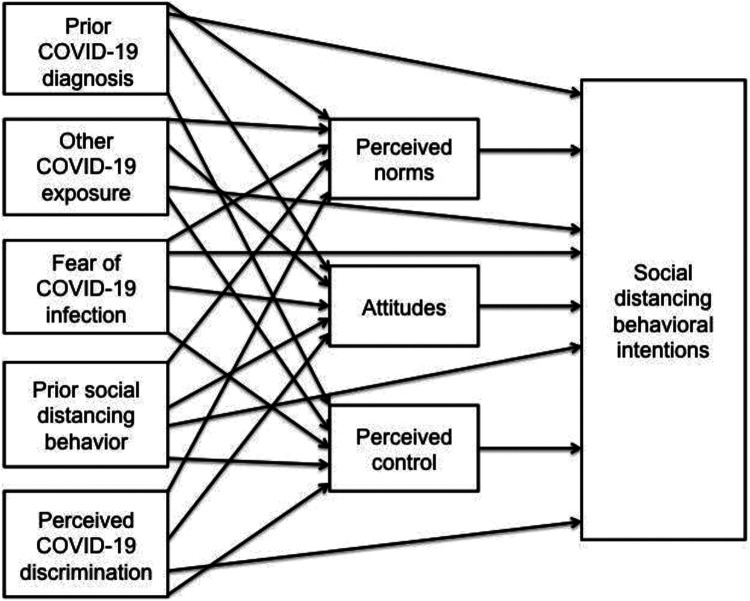
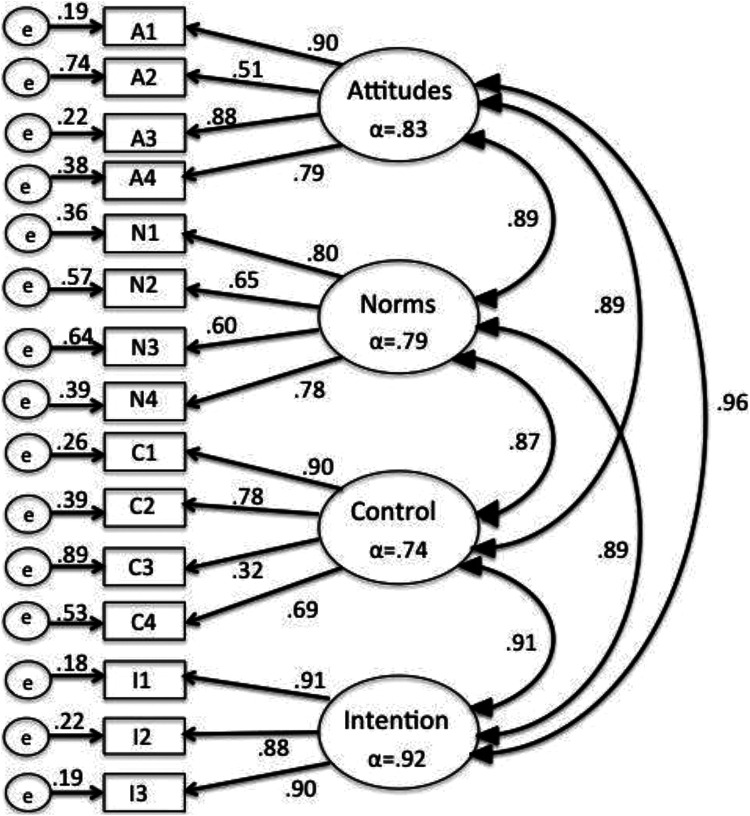
We evaluated a theory of planned behavior (TPB) measurement model of social distancing using confirmatory factor analysis (CFA). The association between COVID-19 perceived discrimination, fear of infection, previous social distancing behavior, exposure to COVID-19, TPB constructs and behavioral intentions to social distance were estimated using SEM path analysis.
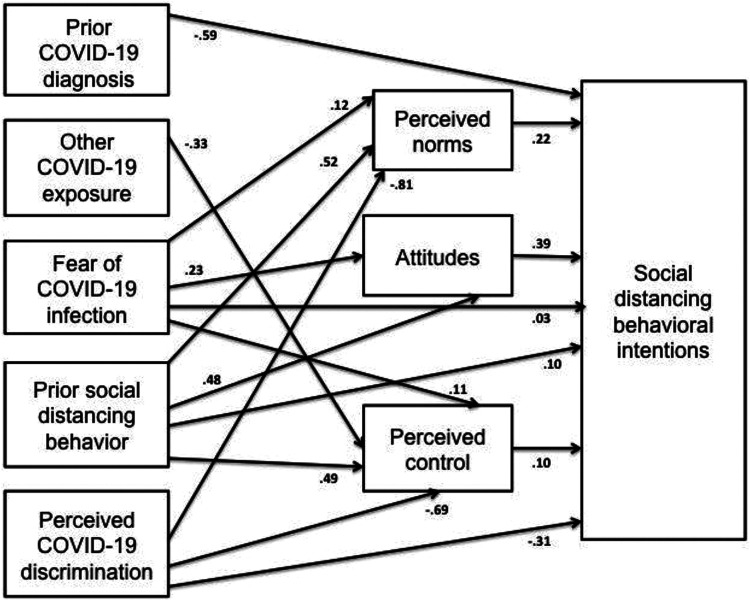
TPB constructs were positively associated with intention to follow social distancing guidelines. Fear of COVID-19 infection and prior social distancing behavior were positively associated with behavioral intentions. In contrast, perceived discrimination was negatively associated with the outcome. Associations between fear of COVID-19, perceived COVID-19 discrimination and behavioral intentions were partially mediated by constructs of TPB.
COVID-19 prevention efforts designed to emphasize positive attitudes, perceived control, and social norms around social distancing should carefully balance campaigns that heighten fear of infection along with anti- discrimination messaging.
本研究旨在确定 COVID-19 经历、感知的 COVID-19 行为控制、社会规范和态度与未来遵循社交距离准则的意向之间的关系。
这是一项横断面研究。
参与者于 2020 年 6 月通过在线调查作答。
本研究纳入了加拿大魁北克省 18 岁及以上的 3183 名居民。
研究中包括与 COVID-19 相关的歧视感知、对 COVID-19 感染的恐惧、之前接触过 COVID-19 以及之前的社交距离行为等措施。参与者自我报告了与社交距离相关的态度、感知行为控制和感知规范。最后,我们还衡量了社交距离行为意向。
我们使用验证性因子分析(CFA)评估了社交距离的计划行为理论(TPB)测量模型。使用结构方程路径分析评估了 COVID-19 感知歧视、感染恐惧、先前的社交距离行为、COVID-19 接触、TPB 构念与社交距离行为意向之间的关联。
TPB 构念与遵循社交距离准则的意向呈正相关。对 COVID-19 感染的恐惧和之前的社交距离行为与行为意向呈正相关。相反,感知歧视与结果呈负相关。对 COVID-19 的恐惧、感知 COVID-19 歧视与行为意向之间的关联部分由 TPB 构念介导。
旨在强调社交距离方面积极态度、感知控制和社会规范的 COVID-19 预防措施应谨慎平衡以提高感染恐惧与反歧视信息传递的宣传活动。