Verbyla Matthew E, Calderon Jose S, Flanigan Shawn, Garcia Mireille, Gersberg Rick, Kinoshita Alicia M, Mladenov Natalie, Pinongcos Federick, Welsh Megan
Department of Civil, Construction, and Environmental Engineering, San Diego State University, San Diego, California, USA.
School of Public Affairs, San Diego State University, San Diego, California, USA.
Environ Eng Sci. 2021 May 1;38(5):389-401. doi: 10.1089/ees.2020.0319. Epub 2021 May 24.
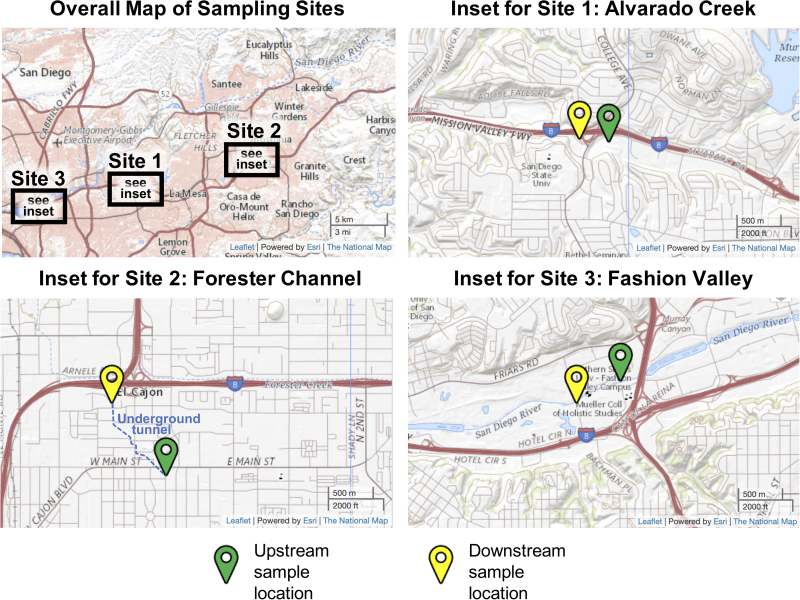
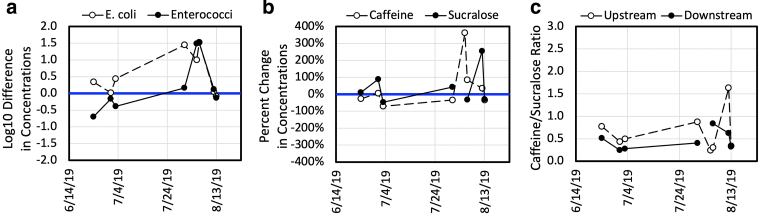
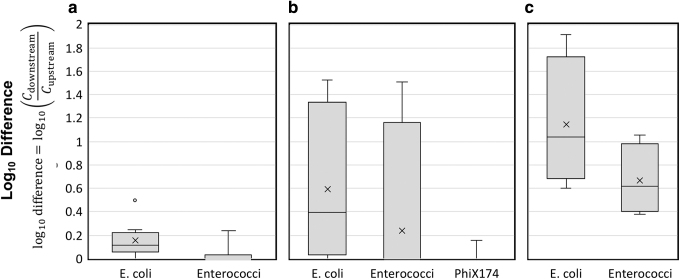
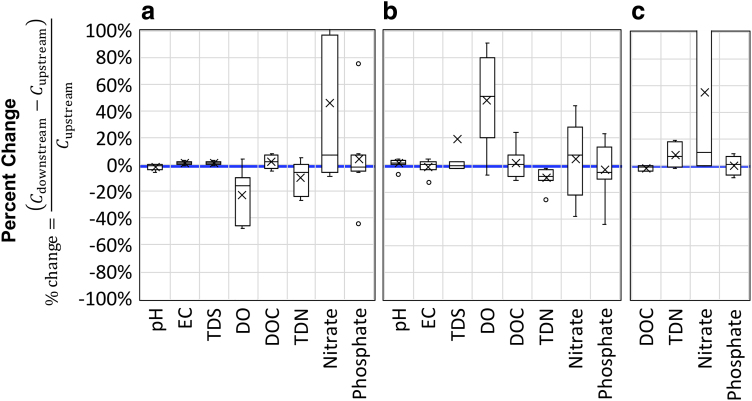
Individuals experiencing unsheltered homelessness face significant barriers to accessing water, sanitation, and hygiene services, but the risks associated with this lack of access and barriers to service provision have been largely understudied. We analyzed water samples upstream and downstream of three homeless encampments in the San Diego River watershed and interviewed service providers from public and nonprofit sectors to assess local perceptions about challenges and potential solutions for water and sanitation service provision in this context. Water upstream from encampments contained detectable levels of caffeine and sucralose. concentrations downstream of the encampments were significantly greater than concentrations upstream, but there was no significant change in the concentrations of other pollutants, including caffeine and sucralose. The HF183 marker of was only detected in one sample upstream of an encampment and was not detected downstream. Overall, there was insufficient evidence to suggest that the encampments studied here were responsible for contributing pollution to the river. Nevertheless, the presence of caffeine, sucralose, and HF183 indicated that there are anthropogenic sources of contamination in the river during dry weather and potential risks associated with the use of this water by encampment residents. Interviews with service providers revealed perceptions that the provision of water and sanitation services for this population would be prohibitively expensive. Interviewees also reported perceptions that most riverbank residents avoided contact with service providers, which may present challenges for the provision of water and sanitation service unless trust is first built between service providers and residents of riverine encampments.
无家可归者在获取水、环境卫生和个人卫生服务方面面临重大障碍,但与缺乏此类服务及服务提供障碍相关的风险在很大程度上尚未得到充分研究。我们分析了圣地亚哥河流域三个无家可归者营地上下游的水样,并采访了公共部门和非营利部门的服务提供者,以评估当地对在这种情况下提供水和环境卫生服务所面临挑战及潜在解决方案的看法。营地上游的水中含有可检测到的咖啡因和三氯蔗糖。营地下游的浓度显著高于上游,但包括咖啡因和三氯蔗糖在内的其他污染物浓度没有显著变化。只有在一个营地上游的样本中检测到了的HF183标记物,下游未检测到。总体而言,没有足够的证据表明这里研究的营地对河流污染负有责任。然而,咖啡因、三氯蔗糖和HF183的存在表明,在旱季河流中存在人为污染源,以及营地居民使用这种水可能带来的潜在风险。对服务提供者的采访显示,他们认为为这一人群提供水和环境卫生服务成本过高。受访者还表示,大多数河岸居民避免与服务提供者接触,这可能给提供水和环境卫生服务带来挑战,除非服务提供者和河边营地居民之间首先建立信任。