Faculty of Pharmaceutical Sciences, Sojo University, 4-22-1, Ikeda, Nishi-ku, Kumamoto, 860-0082, Japan.
Graduate School of Medical Sciences, Faculty of Life Sciences, Kumamoto University, 1-1-1, Honjo, Chuo-ku, Kumamoto, 860-8556, Japan.
J Nat Med. 2021 Sep;75(4):741-751. doi: 10.1007/s11418-021-01533-x. Epub 2021 Jun 3.
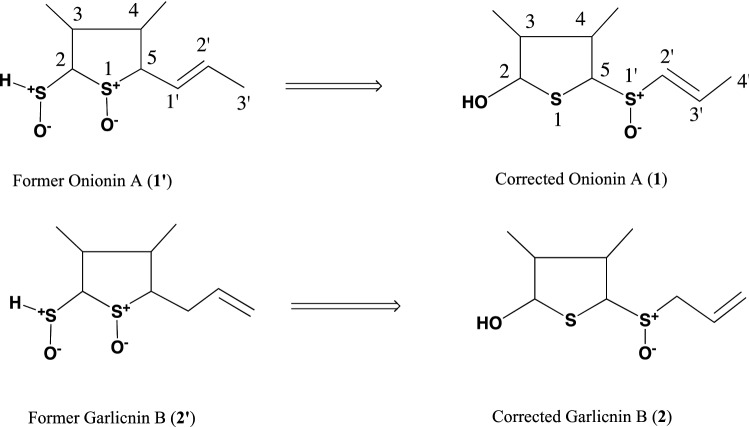
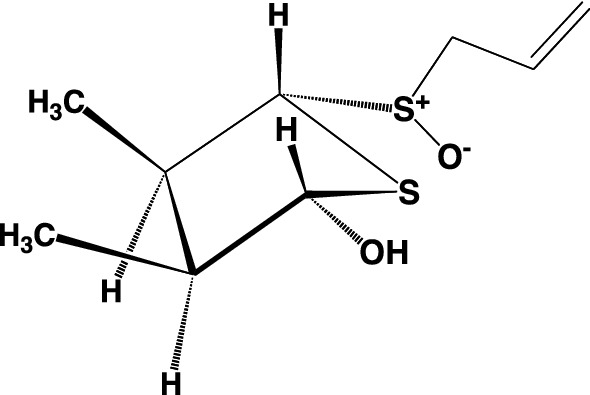
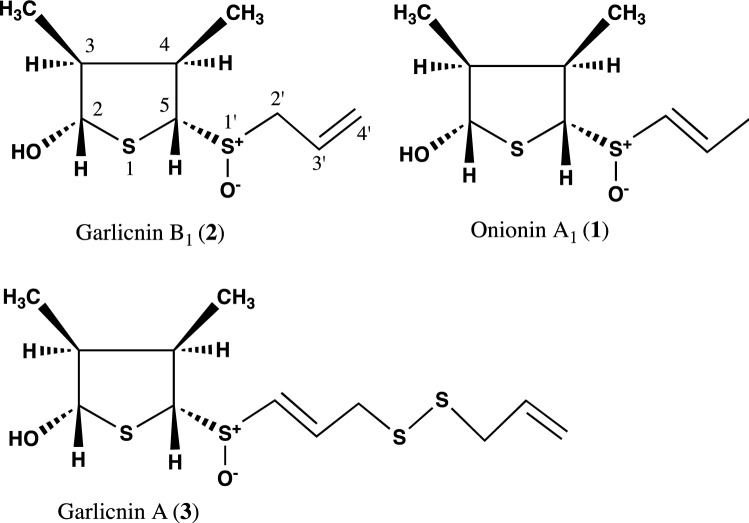
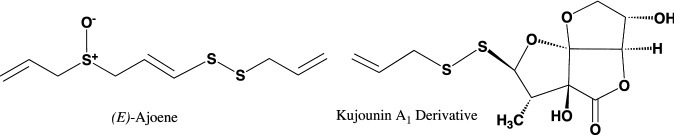
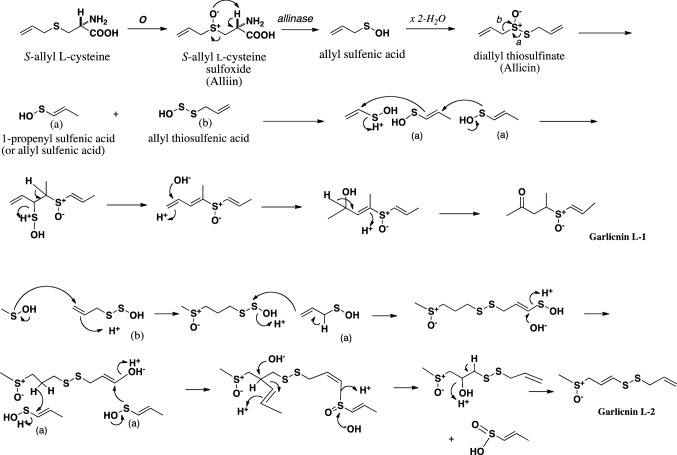
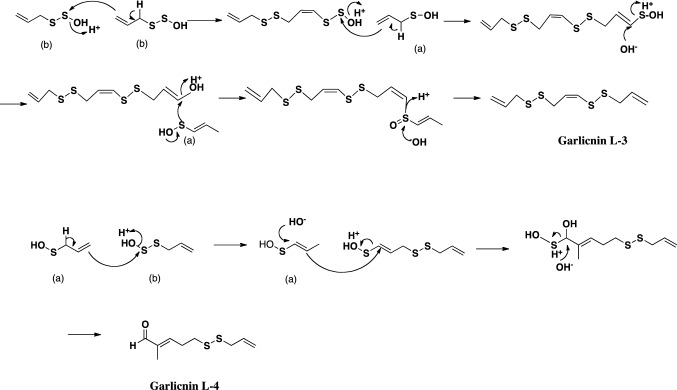
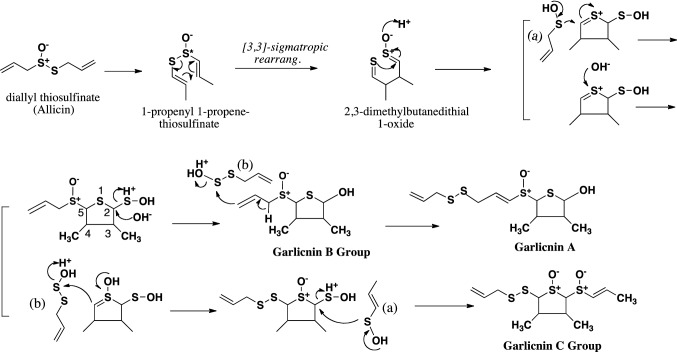
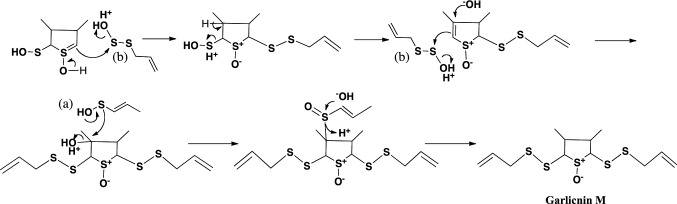
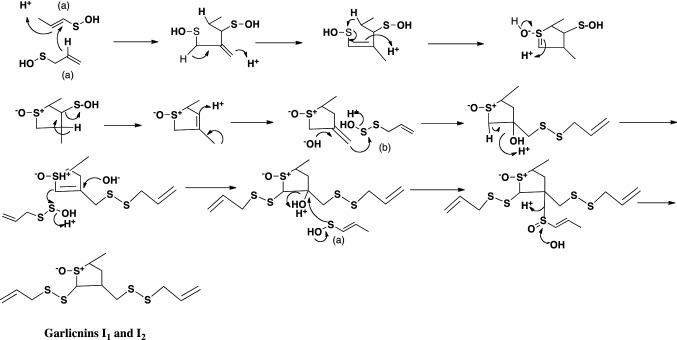
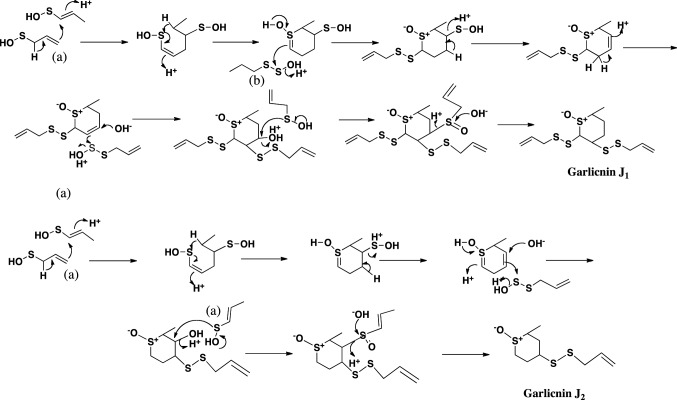
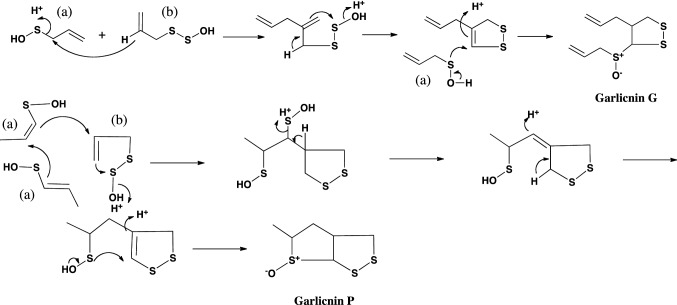
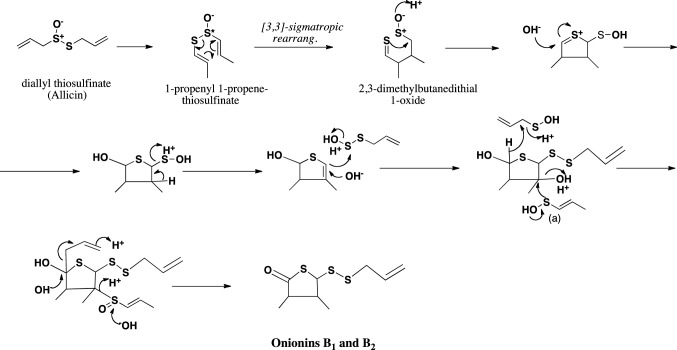
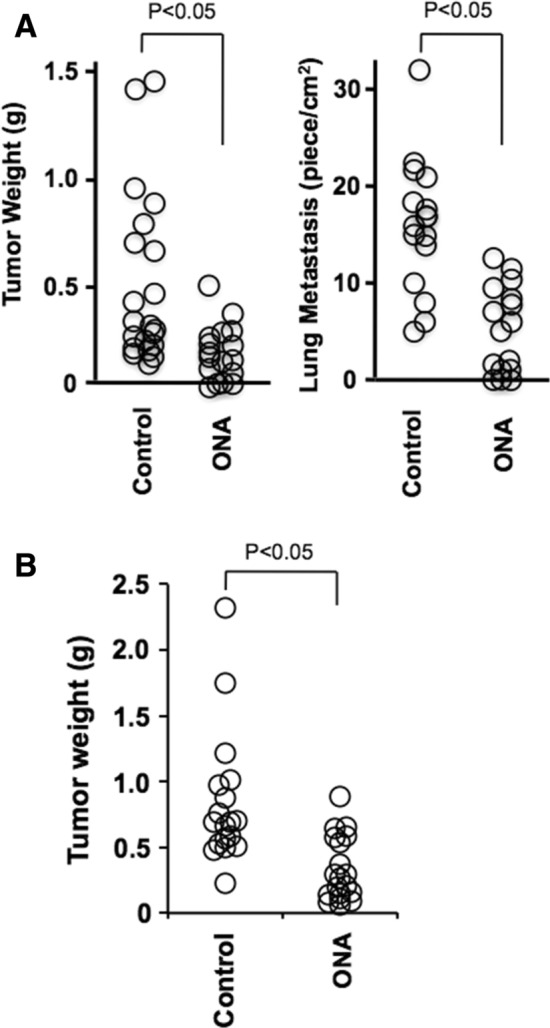
In this paper, we review our work in the last 10 years wherein we examined the sulfides in the acetone extracts of garlic (Allium sativum), onion (A. cepa), and Welsh onion (A. fistulosum), obtained and characterized the structures of new sulfides, three 3,4-dimethylthiolane-type sulfides from onion and Welsh onion, respectively, and four acyclic-type, nine 3,4-dimethyl- thiolane-type, four 2-methylthiolane (and thiane)-type, two 1,2-dithiolane-type, and two 2-oxothiolane-type sulfides, together with (E)-ajoene and one kujounin-type sulfide from garlic. During this process, structural corrections were made in onionin A group, garlicnin A, and garlicnin B group in some 3,4-dimethylthiolane-type sulfides. Next, hypothetical pathways for the production of the aforementioned sulfides were proposed. Furthermore, it was revealed that a typical 3,4-dimethylthiolane-type sulfide, onionin A obtained from onion, having the isomeric structure of garlicnin B obtained from garlic, decreased tumor proliferation and controlled tumor metastasis. These results showed that onionin A is an effective agent for controlling tumors, and that the antitumor effects observed in vivo are likely caused by reversing the antitumor immune system. Activation of the antitumor immune system by onionin A might be an effective adjuvant therapy for patients with osteosarcoma, ovarian cancer and other malignant tumors.
在本文中,我们回顾了过去 10 年的工作,研究了大蒜(Allium sativum)、洋葱(A. cepa)和葱(A. fistulosum)丙酮提取物中的硫化物,获得并表征了新硫化物的结构,分别从洋葱和葱中得到了三种 3,4-二甲基硫醚型硫化物,以及四种无环型、九种 3,4-二甲基硫醚型、四种 2-甲基硫醚(和硫醚)-型、两种 1,2-二硫杂环戊烷型和两种 2-氧代硫杂环戊烷型硫化物,以及大蒜中的(E)-ajoene 和一种 kujounin 型硫化物。在此过程中,对一些 3,4-二甲基硫醚型硫化物中的洋葱素 A 组、大蒜素 A 和大蒜素 B 组进行了结构修正。接下来,提出了上述硫化物生成的假设途径。此外,研究结果表明,从洋葱中获得的典型 3,4-二甲基硫醚型硫化物洋葱素 A 具有与大蒜中获得的大蒜素 B 的异构结构,能够抑制肿瘤增殖并控制肿瘤转移。这些结果表明洋葱素 A 是一种有效的肿瘤控制剂,体内观察到的抗肿瘤作用可能是通过逆转抗肿瘤免疫系统引起的。洋葱素 A 激活抗肿瘤免疫系统可能是骨肉瘤、卵巢癌和其他恶性肿瘤患者的一种有效辅助治疗方法。