Obstetrics and Gynecology, McMaster University, Hamilton, Ontario, Canada
Obstetrics and Gynecology, McMaster University, Hamilton, Ontario, Canada.
BMJ Glob Health. 2021 Jun;6(6). doi: 10.1136/bmjgh-2020-004850.
Midwifery associations are organisations that represent midwives and the profession of midwifery. They support midwives to reduce maternal and newborn mortality and morbidity by promoting the overall integration of midwifery in health systems. Our objective was to generate a framework for evidence-informed midwifery association strengthening.
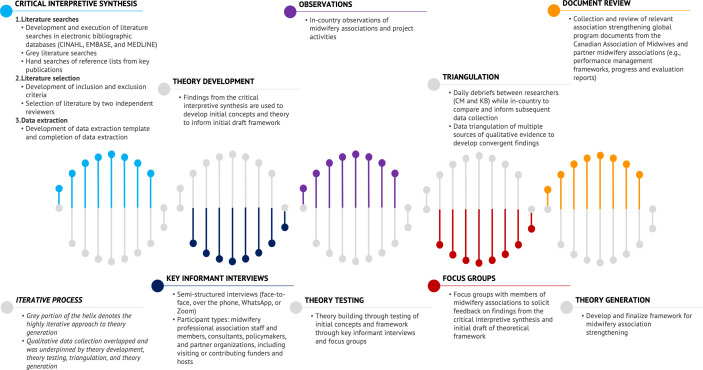
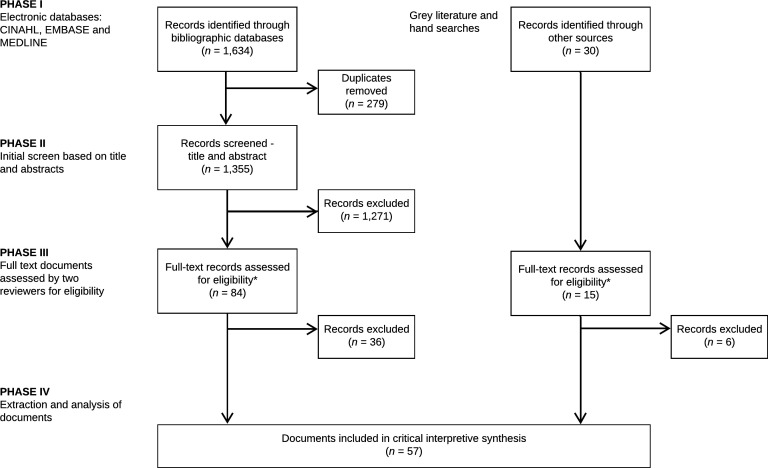
A critical interpretive synthesis complemented by key informant interviews, focus groups, observations, and document review was used to inform the development of concepts and theory. Three electronic bibliographical databases (CINAHL, EMBASE and MEDLINE) were searched through to 2 September 2020. A coding structure was created to guide the synthesis across the five sources of evidence.
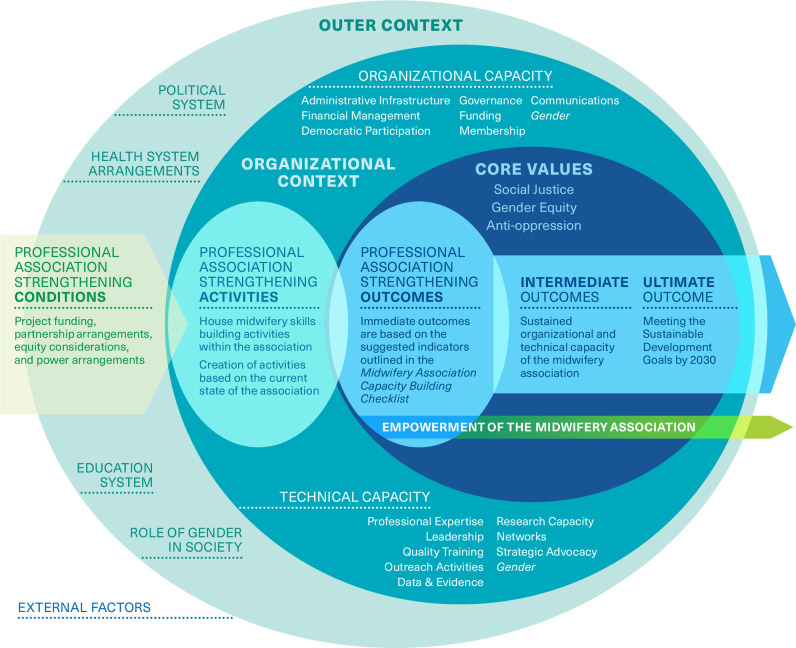
A total of 1634 records were retrieved through electronic searches and 57 documents were included in the critical interpretive synthesis. Thirty-one (31) key informant interviews and five focus groups were completed including observations (255 pages) and audio recordings. Twenty-four (24) programme documents were reviewed. The resulting theoretical framework outlines the key factors by context, describes the system drivers that impact the sustainability of midwifery associations and identifies the key-enabling elements involved in designing programmes that strengthen midwifery associations.
Midwifery associations act as the web that holds the profession together and are key to the integration of the profession in health systems, supporting enabling environments and improving gender inequities. Our findings highlight that in order to strengthen midwifery (education, regulation and services), we have to lead with association strengthening. Building strong associations is the foundation necessary to create formal quality midwifery education systems and to support midwifery regulation and accreditation mechanisms.
助产士协会是代表助产士和助产专业的组织。它们通过促进助产在卫生系统中的全面整合,支持助产士降低母婴死亡率和发病率。我们的目标是制定一个循证助产士协会加强的框架。
批判性解释性综合辅以关键知情人访谈、焦点小组、观察和文件审查,为概念和理论的发展提供信息。通过三个电子书目数据库(CINAHL、EMBASE 和 MEDLINE)进行搜索,截止日期为 2020 年 9 月 2 日。创建了一个编码结构,以指导对五个证据来源的综合分析。
通过电子搜索共检索到 1634 条记录,有 57 篇文献被纳入批判性解释性综合分析。完成了 31 次关键知情人访谈和 5 次焦点小组,包括观察(255 页)和录音。审查了 24 个方案文件。由此产生的理论框架概述了按背景划分的关键因素,描述了影响助产士协会可持续性的系统驱动因素,并确定了参与设计加强助产士协会的方案的关键使能因素。
助产士协会充当了将该专业联系在一起的网络,是该专业融入卫生系统的关键,支持有利环境并改善性别不平等。我们的研究结果表明,为了加强助产(教育、监管和服务),我们必须首先加强协会的建设。建立强大的协会是建立正规的高质量助产教育系统和支持助产监管和认证机制的必要基础。