Department of Obstetrics and Gynecology, McMaster Midwifery Research Centre, 1280 Main St. West, HSC-4H26, Hamilton, ON, L8S 4K1, Canada.
McMaster Health Forum, 1280 Main St West, MML-417, Hamilton, ON, L8S 4L6, Canada.
Health Res Policy Syst. 2020 Jul 8;18(1):77. doi: 10.1186/s12961-020-00590-0.
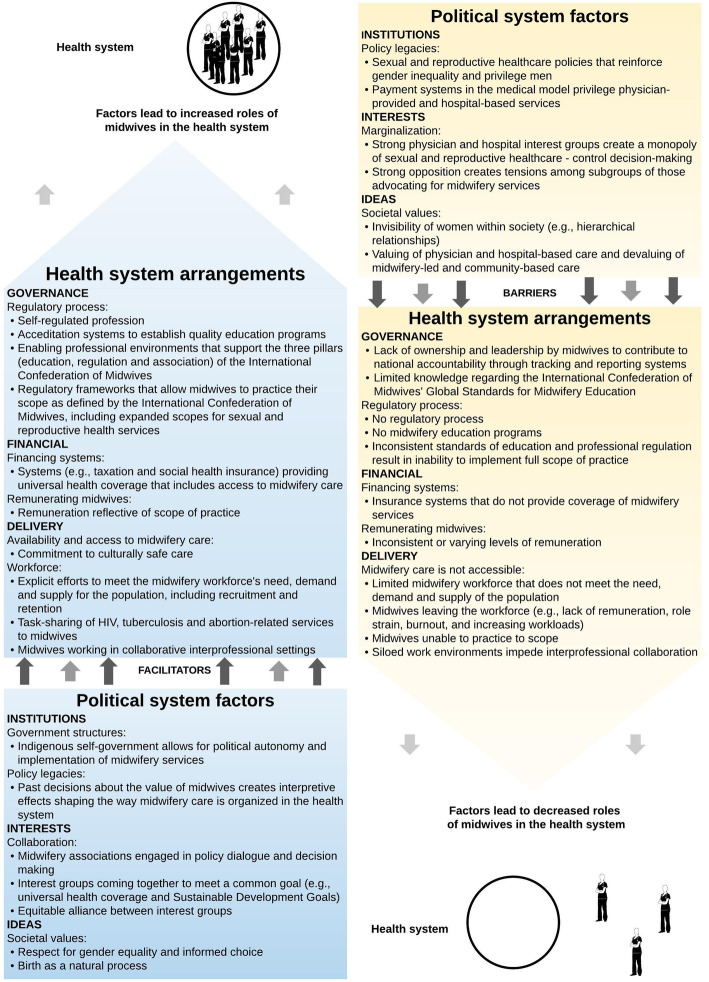
Midwives' roles in sexual and reproductive health and rights continues to evolve. Understanding the profession's role and how midwives can be integrated into health systems is essential in creating evidence-informed policies. Our objective was to develop a theoretical framework of how political system factors and health systems arrangements influence the roles of midwives within the health system.
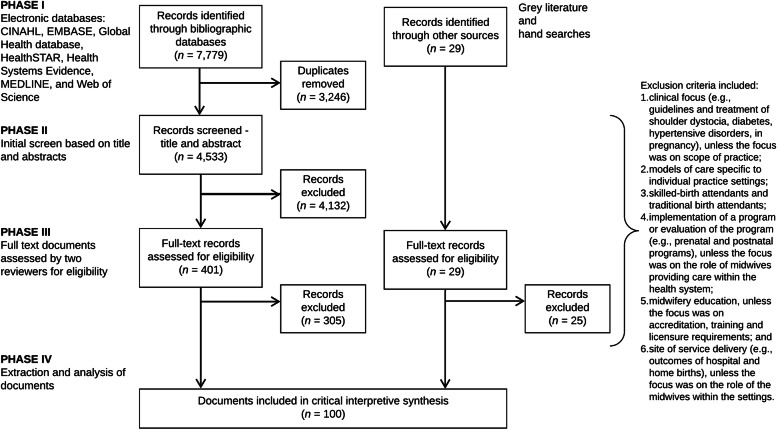
A critical interpretive synthesis was used to develop the theoretical framework. A range of electronic bibliographic databases (CINAHL, EMBASE, Global Health database, HealthSTAR, Health Systems Evidence, MEDLINE and Web of Science) was searched through to 14 May 2020 as were policy and health systems-related and midwifery organisation websites. A coding structure was created to guide the data extraction.
A total of 4533 unique documents were retrieved through electronic searches, of which 4132 were excluded using explicit criteria, leaving 401 potentially relevant records, in addition to the 29 records that were purposively sampled through grey literature. A total of 100 documents were included in the critical interpretive synthesis. The resulting theoretical framework identified the range of political and health system components that can work together to facilitate the integration of midwifery into health systems or act as barriers that restrict the roles of the profession.
Any changes to the roles of midwives in health systems need to take into account the political system where decisions about their integration will be made as well as the nature of the health system in which they are being integrated. The theoretical framework, which can be thought of as a heuristic, identifies the core contextual factors that governments can use to best leverage their position when working to improve sexual and reproductive health and rights.
助产士在性健康和生殖健康及权利方面的作用不断发展。了解该职业的作用以及如何将助产士纳入卫生系统,对于制定基于证据的政策至关重要。我们的目标是制定一个理论框架,说明政治制度因素和卫生系统安排如何影响助产士在卫生系统中的作用。
采用批判解释性综合方法制定理论框架。通过电子书目数据库(CINAHL、EMBASE、全球卫生数据库、HealthSTAR、卫生系统证据、MEDLINE 和 Web of Science)进行了检索,检索截至 2020 年 5 月 14 日,还检索了与政策和卫生系统相关的以及助产组织的网站。创建了一个编码结构来指导数据提取。
通过电子检索共检索到 4533 篇独特的文献,其中 4132 篇根据明确标准被排除在外,留下 401 篇可能相关的记录,此外,还通过灰色文献有针对性地选取了 29 篇记录。共有 100 篇文献被纳入批判解释性综合。由此产生的理论框架确定了一系列政治和卫生系统组成部分,这些组成部分可以共同促进助产士融入卫生系统,或成为限制该专业作用的障碍。
任何对卫生系统中助产士作用的改变都需要考虑到将做出有关其融入决策的政治制度,以及他们正在融入的卫生系统的性质。该理论框架可以被视为一种启发式方法,确定了各国政府在努力改善性健康和生殖健康及权利时可以利用的核心背景因素,以最佳利用其地位。