Evolutionary Biology of the Microbial Cell Unit, CNRS UMR2001, Department of Microbiology, Institut Pasteur, Paris, France.
Structural Microbiology Unit, Institut Pasteur, CNRS UMR 3528, Université de Paris, Paris, France.
Nat Commun. 2021 Jun 4;12(1):3214. doi: 10.1038/s41467-021-23099-8.
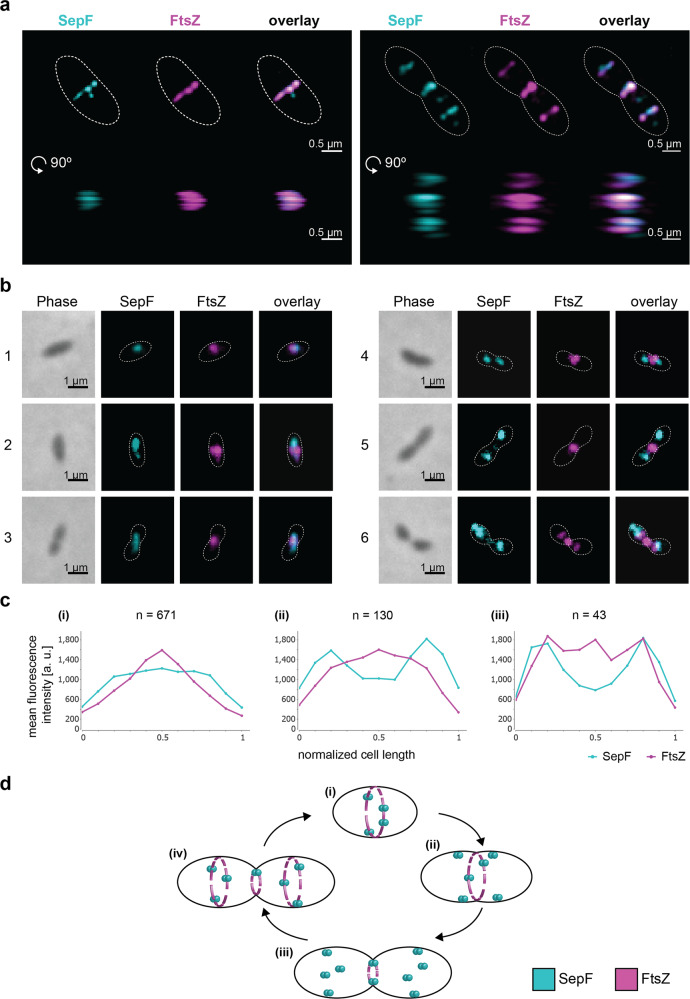
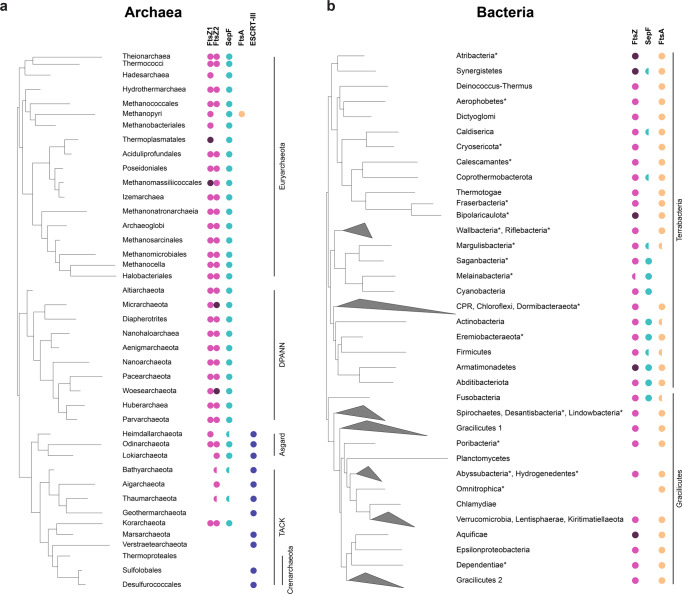
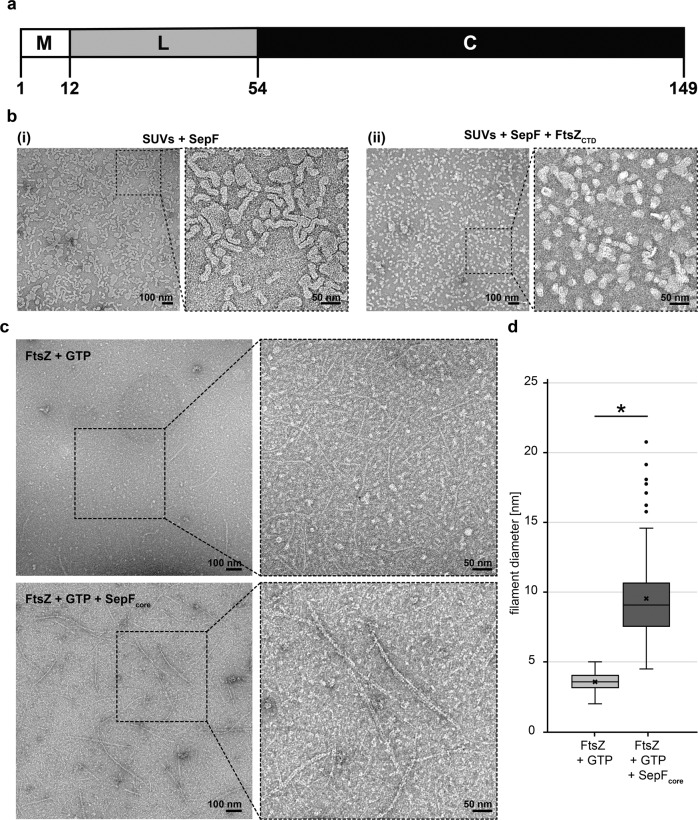
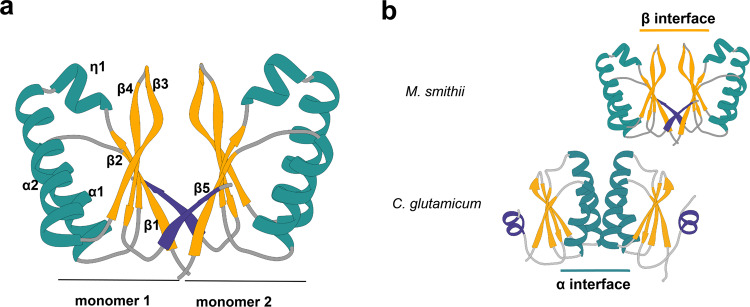
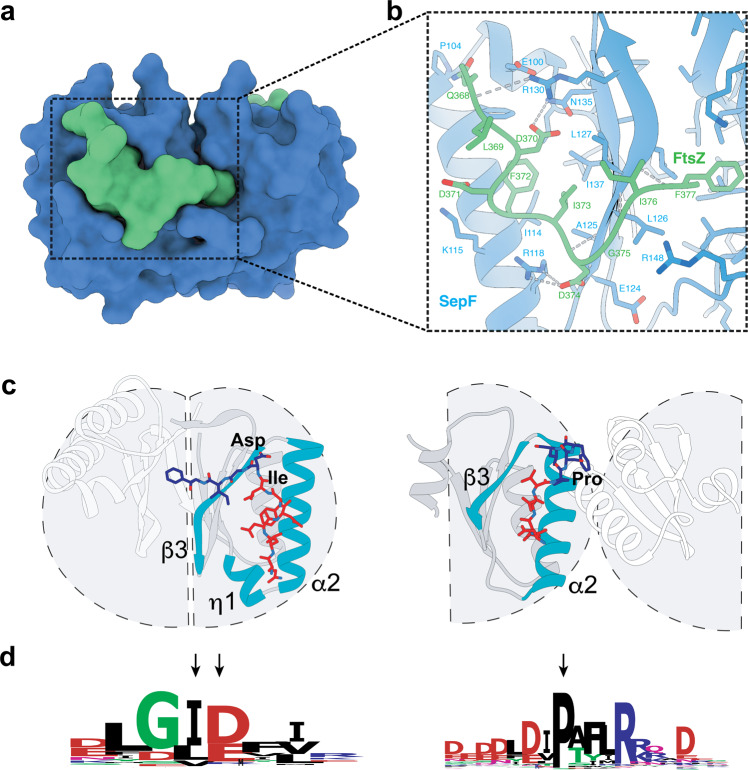
Most archaea divide by binary fission using an FtsZ-based system similar to that of bacteria, but they lack many of the divisome components described in model bacterial organisms. Notably, among the multiple factors that tether FtsZ to the membrane during bacterial cell constriction, archaea only possess SepF-like homologs. Here, we combine structural, cellular, and evolutionary analyses to demonstrate that SepF is the FtsZ anchor in the human-associated archaeon Methanobrevibacter smithii. 3D super-resolution microscopy and quantitative analysis of immunolabeled cells show that SepF transiently co-localizes with FtsZ at the septum and possibly primes the future division plane. M. smithii SepF binds to membranes and to FtsZ, inducing filament bundling. High-resolution crystal structures of archaeal SepF alone and in complex with the FtsZ C-terminal domain (FtsZ) reveal that SepF forms a dimer with a homodimerization interface driving a binding mode that is different from that previously reported in bacteria. Phylogenetic analyses of SepF and FtsZ from bacteria and archaea indicate that the two proteins may date back to the Last Universal Common Ancestor (LUCA), and we speculate that the archaeal mode of SepF/FtsZ interaction might reflect an ancestral feature. Our results provide insights into the mechanisms of archaeal cell division and pave the way for a better understanding of the processes underlying the divide between the two prokaryotic domains.
大多数古菌通过基于 FtsZ 的系统进行二分分裂,类似于细菌的系统,但它们缺乏许多在模式细菌生物中描述的分裂体成分。值得注意的是,在细菌细胞收缩过程中将 FtsZ 固定在膜上的多个因素中,古菌仅拥有类似于 SepF 的同源物。在这里,我们结合结构、细胞和进化分析来证明 SepF 是与人相关的古菌 Methanobrevibacter smithii 中的 FtsZ 锚定蛋白。3D 超分辨率显微镜和免疫标记细胞的定量分析表明,SepF 与 FtsZ 在隔膜处短暂共定位,并可能为未来的分裂面做好准备。M. smithii SepF 与膜和 FtsZ 结合,诱导丝束形成。单独的和与 FtsZ C 末端结构域(FtsZ)复合物的古菌 SepF 的高分辨率晶体结构揭示了 SepF 形成二聚体,具有同源二聚化界面,其结合模式与以前在细菌中报道的不同。来自细菌和古菌的 SepF 和 FtsZ 的系统发育分析表明,这两种蛋白质可能可以追溯到最后普遍共同祖先(LUCA),我们推测古菌 SepF/FtsZ 相互作用的模式可能反映了一个古老的特征。我们的研究结果为古菌细胞分裂的机制提供了新的见解,并为更好地理解两个原核领域之间分裂的过程铺平了道路。