Sarah James (
Sarah Gold is a postdoctoral research associate in the Bendheim-Thoman Center for Research on Child Wellbeing, Princeton University, in Princeton, New Jersey.
Health Aff (Millwood). 2021 Jun;40(6):961-969. doi: 10.1377/hlthaff.2020.02295.
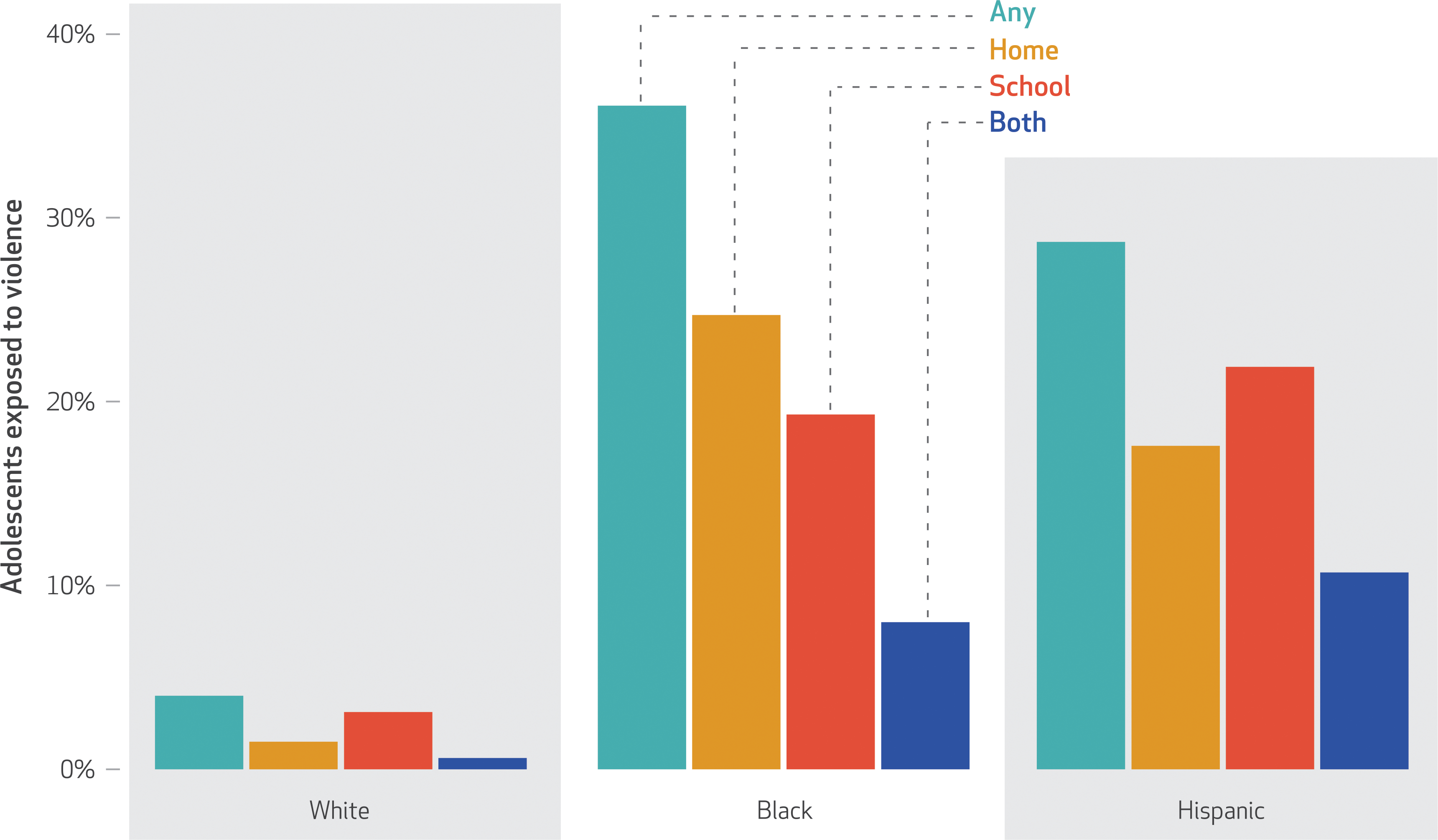
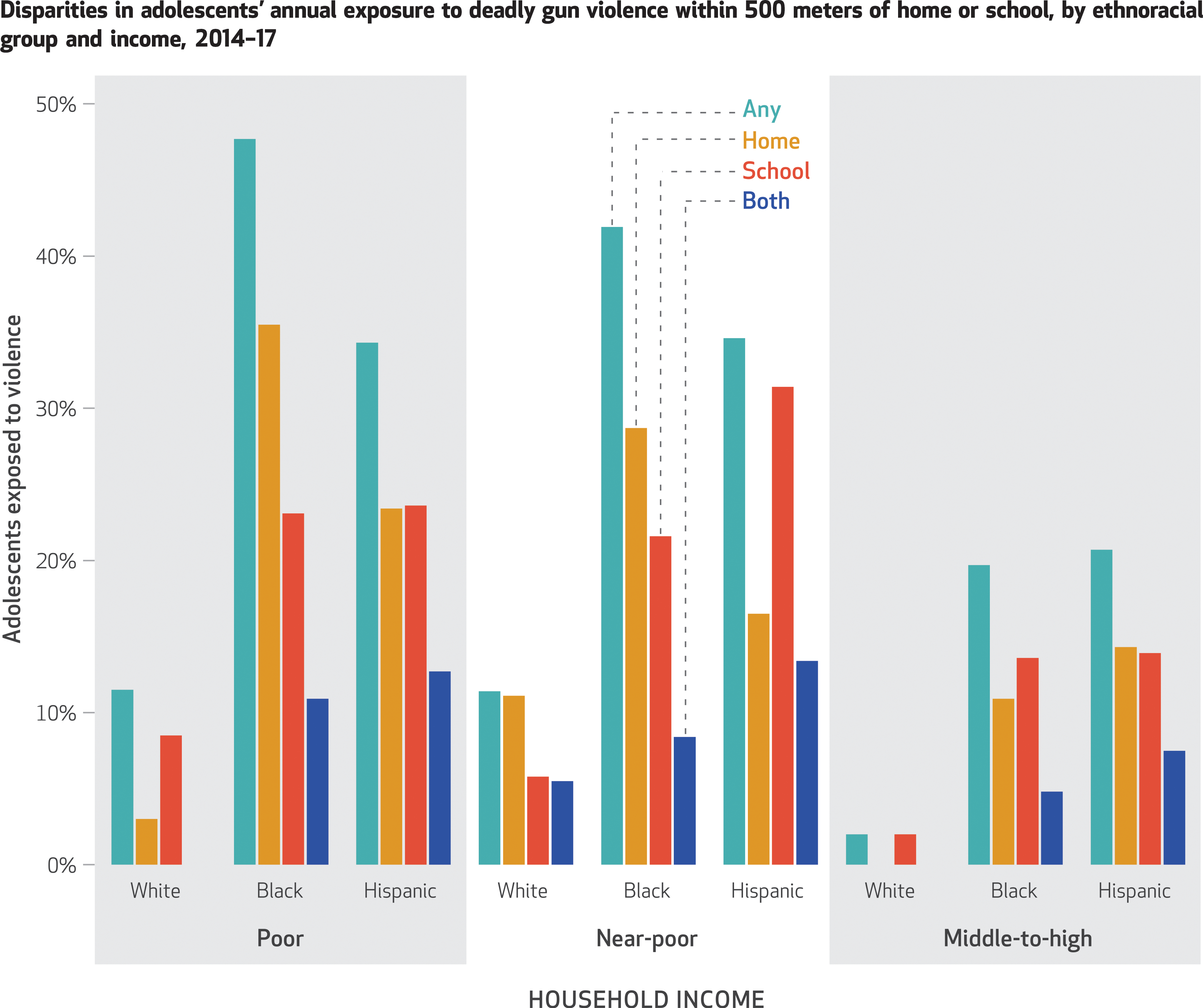
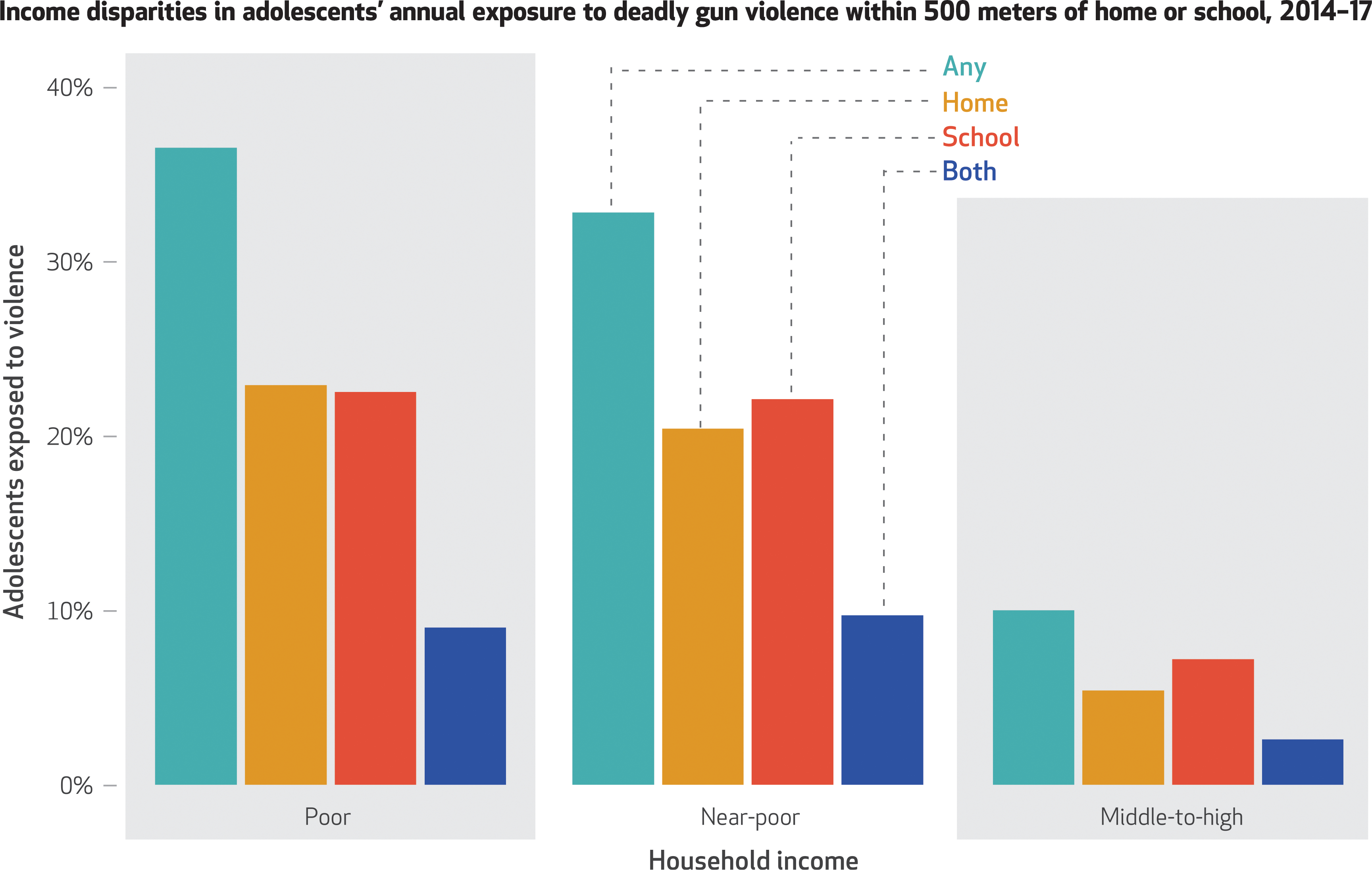
To identify the prevalence of and disparities in past-year exposure to deadly gun violence near adolescents' homes and schools, we linked national data on deadly gun violence incidents from the Gun Violence Archive to the age-fifteen wave of the Fragile Families and Child Wellbeing Study, a cohort of children born during 1998-2000 in large US cities. We found that 21 percent of adolescents in this cohort resided or attended school within 500 meters of a prior-year deadly gun violence incident during 2014-17. Rates of exposure were higher for Black and Hispanic adolescents than for White adolescents and higher for poor and near-poor adolescents than middle-to-high-income adolescents. Middle-to-high-income Black and Hispanic adolescents were more likely to be exposed to violence near home or school than poorer White adolescents. Because exposure to violence is detrimental to health, policies that reduce gun violence could improve population health disparities.
为了确定青少年家庭和学校附近过去一年致命枪支暴力事件的发生率和差异,我们将枪支暴力档案中的致命枪支暴力事件国家数据与脆弱家庭和儿童福利研究的年龄 15 波联系起来,这是一个在 1998-2000 年期间在美国大城市出生的儿童队列。我们发现,在 2014-17 年期间,该队列中有 21%的青少年居住或上学的地方距离前一年的致命枪支暴力事件现场不到 500 米。黑人青少年和西班牙裔青少年的暴露率高于白人青少年,贫困和接近贫困的青少年的暴露率高于中高收入的青少年。中高收入的黑人和西班牙裔青少年比贫困的白人青少年更有可能在家或学校附近遭受暴力。由于接触暴力对健康有害,因此减少枪支暴力的政策可以改善人口健康差异。