Institute of Biologic Chemistry, Academia Sinica, Taipei, Taiwan.
Institute of Cellular and Organismic Biology, Academia Sinica, No. 128, Academia Road, Section 2, Nangang, Taipei, 11529, Taiwan.
J Biomed Sci. 2021 Jun 7;28(1):43. doi: 10.1186/s12929-021-00740-8.
Coronavirus disease 19 (COVID-19) first appeared in the city of Wuhan, in the Hubei province of China. Since its emergence, the COVID-19-causing virus, SARS-CoV-2, has been rapidly transmitted around the globe, overwhelming the medical care systems in many countries and leading to more than 3.3 million deaths. Identification of immunological epitopes on the virus would be highly useful for the development of diagnostic tools and vaccines that will be critical to limiting further spread of COVID-19.
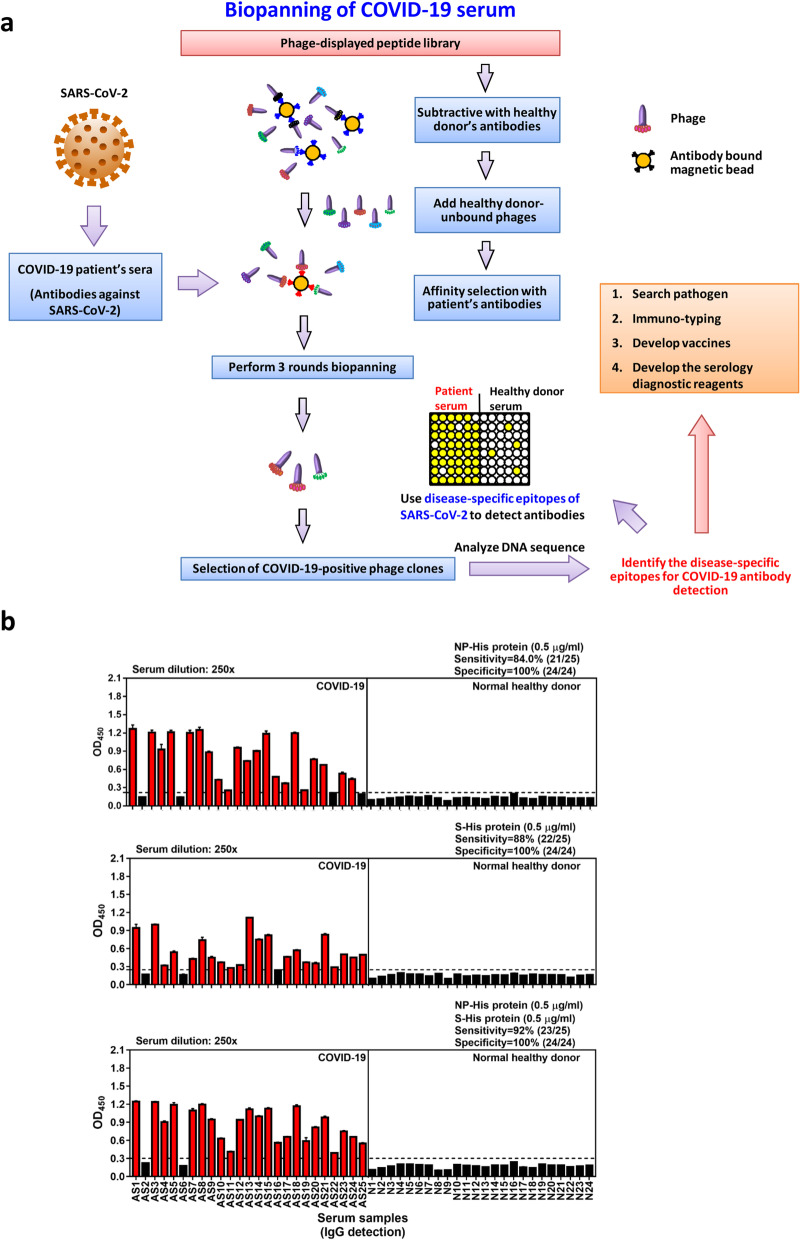
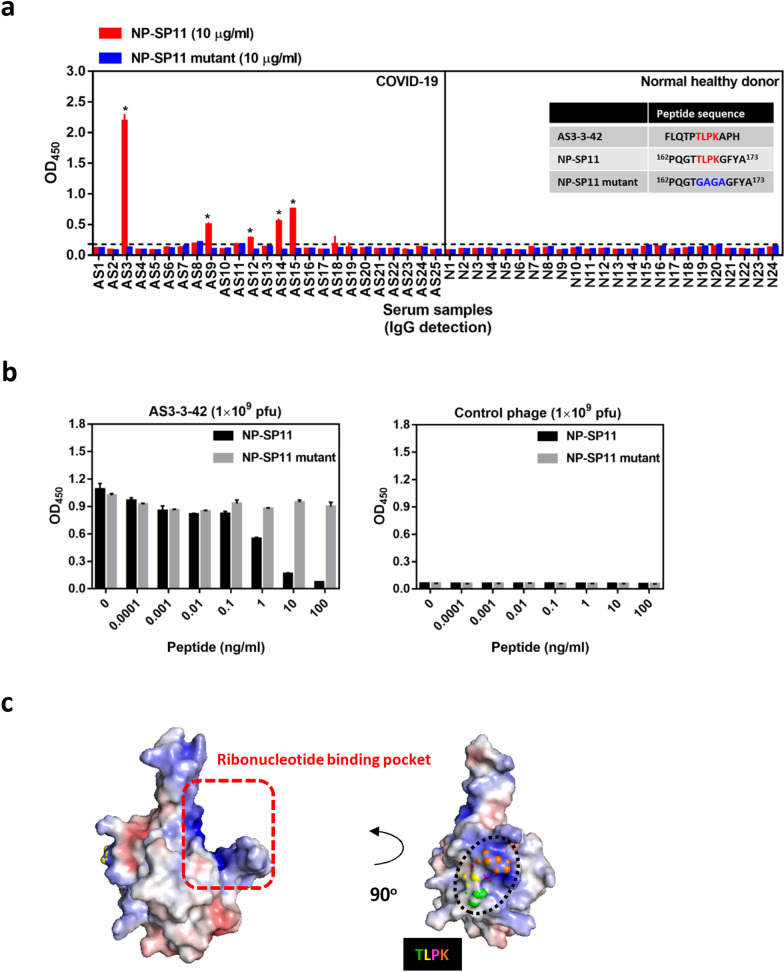
To find disease-specific B-cell epitopes that correspond to or mimic natural epitopes, we used phage display technology to determine the targets of specific antibodies present in the sera of immune-responsive COVID-19 patients. Enzyme-linked immunosorbent assays were further applied to assess competitive antibody binding and serological detection. VaxiJen, BepiPred-2.0 and DiscoTope 2.0 were utilized for B-cell epitope prediction. PyMOL was used for protein structural analysis.
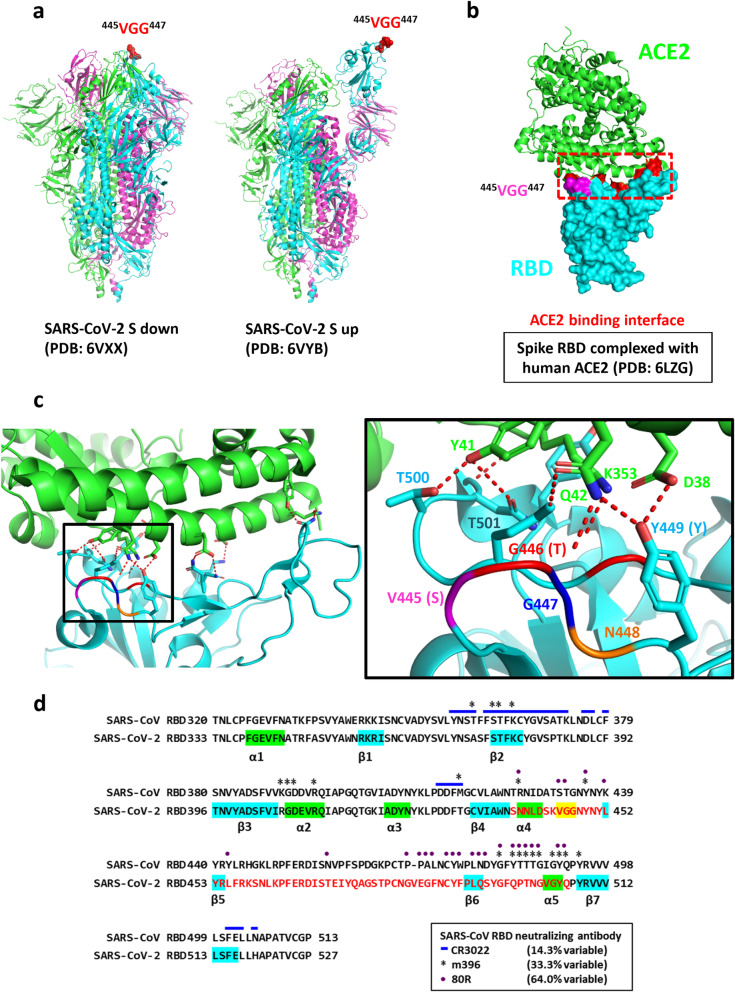
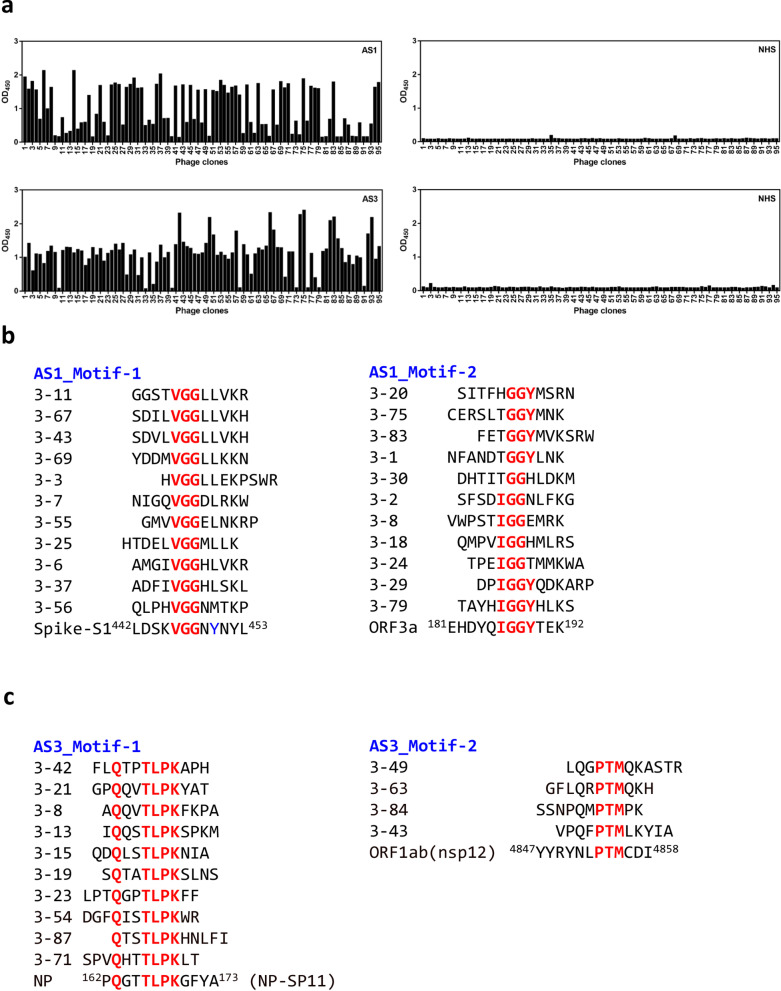
36 enriched peptides were identified by biopanning with antibodies from two COVID-19 patients; the peptides 4 motifs with consensus residues corresponding to two potential B-cell epitopes on SARS-CoV-2 viral proteins. The putative epitopes and hit peptides were then synthesized for validation by competitive antibody binding and serological detection.
The identified B-cell epitopes on SARS-CoV-2 may aid investigations into COVID-19 pathogenesis and facilitate the development of epitope-based serological diagnostics and vaccines.
2019 年冠状病毒病(COVID-19)首先出现在中国湖北省武汉市。自出现以来,COVID-19 病毒 SARS-CoV-2 在全球迅速传播,使许多国家的医疗体系不堪重负,并导致超过 330 万人死亡。鉴定病毒上的免疫表位对于开发诊断工具和疫苗非常有用,这对于限制 COVID-19 的进一步传播至关重要。
为了找到与天然表位相对应或模拟天然表位的疾病特异性 B 细胞表位,我们使用噬菌体展示技术来确定免疫反应性 COVID-19 患者血清中存在的特定抗体的靶标。进一步应用酶联免疫吸附试验来评估竞争抗体结合和血清学检测。利用 VaxiJen、BepiPred-2.0 和 DiscoTope 2.0 进行 B 细胞表位预测。使用 PyMOL 进行蛋白质结构分析。
通过用来自两名 COVID-19 患者的抗体进行生物淘选,鉴定出 36 个富集肽;这些肽中有 4 个基序,具有与 SARS-CoV-2 病毒蛋白上两个潜在 B 细胞表位相对应的保守残基。然后合成假定的表位和命中肽,以通过竞争抗体结合和血清学检测进行验证。
鉴定出的 SARS-CoV-2 B 细胞表位可能有助于 COVID-19 发病机制的研究,并促进基于表位的血清学诊断和疫苗的开发。