Division of Cardiovascular Medicine, Vanderbilt Translational and Clinical Cardiovascular Research Center, Vanderbilt University Medical Center, Nashville, TN (A.W.A.).
Department of Epidemiology, Johns Hopkins Bloomberg School of Public Health, Baltimore, MD (K.M.).
Circ Res. 2021 Jun 11;128(12):1818-1832. doi: 10.1161/CIRCRESAHA.121.318535. Epub 2021 Jun 10.
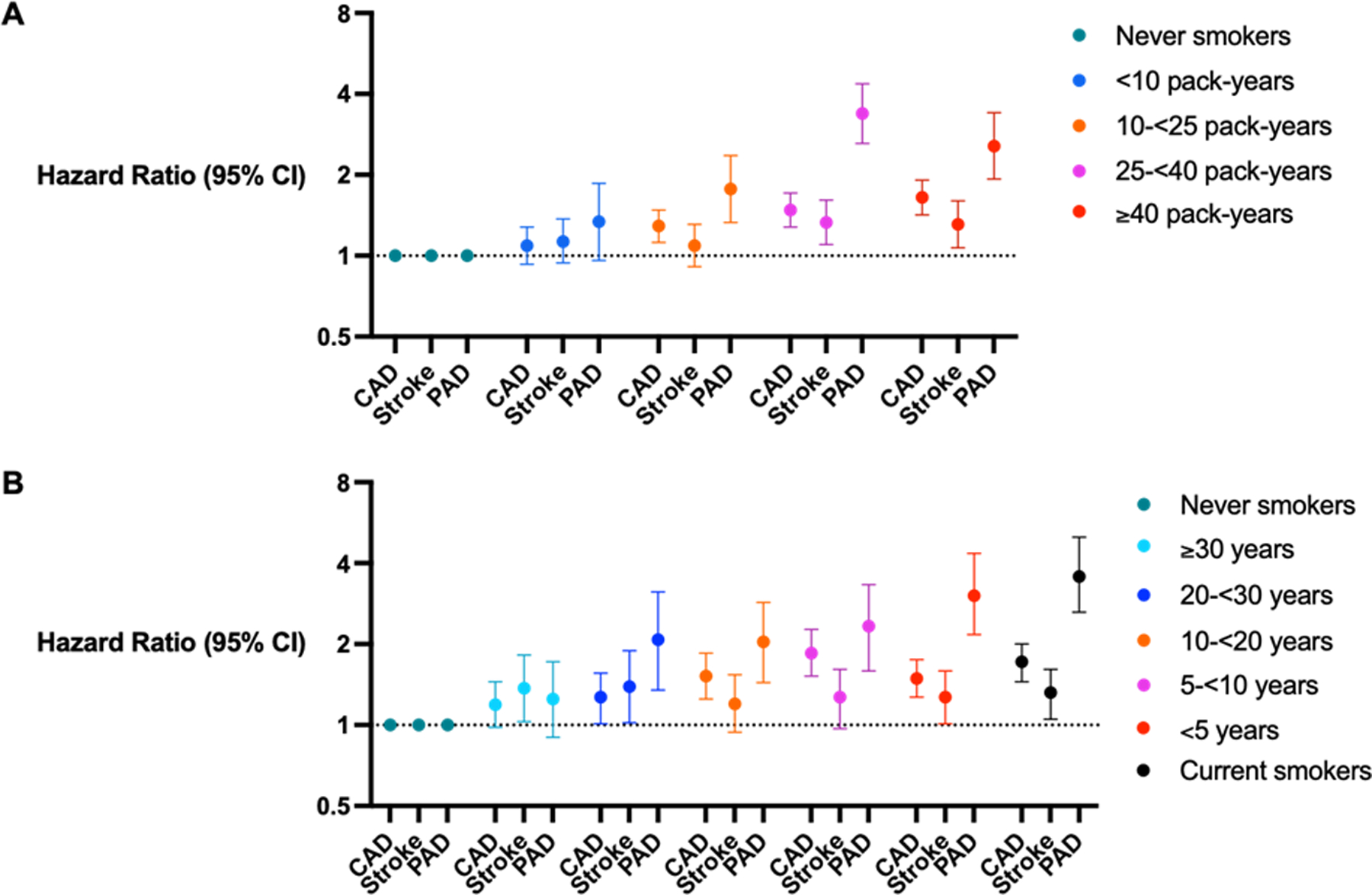
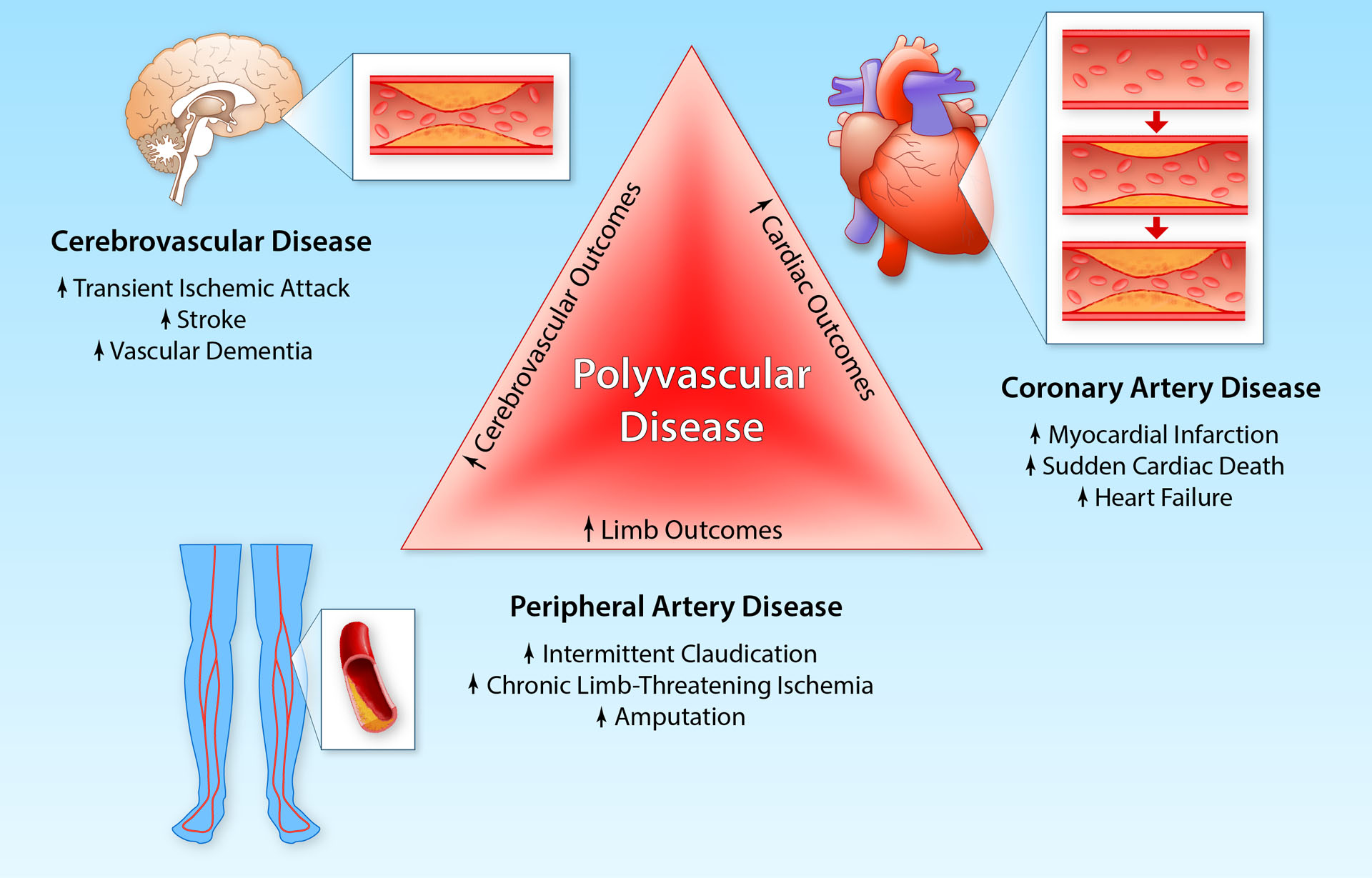
Atherosclerotic lower extremity peripheral artery disease (PAD) is increasingly recognized as an important cause of cardiovascular morbidity and mortality that affects >230 million people worldwide. Traditional cardiovascular risk factors, including advanced age, smoking, and diabetes, are strongly linked to an increase risk of PAD. Although PAD has been historically underappreciated compared with coronary artery disease and stroke, greater attention on PAD in recent years has led to important new epidemiological insights in the areas of thrombosis, inflammation, dyslipidemia, and microvascular disease. In addition, the concept of polyvascular disease, or clinically evident atherosclerosis in multiple arterial beds, is increasingly identified as a particularly malignant cardiovascular disease worthy of special clinical attention and further study. It is noteworthy that PAD may increase the risk of adverse outcomes in similar or even greater magnitude than coronary disease or stroke. In this review, we highlight important new advances in the epidemiology of PAD with a particular focus on polyvascular disease, emerging biomarkers, and differential risk pathways for PAD compared with other atherosclerotic diseases.
动脉粥样硬化性下肢外周动脉疾病(PAD)日益被认为是心血管发病率和死亡率的重要原因,影响着全球超过 2.3 亿人。传统心血管危险因素,包括高龄、吸烟和糖尿病,与 PAD 风险增加密切相关。尽管与冠状动脉疾病和中风相比,PAD 在历史上一直被低估,但近年来对 PAD 的更多关注导致了血栓形成、炎症、血脂异常和微血管疾病等领域的重要新的流行病学见解。此外,多血管疾病的概念,或多个动脉床的临床明显动脉粥样硬化,越来越被认为是一种特别恶性的心血管疾病,值得特别关注和进一步研究。值得注意的是,PAD 可能会增加不良后果的风险,其程度与冠状动脉疾病或中风相似,甚至更大。在这篇综述中,我们重点介绍了 PAD 流行病学的重要新进展,特别是多血管疾病、新兴生物标志物以及与其他动脉粥样硬化性疾病相比 PAD 的不同风险途径。