François Sabine, Helissey Carole, Cavallero Sophie, Drouet Michel, Libert Nicolas, Cosset Jean-Marc, Deutsch Eric, Meziani Lydia, Chargari Cyrus
Department of Radiation Biological Effects, French Armed Forces Biomedical Research Institute, Brétigny-sur-Orge, France.
Clinical Unit Research, HIA Bégin, Paris, France.
Front Pharmacol. 2021 May 25;12:640040. doi: 10.3389/fphar.2021.640040. eCollection 2021.
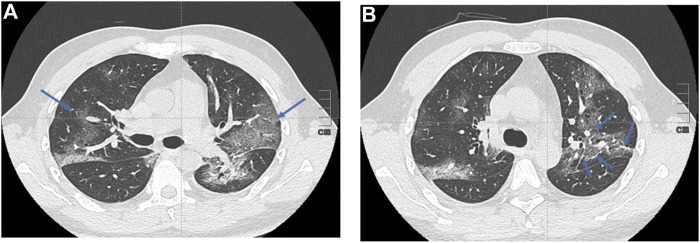
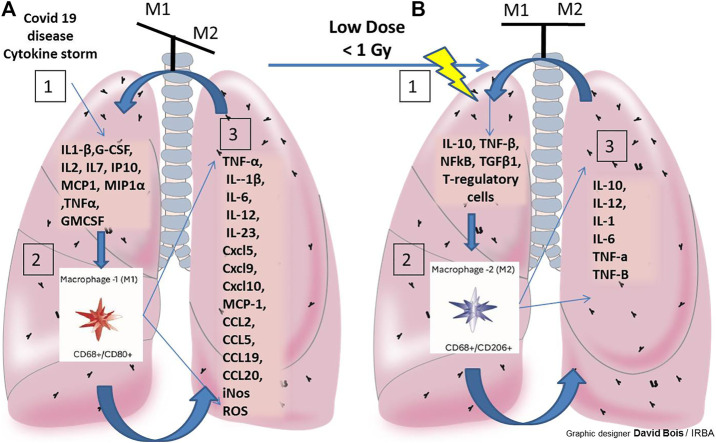
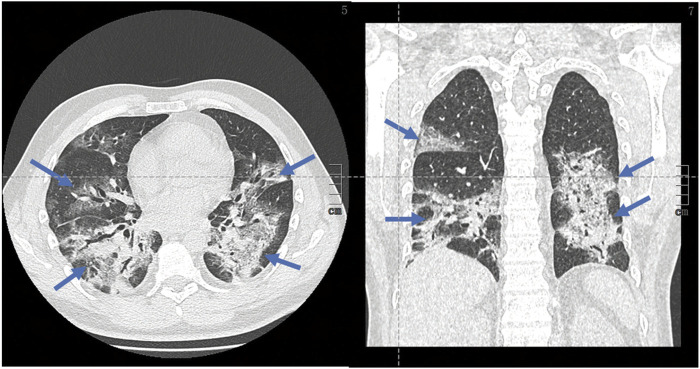
The evolution of SARS-CoV-2 pneumonia to acute respiratory distress syndrome is linked to a virus-induced "cytokine storm", associated with systemic inflammation, coagulopathies, endothelial damage, thrombo-inflammation, immune system deregulation and disruption of angiotensin converting enzyme signaling pathways. To date, the most promising therapeutic approaches in COVID-19 pandemic are linked to the development of vaccines. However, the fight against COVID-19 pandemic in the short and mid-term cannot only rely on vaccines strategies, in particular given the growing proportion of more contagious and more lethal variants among exposed population (the English, South African and Brazilian variants). As long as collective immunity is still not acquired, some patients will have severe forms of the disease. Therapeutic perspectives also rely on the implementation of strategies for the prevention of secondary complications resulting from vascular endothelial damage and from immune system deregulation, which contributes to acute respiratory distress and potentially to long term irreversible tissue damage. While the anti-inflammatory effects of low dose irradiation have been exploited for a long time in the clinics, few recent physiopathological and experimental data suggested the possibility to modulate the inflammatory storm related to COVID-19 pulmonary infection by exposing patients to ionizing radiation at very low doses. Despite level of evidence is only preliminary, these preclinical findings open therapeutic perspectives and are discussed in this article.
严重急性呼吸综合征冠状病毒2型肺炎向急性呼吸窘迫综合征的演变与病毒诱导的“细胞因子风暴”有关,这与全身炎症、凝血病、内皮损伤、血栓炎症、免疫系统失调以及血管紧张素转换酶信号通路的破坏有关。迄今为止,新冠疫情中最有前景的治疗方法与疫苗的研发有关。然而,抗击新冠疫情的短期和中期策略不能仅依赖于疫苗,特别是考虑到在暴露人群中传染性更强、致死性更高的变异毒株(英国、南非和巴西变异毒株)的比例不断增加。只要尚未获得群体免疫,一些患者就会出现严重的疾病形式。治疗前景还依赖于实施预防血管内皮损伤和免疫系统失调导致的继发性并发症的策略,这些并发症会导致急性呼吸窘迫,并可能造成长期不可逆的组织损伤。虽然低剂量辐射的抗炎作用在临床上已被应用很长时间,但最近很少有生理病理学和实验数据表明,让患者接受极低剂量的电离辐射有可能调节与新冠病毒肺部感染相关的炎症风暴。尽管证据水平只是初步的,但这些临床前研究结果开启了治疗前景,本文将对此进行讨论。