Krivan H C, Roberts D D, Ginsburg V
Laboratory of Structural Biology, National Institute of Diabetes and Digestive and Kidney Diseases, Bethesda, MD 20892.
Proc Natl Acad Sci U S A. 1988 Aug;85(16):6157-61. doi: 10.1073/pnas.85.16.6157.
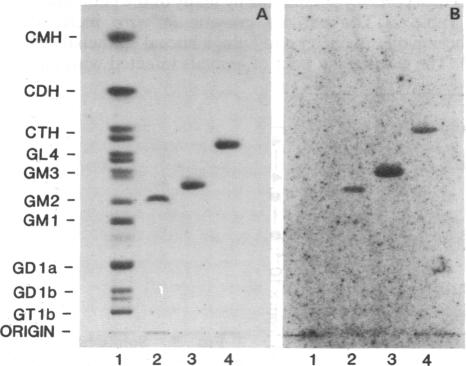
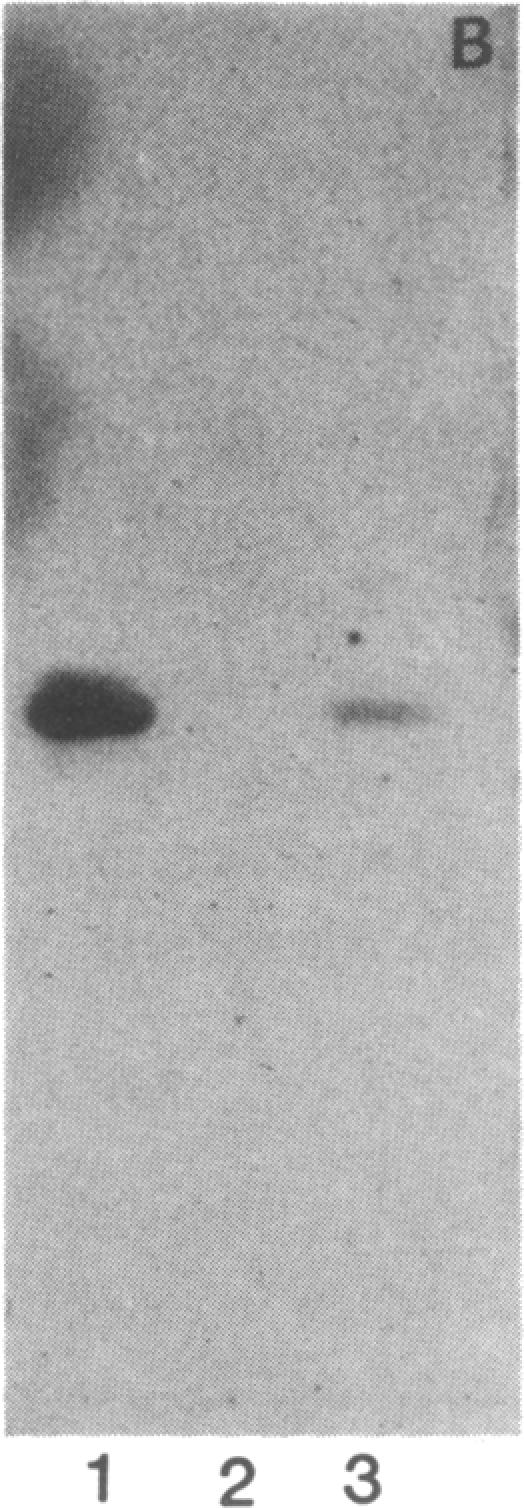
Pneumonia is one of the most common causes of death from infectious disease in the United States. To examine the possible role of carbohydrates as adhesion receptors for infection, several pulmonary pathogenic bacteria were studied for binding to glycosphingolipids. Radiolabeled bacteria were layered on thin-layer chromatograms of separated glycosphingolipids, and bound bacteria were detected by autoradiography. The classic triad of infectious bacteria found in cystic fibrosis, Pseudomonas aeruginosa, Haemophilus influenzae, and Staphylococcus aureus, along with other bacteria commonly implicated in typical pneumonia, such as Streptococcus pneumoniae, Klebsiella pneumoniae, and certain Escherichia coli, bind specifically to fucosylasialo-GM1 (Fuc alpha 1-2Gal beta 1-3GalNAc beta 1-4Gal beta 1-4Cer), asialo-GM1 (Gal beta 1-3GalNAc beta 1-4Gal beta-1-4Galc beta 1-1Cer), and asialo-GM2 (GalNAc beta 1-4Gal beta 1-4Glc beta 1-1Cer). Bacteria maintained in nutrient medium bind better than the same cells suspended in buffer. They do not bind to galactosylceramide, glucosylceramide, lactosylceramide, trihexosylceramide, globoside, paragloboside, Forssman glycosphingolipid, or several other glycosphingolipids tested, including the gangliosides GM1, GM2, GM3, GD1a, GD1b, GT1b, and Cad. The finding that these pathogens do not bind to lactosylceramide suggests that beta 1-4-linked GalNAc, which is positioned internally in fucosylasialo-GM1 and asialo-GM1 and terminally in asialo-GM2, is required for binding. beta-N-Acetylgalactosamine itself, however, is not sufficient for binding, as the bacteria did not bind to globoside, which contains the terminal sequence GalNAc beta 1-3Gal. These data suggest that these bacteria require at least terminal or internal GalNAc beta 1-4Gal sequences unsubstituted with sialyl residues for binding. Other bacteria, including Mycoplasma pneumoniae, Streptococcus pyogenes, Salmonella species, and some E. coli, do not bind to the GalNAc beta 1-4Gal sequence. The biological relevance of these data is suggested by our finding that substantial amounts of asialo-GM1 occur in human lung tissue.
在美国,肺炎是传染病致死的最常见原因之一。为了研究碳水化合物作为感染黏附受体的可能作用,对几种肺部致病细菌与糖鞘脂的结合情况进行了研究。将放射性标记的细菌铺在分离的糖鞘脂薄层色谱上,通过放射自显影检测结合的细菌。在囊性纤维化中发现的典型感染细菌三联体,铜绿假单胞菌、流感嗜血杆菌和金黄色葡萄球菌,以及其他通常与典型肺炎有关的细菌,如肺炎链球菌、肺炎克雷伯菌和某些大肠杆菌,都能特异性结合岩藻糖基唾液酸神经节苷脂(Fucα1-2Galβ1-3GalNAcβ1-4Galβ1-4Cer)、唾液酸神经节苷脂(Galβ1-3GalNAcβ1-4Galβ-1-4Galcβ1-1Cer)和唾液酸神经节苷脂(GalNAcβ1-4Galβ1-4Glcβ1-1Cer)。在营养培养基中培养的细菌比悬浮在缓冲液中的相同细胞结合得更好。它们不与半乳糖神经酰胺、葡萄糖神经酰胺、乳糖神经酰胺、三己糖神经酰胺、球蛋白、副球蛋白、福斯曼糖鞘脂或其他几种测试的糖鞘脂结合,包括神经节苷脂GM1、GM2、GM3、GD1a、GD1b、GT1b和Cad。这些病原体不与乳糖神经酰胺结合的发现表明,位于岩藻糖基唾液酸神经节苷脂和唾液酸神经节苷脂内部以及唾液酸神经节苷脂末端的β1-4连接的GalNAc是结合所必需的。然而,β-N-乙酰半乳糖胺本身不足以结合,因为细菌不与含有末端序列GalNAcβ1-3Gal的球蛋白结合。这些数据表明,这些细菌需要至少末端或内部未被唾液酸残基取代的GalNAcβ1-4Gal序列才能结合。其他细菌,包括肺炎支原体、化脓性链球菌、沙门氏菌属和一些大肠杆菌,不与GalNAcβ1-4Gal序列结合。我们发现人肺组织中存在大量唾液酸神经节苷脂,这表明了这些数据的生物学相关性。