Polsky Michael B, Moraveji Neema
Pulmonary Associates of Richmond, Spire Health, United States.
Respir Med Case Rep. 2021;33:101436. doi: 10.1016/j.rmcr.2021.101436. Epub 2021 Jun 15.
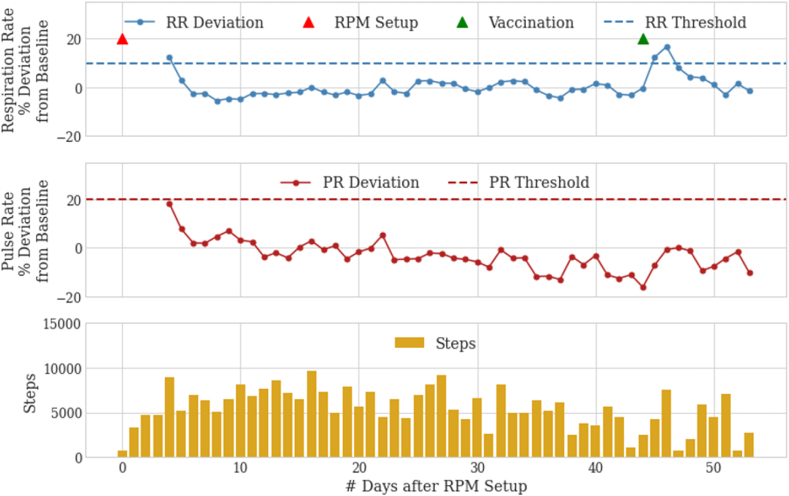
Hospital discharge planning can be complex and hospital space is often limited. Patients, including those with COVID-19, can have prolonged symptoms after discharge and often require ongoing monitoring. Furthermore, prolonging hospital stays primarily for monitoring can expose patients to iatrogenic and infectious risks. The patient's overall condition and their home support system factor into the decisions of when and where to discharge patients. Innovations in remote patient monitoring (RPM) now allow for more options in the discharge process. This case report presents a patient with severe COVID-19 pneumonia where RPM was used at discharge to improve home monitoring and clinical follow-up. Additional experience with RPM is necessary to refine its role in post-acute care monitoring.
医院出院计划可能很复杂,而且医院空间通常有限。患者,包括新冠肺炎患者,出院后可能会有持续的症状,往往需要持续监测。此外,主要为了监测而延长住院时间可能会使患者面临医源性和感染风险。患者的整体状况及其家庭支持系统是决定患者何时何地出院的因素。远程患者监测(RPM)的创新现在为出院过程提供了更多选择。本病例报告介绍了一名患有严重新冠肺炎肺炎的患者,出院时使用了RPM以改善家庭监测和临床随访。需要更多关于RPM的经验来完善其在急性后期护理监测中的作用。