School of Medicine, University of Electronic Science and Technology of China, Chengdu, China.
Department of Pharmacy, Sichuan Academy of Medical Sciences & Sichuan Provincial People's Hospital, Personalized Drug Therapy Key Laboratory of Sichuan Province, Chengdu, China.
J Oncol Pharm Pract. 2022 Oct;28(7):1487-1498. doi: 10.1177/10781552211023571. Epub 2021 Jun 24.
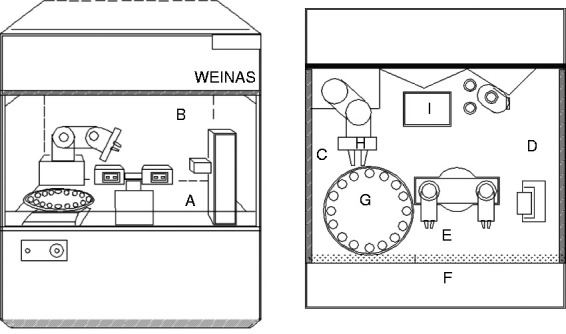
The aims of the study were to evaluate the external contamination of hazardous drug vials used in Chinese hospitals and to compare environmental contamination generated by a robotic intelligent dispensing system (WEINAS) and a manual compounding procedure using a biological safety cabinet (BSC).
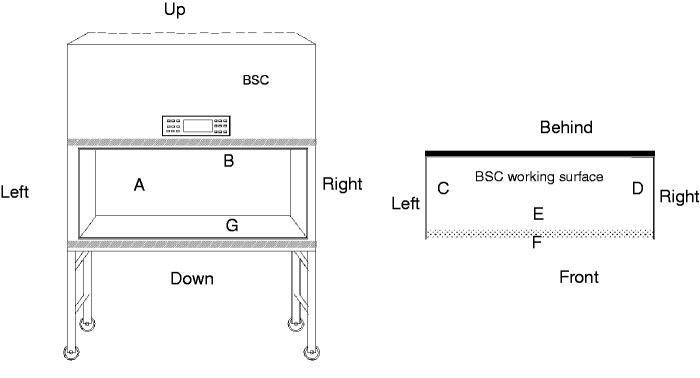
Cyclophosphamide, fluorouracil, and gemcitabine were selected as the representative hazardous drugs to monitor surface contamination of vials. In the comparative analysis of environmental contamination from manual and robotic compounding, wipe samples were taken from infusion bags, gloves, and the different locations of the BSC and the WEINAS robotic system. In this study, high-performance liquid chromatography coupled with double mass spectrometer (HPLC-MS/MS) was employed for sample analysis.
(1) External contamination was measured on vials of all three hazardous drugs. The contamination detected on fluorouracil vials was the highest with an average amount up to 904.33 ng/vial, followed by cyclophosphamide (43.51 ng/vial), and gemcitabine (unprotected vials of 5.92 ng/vial, protected vials of 0.66 ng/vial); (2) overall, the environmental contamination induced by WEINAS robotic compounding was significantly reduced compared to that by manual compounding inside the BSC. Particularly, compared with manual compounding, the surface contamination on the infusion bags during robotic compounding was nearly nine times lower for cyclophosphamide (10.62 ng/cm vs 90.43 ng/cm), two times lower for fluorouracil (3.47 vs 7.52 ng/cm), and more than 23 times lower for gemcitabine (2.61 ng/cm vs 62.28 ng/cm).
The external contamination occurred extensively on some hazardous drug vials that commonly used in Chinese hospitals. Comparison analysis for both compounding procedures revealed that robotic compounding can remarkably reduce environmental contamination.
本研究旨在评估中国医院使用的危险药物小瓶的外部污染情况,并比较使用机器人智能分配系统(WEINAS)和生物安全柜(BSC)进行手动配药时产生的环境污染。
选择环磷酰胺、氟尿嘧啶和吉西他滨作为代表性的危险药物,监测小瓶的表面污染情况。在手动和机器人混合的环境污染比较分析中,从输液袋、手套和 BSC 以及 WEINAS 机器人系统的不同位置采集擦拭样本。在本研究中,采用高效液相色谱-串联质谱(HPLC-MS/MS)进行样品分析。
(1)对三种危险药物的小瓶进行了外部污染测量。氟尿嘧啶小瓶检测到的污染最高,平均达到 904.33ng/vial,其次是环磷酰胺(43.51ng/vial)和吉西他滨(未保护小瓶为 5.92ng/vial,保护小瓶为 0.66ng/vial);(2)总体而言,与在 BSC 内进行手动混合相比,WEINAS 机器人混合产生的环境污染显著降低。特别是与手动混合相比,机器人混合时输液袋的表面污染对于环磷酰胺降低了近 9 倍(10.62ng/cm 对 90.43ng/cm),对于氟尿嘧啶降低了 2 倍(3.47ng/cm 对 7.52ng/cm),对于吉西他滨降低了 23 倍以上(2.61ng/cm 对 62.28ng/cm)。
在中国医院常用的一些危险药物小瓶上广泛发生了外部污染。两种混合程序的比较分析表明,机器人混合可以显著减少环境污染。