Xie Yi, Liu Shuai, Chen Xue-Jiao, Yu Hai-Han, Yang Yuan, Wang Wei
Department of Neurology, Tongji Hospital, Tongji Medical College, Huazhong University of Science and Technology, Wuhan, China.
Reproductive Medicine Center, Tongji Hospital, Tongji Medicine College, Huazhong University of Science and Technology, Wuhan, China.
Front Psychiatry. 2021 Jun 7;12:664499. doi: 10.3389/fpsyt.2021.664499. eCollection 2021.
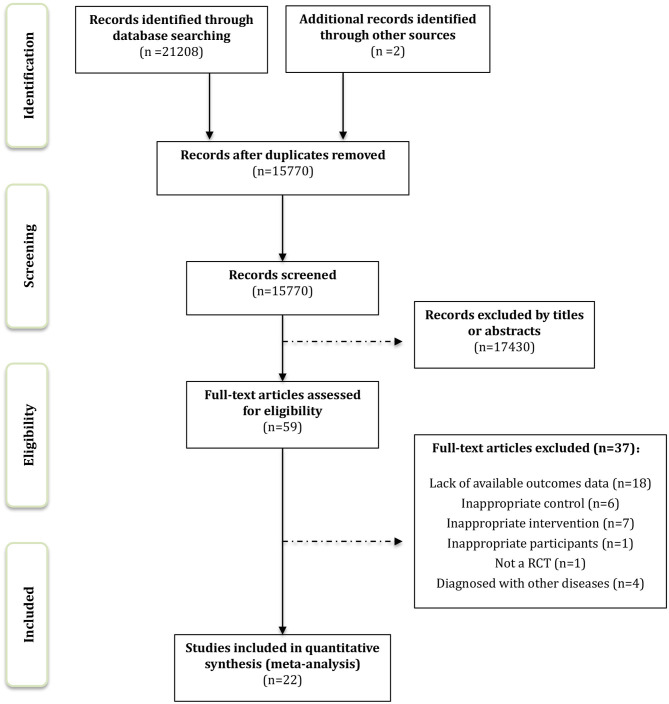
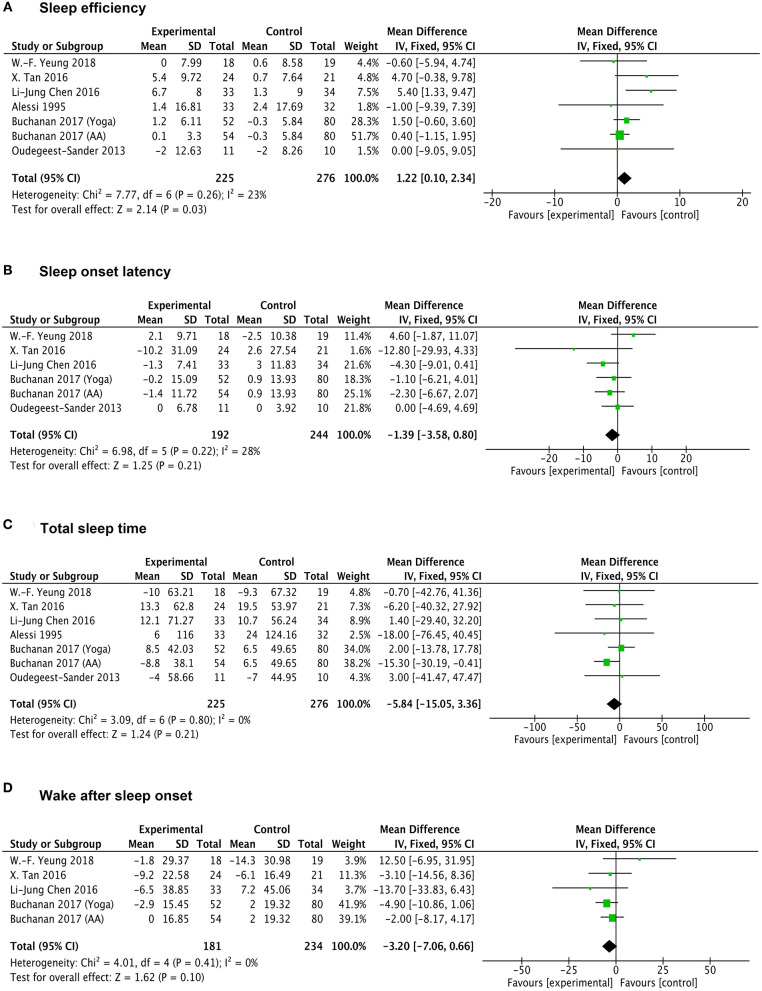
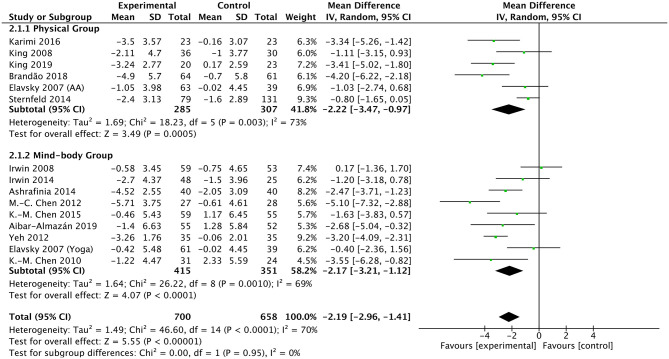
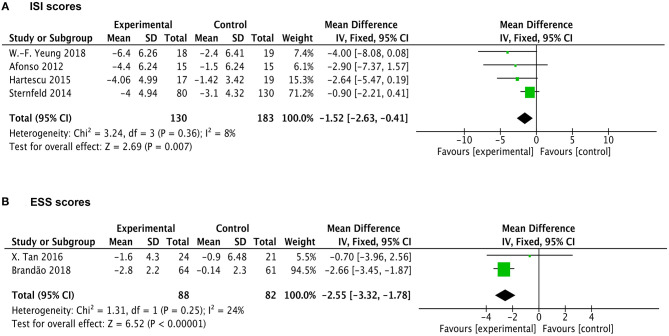
We conducted a meta-analysis to assess the effects of different regular exercise (lasting at least 2 months on a regular basis) on self-reported and physiological sleep quality in adults. Varied exercise interventions contained traditional physical exercise (e.g., walking, cycling) and mind-body exercise characterized by gentle exercise with coordination of the body (e.g., yoga). Procedures followed the Preferred Reporting Items for Systematic Reviews and Meta-Analyses (PRISMA) guidelines. Systematical searches were conducted in three electronic databases (PubMed, Embase, and Web of Science) for relevant research that involved adult participants without pathological diseases receiving exercise intervention. The search strategy was based on the population, intervention, comparison, and outcome study design (PICOS) framework. The self-reported outcomes included varied rating scales of Pittsburgh Sleep Quality Index (PSQI), Insomnia Severity Index (ISI), and Epworth Sleepiness Scale (ESS). Subgroup meta-analyses of PSQI scores were conducted based on type of exercise, duration of intervention, and participants' age and gender. The physiological outcomes were measured by Actigraph. All meta-analyses were performed in a fixed or random statistic model using Revman software. Twenty-two randomized controlled trials were included in the analysis. The overall analysis on subjective outcomes suggests that exercise interventions significantly improved sleep quality in adults compared with control interventions with lower PSQI (MD -2.19; 95% CI -2.96 to -1.41), ISI (MD -1.52; 95% CI -2.63 to -0.41), and ESS (MD -2.55; 95% CI -3.32 to -1.78) scores. Subgroup analyses of PSQI scores showed both physical and mind-body exercise interventions resulted in improvements of subjective sleep to the same extent. Interestingly, short-term interventions (≤3 months) had a significantly greater reduction in sleep disturbance vs. long-term interventions (>3 months). Regarding physiological sleep, few significant effects were found in various sleep parameters except the increased sleep efficiency in the exercise group vs. control group. Results of this systematic review suggest that regular physical as well as mind-body exercise primarily improved subjective sleep quality rather than physiological sleep quality in adults. Specifically, self-reported sleep quality, insomnia severity, and daytime sleepiness could be improved or ameliorated with treatment of exercise, respectively, evaluated by PSQI, ISI, and ESS sleep rating scales.
我们进行了一项荟萃分析,以评估不同的规律运动(定期持续至少2个月)对成年人自我报告的睡眠质量和生理睡眠质量的影响。各种运动干预措施包括传统体育锻炼(如散步、骑自行车)和以身体协调的温和运动为特征的身心运动(如瑜伽)。研究程序遵循系统评价和荟萃分析的首选报告项目(PRISMA)指南。在三个电子数据库(PubMed、Embase和Web of Science)中进行了系统检索,以查找涉及无病理性疾病的成年参与者接受运动干预的相关研究。检索策略基于人群、干预、对照和结局研究设计(PICOS)框架。自我报告的结局包括匹兹堡睡眠质量指数(PSQI)、失眠严重程度指数(ISI)和爱泼华嗜睡量表(ESS)的各种评分量表。基于运动类型、干预持续时间以及参与者的年龄和性别,对PSQI评分进行了亚组荟萃分析。生理结局通过活动记录仪进行测量。所有荟萃分析均使用Revman软件在固定或随机统计模型中进行。分析纳入了22项随机对照试验。对主观结局的总体分析表明,与对照干预相比,运动干预显著改善了成年人的睡眠质量,PSQI(MD -2.19;95%CI -2.96至-1.41)、ISI(MD -1.52;95%CI -2.63至-0.41)和ESS(MD -2.55;95%CI -3.32至-1.78)评分更低。PSQI评分的亚组分析表明,体育锻炼和身心运动干预在同等程度上改善了主观睡眠。有趣的是,与长期干预(>3个月)相比,短期干预(≤3个月)对睡眠干扰的降低幅度显著更大。关于生理睡眠,除了运动组与对照组相比睡眠效率提高外,在各种睡眠参数中未发现显著影响。这项系统评价的结果表明,规律的体育锻炼以及身心运动主要改善了成年人的主观睡眠质量,而非生理睡眠质量。具体而言,通过PSQI、ISI和ESS睡眠评分量表评估,运动治疗分别可以改善或减轻自我报告的睡眠质量、失眠严重程度和日间嗜睡情况。