Lab of Lighting and Physio-Psychological Health, National Center for International Research on Green Optoelectronics, South China Normal University, Guangzhou, China.
Guangdong Provincial Key Laboratory of Optical Information Materials and Technology & Institute of Electronic Paper Displays, South China Academy of Advanced Optoelectronics, South China Normal University, Guangzhou, China.
Front Public Health. 2021 Jun 7;9:652849. doi: 10.3389/fpubh.2021.652849. eCollection 2021.
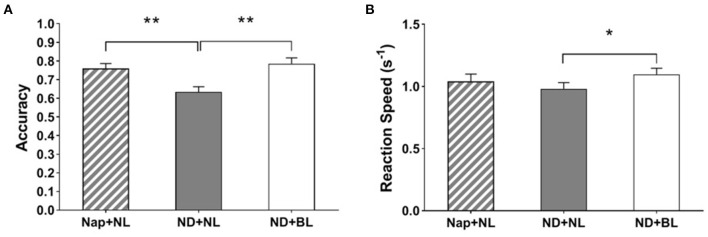
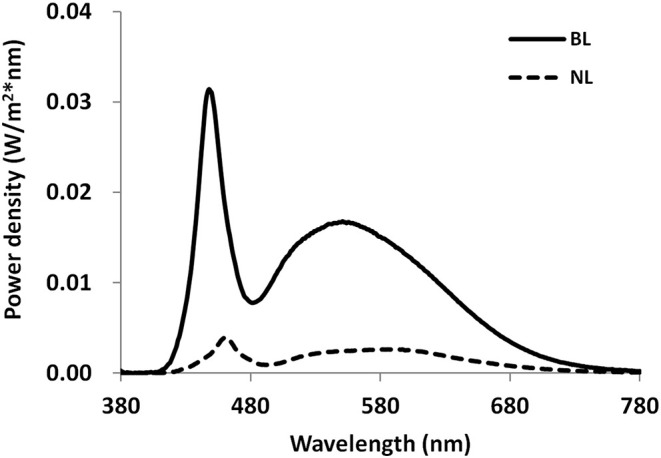
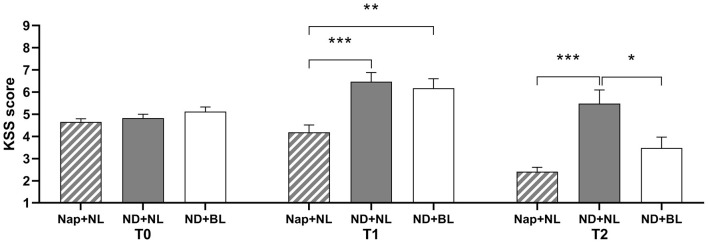
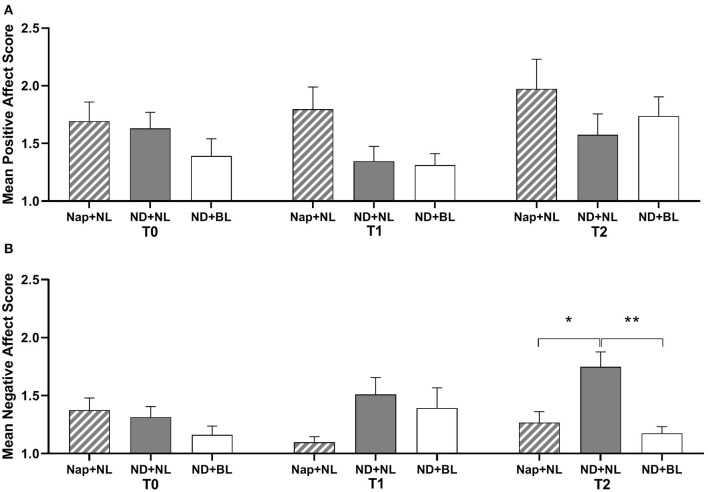
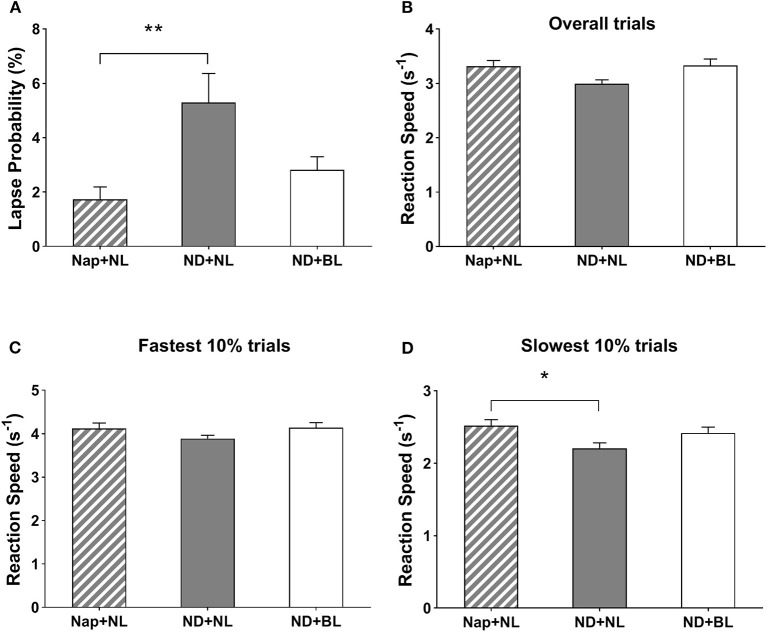
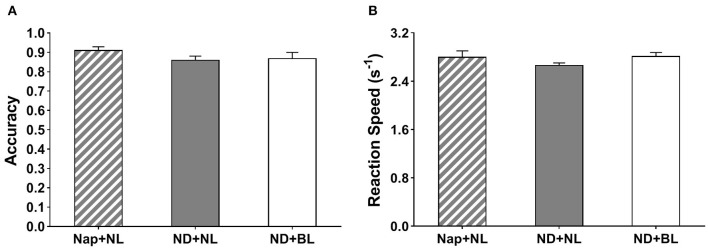
The post-lunch dip in alertness and performance was widely experienced during the early afternoon. Taking a short nap was documented as a practical strategy for habitual nappers to counteract the decline of alertness and performance. Yet, it remains unknown whether bright light exposure in the early afternoon working hours could alleviate the performance deficits caused by a post-lunch nap loss for habitual nappers. Seventeen undergraduate students who had a long-term habit of taking a post-lunch nap were assigned to three interventions: (1) a short nap + normal indoor light (100 lx, 4,000 K at eye level); (2) no nap + normal indoor light, and (3) no nap + blue-enriched bright light (1,000 lx, 6,500 K at eye level), in which subjective alertness (Karolinska Sleepiness Scale, KSS), mood (Positive and Negative Affect Schedule, PANAS), and task performance in sustained attention (psychomotor vigilance test, PVT), response inhibition (go/no-go task), and working memory (paced visual serial addition test, PVSAT) were measured. Results showed that a post-lunch nap deprivation significantly increased subjective sleepiness and negative mood and impaired performance in PVT and PVSAT, while exposure to bright blue-enriched white light vs. normal indoor light in the early afternoon significantly relieved such negative effects on mood, sleepiness, and performance in PVSAT; subjective positive mood and performance in PVT and go/no-go task remained unaffected with light intervention. These findings suggested that bright blue-enriched white light exposure could be a potential strategy for those who are suffering from drowsiness and low working memory following a habitual midday nap loss.
午后警觉度和表现的下降在午后早期被广泛体验到。小睡被记录为习惯性午睡者的一种实用策略,以抵消警觉度和表现的下降。然而,目前尚不清楚在午后工作时间暴露在明亮的光线下是否可以缓解习惯性午睡者因午睡损失而导致的表现缺陷。17 名有长期午后小睡习惯的本科生被分配到三种干预措施中:(1)小睡+正常室内光(100 lx,6500 K 眼部水平);(2)无小睡+正常室内光,以及(3)无小睡+富含蓝光的明亮光(1000 lx,6500 K 眼部水平),其中主观警觉度(Karolinska 睡眠量表,KSS)、情绪(积极和消极情绪量表,PANAS)以及持续注意力任务表现(精神运动警觉性测试,PVT)、反应抑制(go/no-go 任务)和工作记忆( paced visual serial addition test,PVSAT)。结果表明,午后小睡剥夺显著增加了主观困倦和负性情绪,并损害了 PVT 和 PVSAT 的表现,而在午后早期暴露于富含蓝光的白光与正常室内光相比,显著缓解了对 PVSAT 中情绪、困倦和表现的负面影响;主观积极情绪和 PVT 及 go/no-go 任务的表现不受光照干预的影响。这些发现表明,在习惯性午睡损失后出现困倦和工作记忆下降的人群中,暴露于富含蓝光的白光可能是一种潜在策略。