Graduate School of Anhui Medical University, Hefei, 230032, People's Republic of China.
Beijing Institute of Microbiology and Epidemiology, State Key Laboratory of Pathogen and Biosecurity, 20 Dong-Da Street, Fengtai District, Beijing, 100071, People's Republic of China.
Infect Dis Poverty. 2021 Jun 29;10(1):90. doi: 10.1186/s40249-021-00877-6.
Severe fever with thrombocytopenia syndrome (SFTS), an emerging tickborne infectious disease caused by a novel banyangvirus (SFTS virus, SFTSV), was endemic in several Asian countries with a high mortality up to 30%. Until recently, SFTSV-associated re-infection have not been reported and investigated.
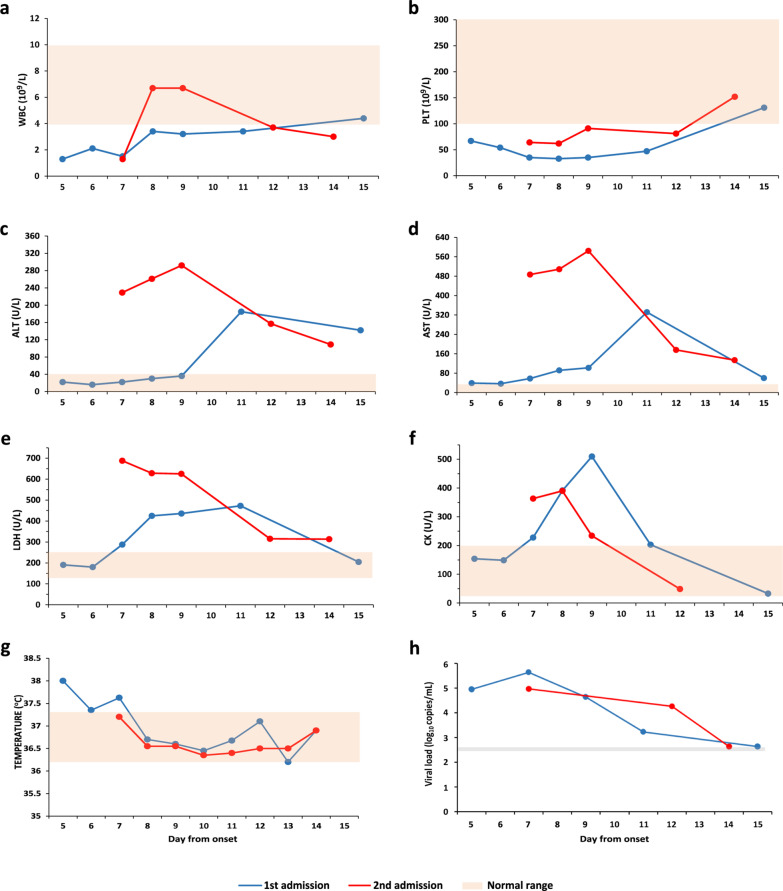
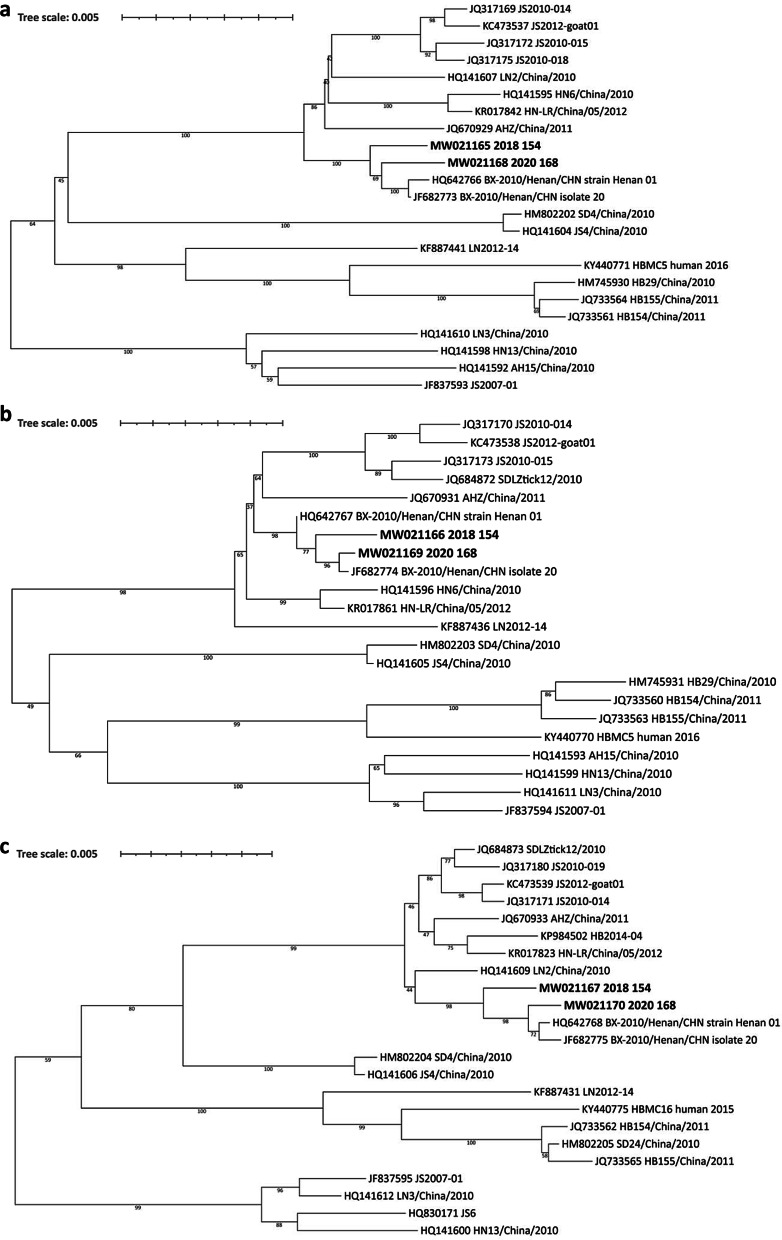
A 42-year-old female patient was identified as a case of SFTS with re-infection, with two episodes of SFTSV infection on June 2018 and May 2020. The diagnosis of SFTS was confirmed by detection of SFTSV RNA in the blood samples using real-time reverse-transcription polymerase chain reaction and antibodies specific for SFTSV using enzyme linked immunosorbent assay. The changes of viremia and antibody response differed between the two episodes. Phylogenetic analysis showed the two viral genome sequences were in the same clade, but showing 0.6% dissimilarity of the nearly whole nucleotide sequence. Analysis of clinical data revealed that the second episode showed milder illness than that of the first episode.
Epidemiological and clinical findings, viral whole genomic sequences, and serological evidence, provided evidence for the re-infection of SFTSV rather than prolonged viral shedding or relapse of the original infection. The patients with re-infection of SFTSV may be at high odds of clinically inapparent or mildly symptomatic. More attention should be directed towards the long-term follow up of the recovered patients in the future, to explicitly acquire the decay profile of their immunity response.
严重发热伴血小板减少综合征(SFTS)是一种由新型班岩病毒(SFTS 病毒,SFTSV)引起的新兴蜱传传染病,在多个亚洲国家流行,死亡率高达 30%。直到最近,SFTSV 相关再感染尚未被报道和研究。
一名 42 岁女性患者被确定为 SFTS 再感染病例,她于 2018 年 6 月和 2020 年 5 月两次感染 SFTSV。SFTS 的诊断通过实时逆转录聚合酶链反应检测血液样本中的 SFTSV RNA 和酶联免疫吸附试验检测 SFTSV 特异性抗体来确认。两次感染的病毒血症和抗体反应变化不同。系统进化分析显示,两个病毒基因组序列在同一分支内,但近全核苷酸序列存在 0.6%的差异。临床数据分析显示,第二次感染的病情比第一次感染轻。
流行病学和临床发现、病毒全基因组序列和血清学证据表明 SFTSV 发生了再感染,而不是病毒持续排出或原感染复发。SFTSV 再感染患者可能具有临床无明显症状或症状轻微的高风险。未来应更加关注康复患者的长期随访,明确获得其免疫反应的衰减特征。