Department of Crop Sciences, Research Institute of Organic Agriculture (FiBL), Frick, Switzerland.
Institute of Phytomedicine, University of Hohenheim, Stuttgart, Germany.
Sci Rep. 2021 Jun 29;11(1):13547. doi: 10.1038/s41598-021-92953-y.
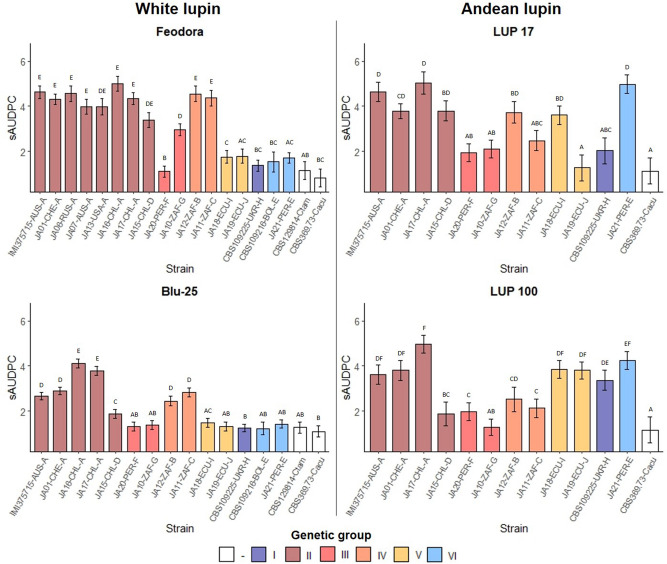
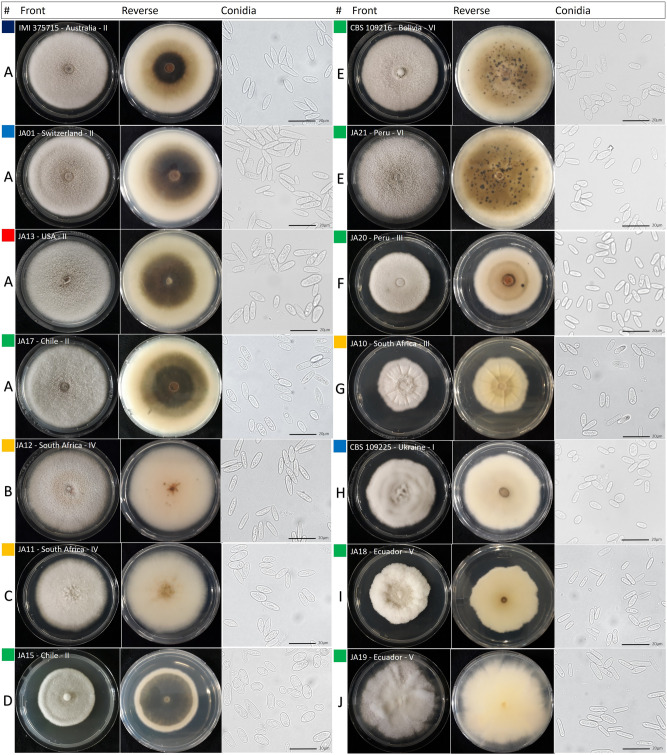
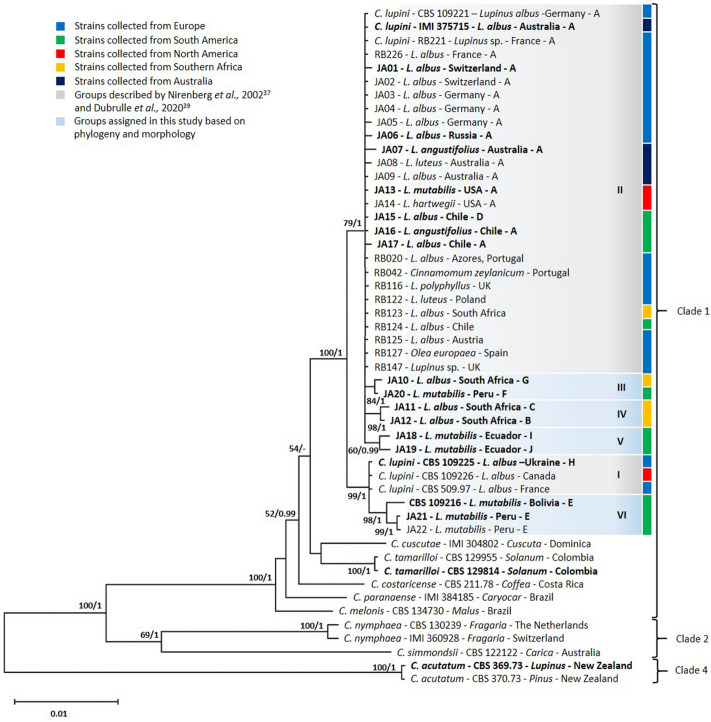
Lupin cultivation worldwide is threatened by anthracnose, a destructive disease caused by the seed- and air-borne fungal pathogen Colletotrichum lupini. In this study we explored the intraspecific diversity of 39 C. lupini isolates collected from different lupin cultivating regions around the world, and representative isolates were screened for their pathogenicity and virulence on white and Andean lupin. Multi-locus phylogeny and morphological characterizations showed intraspecific diversity to be greater than previously shown, distinguishing a total of six genetic groups and ten distinct morphotypes. Highest diversity was found across South America, indicating it as the center of origin of C. lupini. The isolates that correspond to the current pandemic belong to a genetic and morphological uniform group, were globally widespread, and showed high virulence on tested white and Andean lupin accessions. Isolates belonging to the other five genetic groups were mostly found locally and showed distinct virulence patterns. Two highly virulent strains were shown to overcome resistance of advanced white lupin breeding material. This stresses the need to be careful with international seed transports in order to prevent spread of currently confined but potentially highly virulent strains. This study improves our understanding of the diversity, phylogeography and pathogenicity of a member of one of the world's top 10 plant pathogen genera, providing valuable information for breeding programs and future disease management.
全世界的羽扇豆种植都受到炭疽病的威胁,炭疽病是一种由种子和空气传播的真菌病原体——炭疽菌引起的破坏性疾病。在这项研究中,我们探索了来自世界各地不同羽扇豆种植区的 39 个 C. lupini 分离株的种内多样性,代表性分离株被筛选其对白色和安第斯羽扇豆的致病性和毒性。多基因系统发育和形态特征表明种内多样性大于先前显示的多样性,总共区分出六个遗传群和十个不同的形态型。在南美洲发现了最高的多样性,表明其为 C. lupini 的起源中心。与当前大流行相关的分离株属于遗传和形态上统一的组,在全球范围内广泛分布,对测试的白色和安第斯羽扇豆品系表现出高毒性。属于其他五个遗传群的分离株主要在当地发现,表现出不同的毒性模式。两个高毒性菌株被证明能够克服先进的白色羽扇豆育成材料的抗性。这强调了在国际种子运输方面要小心谨慎,以防止目前局限但潜在高度毒性菌株的传播。这项研究提高了我们对世界十大植物病原体属之一的成员的多样性、系统地理学和致病性的认识,为育成计划和未来的疾病管理提供了有价值的信息。