Wagner Andrej, Zandanell Stephan, Kiesslich Tobias, Neureiter Daniel, Klieser Eckhard, Holzinger Josef, Berr Frieder
Department of Internal Medicine I, University Clinics Salzburg, Paracelsus Medical University, Müllner Hauptstrasse 48, 5020 Salzburg, Austria.
Laboratory for Tumour Biology and Experimental Therapies (TREAT), Center for Physiology, Pathophysiology and Biophysics-Salzburg and Nuremberg, Institute for Physiology and Pathophysiology-Salzburg, Paracelsus Medical University, 5020 Salzburg, Austria.
J Clin Med. 2021 Jun 25;10(13):2794. doi: 10.3390/jcm10132794.
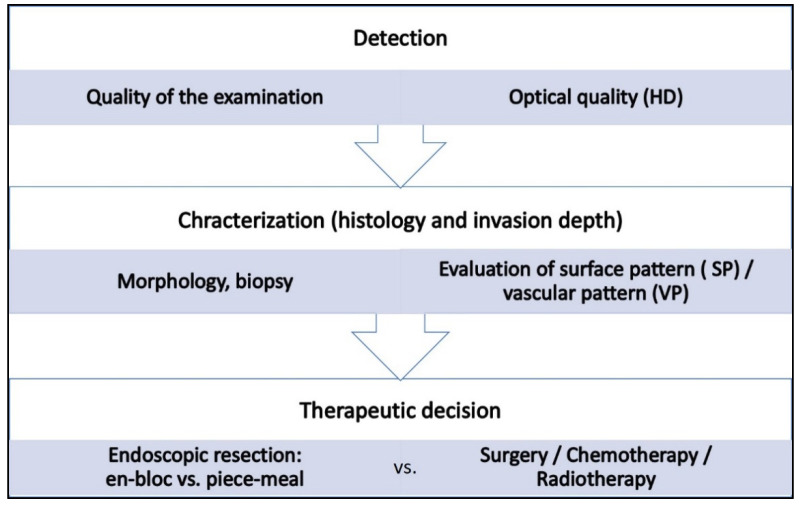
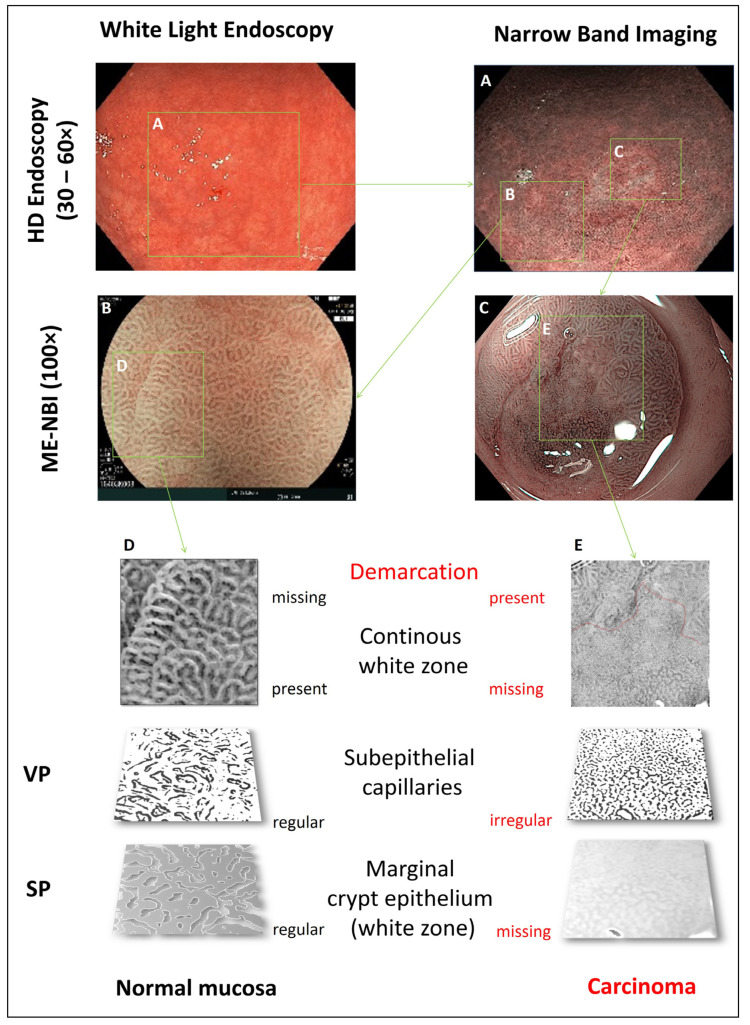
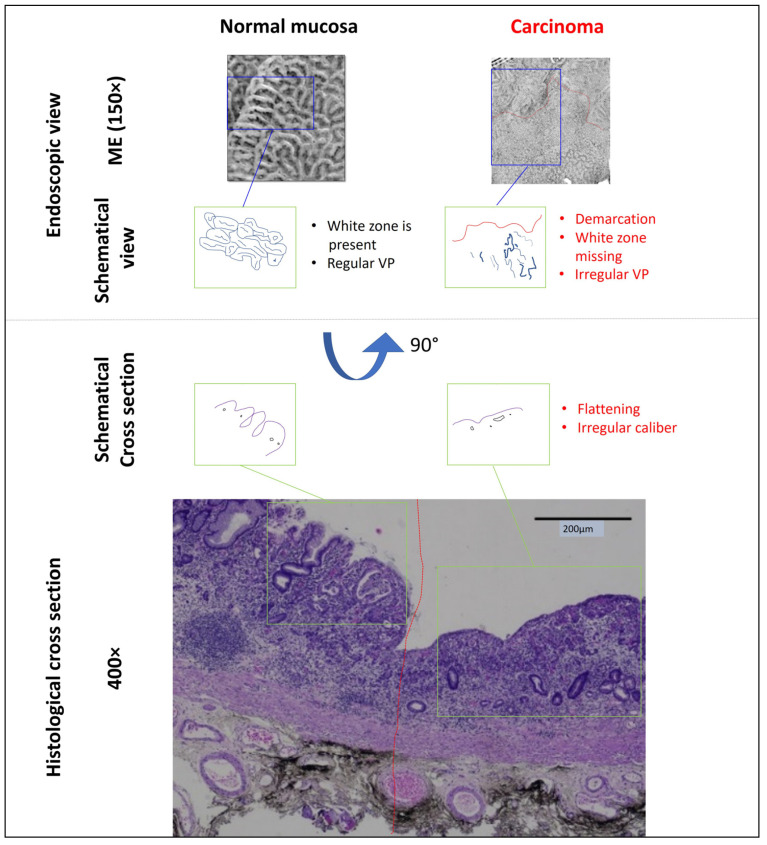
Meticulous endoscopic characterization of gastrointestinal neoplasias (GN) is crucial to the clinical outcome. Hereby the indication and type of resection (endoscopically, en-bloc or piece-meal, or surgical resection) are determined. By means of established image-enhanced (IEE) and magnification endoscopy (ME) GN can be characterized in terms of malignancy and invasion depth. In this context, the statistical evidence and accuracy of these diagnostic procedures should be elucidated. Here, we present a systematic review of the literature.
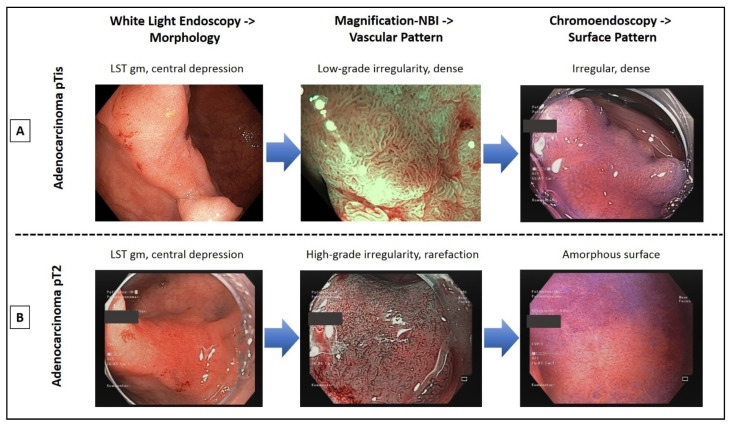
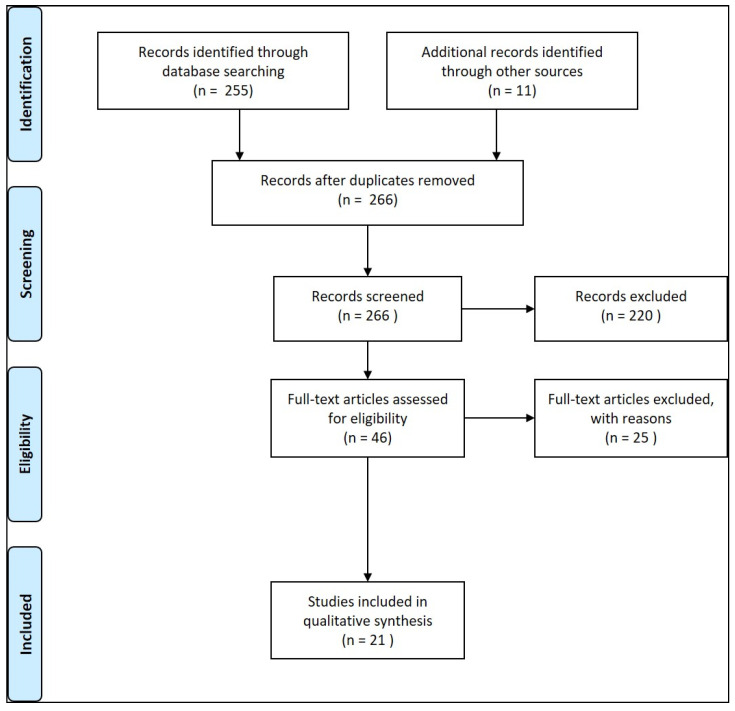
21 Studies could be found which met the inclusion criteria. In clinical prospective trials and meta-analyses, the diagnostic accuracy of >90% for characterization of malignant neoplasms could be documented, if ME with IEE was used in squamous cell esophageal cancer, stomach, or colonic GN.
Currently, by means of optical diagnosis, today's gastrointestinal endoscopy is capable of determining the histological subtype, exact lateral spread, and depth of invasion of a lesion. The prerequisites for this are an exact knowledge of the anatomical structures, the endoscopic classifications based on them, and a systematic learning process, which can be supported by training courses. More prospective clinical studies are required, especially in the field of Barrett's esophagus and duodenal neoplasia.
对胃肠道肿瘤(GN)进行细致的内镜特征描述对临床结果至关重要。据此确定切除的指征和类型(内镜下切除、整块切除或分片切除,或手术切除)。借助已确立的图像增强(IEE)和放大内镜(ME),可以从恶性程度和浸润深度方面对GN进行特征描述。在此背景下,应阐明这些诊断程序的统计学证据和准确性。在此,我们对文献进行了系统综述。
发现有21项研究符合纳入标准。在临床前瞻性试验和荟萃分析中,如果在鳞状细胞食管癌、胃癌或结肠GN中使用ME联合IEE,对恶性肿瘤特征描述的诊断准确率可达90%以上。
目前,通过光学诊断,当今的胃肠内镜能够确定病变的组织学亚型、确切的侧向扩散和浸润深度。做到这一点的前提是准确了解解剖结构、基于此的内镜分类以及系统的学习过程,培训课程可以对此提供支持。需要更多的前瞻性临床研究,尤其是在巴雷特食管和十二指肠肿瘤领域。