College of Information Science and Engineering, Northeastern University, Shenyang 110819, China.
College of Information Engineering, Shenyang University, Shenyang 110044, China.
Sensors (Basel). 2021 Jun 18;21(12):4182. doi: 10.3390/s21124182.
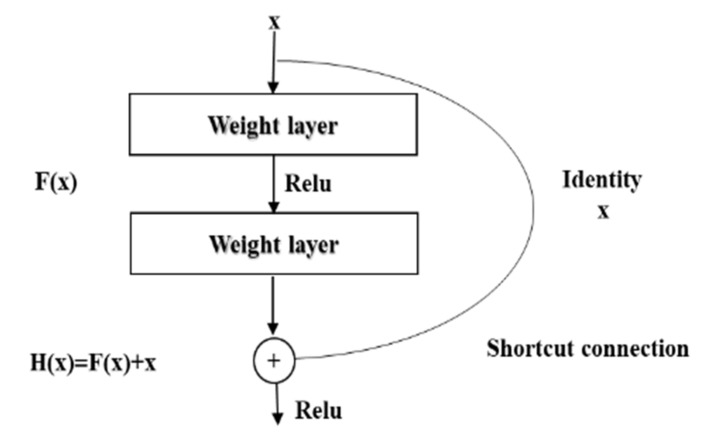
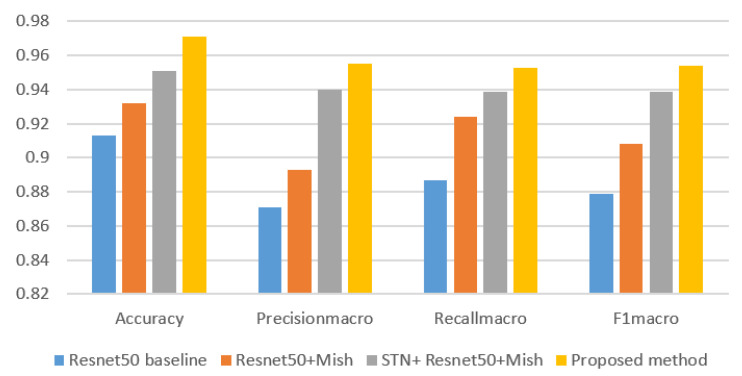
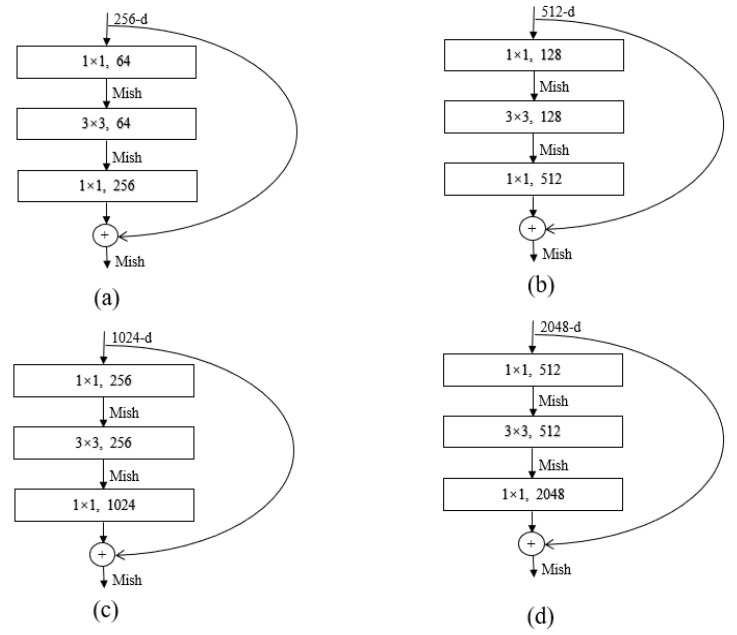
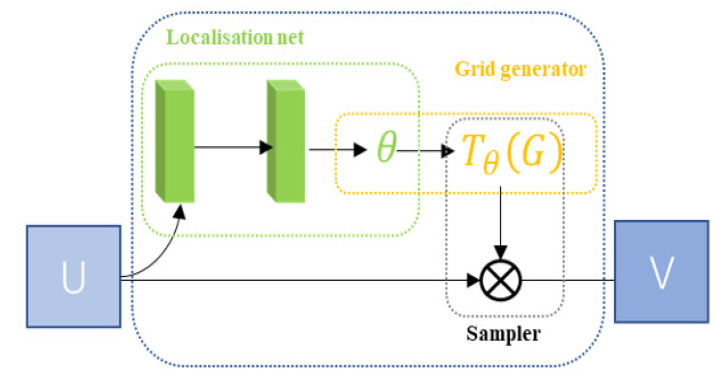
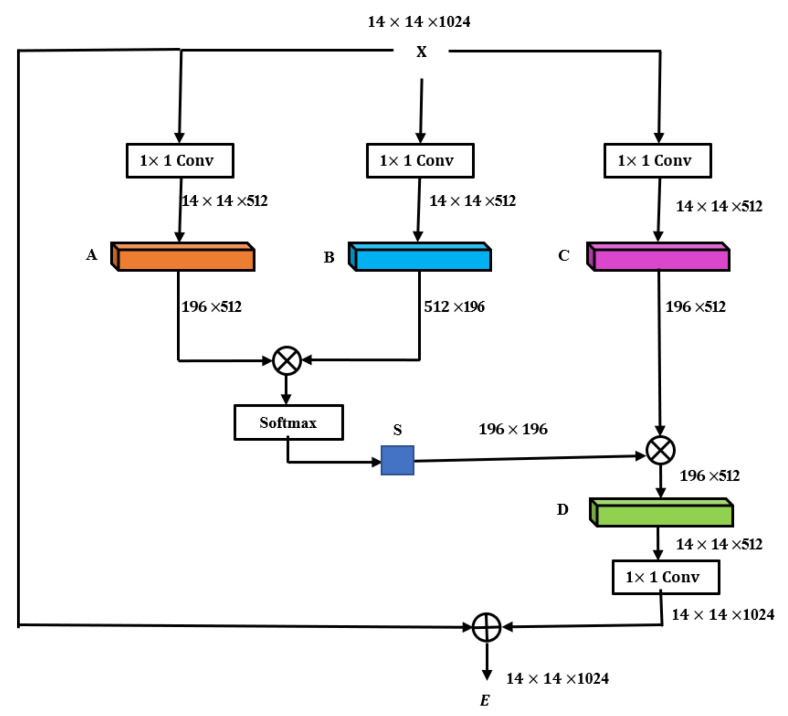
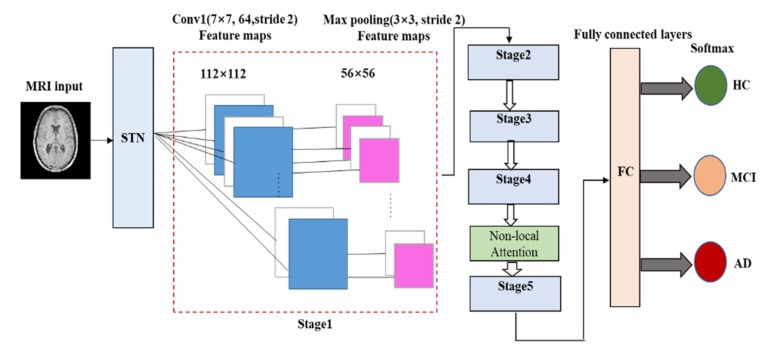
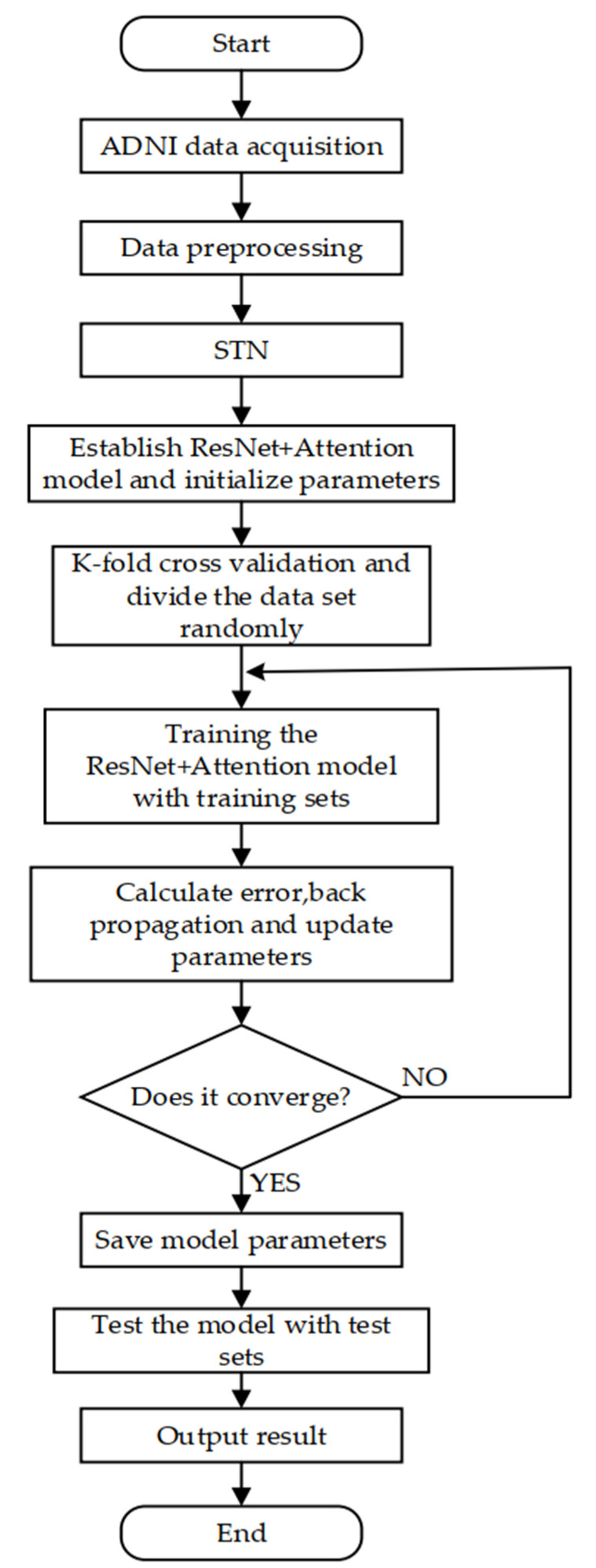
The early diagnosis of Alzheimer's disease (AD) can allow patients to take preventive measures before irreversible brain damage occurs. It can be seen from cross-sectional imaging studies of AD that the features of the lesion areas in AD patients, as observed by magnetic resonance imaging (MRI), show significant variation, and these features are distributed throughout the image space. Since the convolutional layer of the general convolutional neural network (CNN) cannot satisfactorily extract long-distance correlation in the feature space, a deep residual network (ResNet) model, based on spatial transformer networks (STN) and the non-local attention mechanism, is proposed in this study for the early diagnosis of AD. In this ResNet model, a new Mish activation function is selected in the ResNet-50 backbone to replace the Relu function, STN is introduced between the input layer and the improved ResNet-50 backbone, and a non-local attention mechanism is introduced between the fourth and the fifth stages of the improved ResNet-50 backbone. This ResNet model can extract more information from the layers by deepening the network structure through deep ResNet. The introduced STN can transform the spatial information in MRI images of Alzheimer's patients into another space and retain the key information. The introduced non-local attention mechanism can find the relationship between the lesion areas and normal areas in the feature space. This model can solve the problem of local information loss in traditional CNN and can extract the long-distance correlation in feature space. The proposed method was validated using the ADNI (Alzheimer's disease neuroimaging initiative) experimental dataset, and compared with several models. The experimental results show that the classification accuracy of the algorithm proposed in this study can reach 97.1%, the macro precision can reach 95.5%, the macro recall can reach 95.3%, and the macro F1 value can reach 95.4%. The proposed model is more effective than other algorithms.
阿尔茨海默病(AD)的早期诊断可以使患者在不可逆的脑损伤发生之前采取预防措施。从 AD 的横断面影像学研究可以看出,磁共振成像(MRI)观察到的 AD 患者病变区域的特征存在显著差异,这些特征分布在整个图像空间中。由于通用卷积神经网络(CNN)的卷积层不能令人满意地提取特征空间中的长距离相关性,因此本研究提出了一种基于空间变换网络(STN)和非局部注意机制的深度残差网络(ResNet)模型,用于 AD 的早期诊断。在该 ResNet 模型中,在 ResNet-50 主干中选择了新的 Mish 激活函数来替代 Relu 函数,在输入层和改进的 ResNet-50 主干之间引入了 STN,并在改进的 ResNet-50 主干的第四和第五阶段之间引入了非局部注意机制。该 ResNet 模型通过加深网络结构,通过深度 ResNet 从更深层次的网络结构中提取更多信息。引入的 STN 可以将 AD 患者 MRI 图像中的空间信息转换到另一个空间,并保留关键信息。引入的非局部注意机制可以在特征空间中找到病变区域和正常区域之间的关系。该模型可以解决传统 CNN 中存在的局部信息丢失问题,并提取特征空间中的长距离相关性。该方法使用 ADNI(阿尔茨海默病神经影像学倡议)实验数据集进行验证,并与几种模型进行了比较。实验结果表明,本研究提出的算法的分类准确率可达 97.1%,宏观精度可达 95.5%,宏观召回率可达 95.3%,宏观 F1 值可达 95.4%。与其他算法相比,所提出的模型更有效。