Department of Materials Science & Engineering, National Taiwan University of Science and Technology, Taipei 114, Taiwan,
Department of Otolaryngology-Head and Neck Surgery Tri-Service General Hospital, National Defense Medical Center No. 325, Sec. 2, Cheng-Gong Road, Neihu District, Taipei 114, Taiwan.
Tomography. 2022 Mar 7;8(2):718-729. doi: 10.3390/tomography8020059.
The traditional Lund-Mackay score (TLMs) is unable to subgrade the volume of inflammatory disease. We aimed to propose an effective modification and calculated the volume-based modified LM score (VMLMs), which should correlate more strongly with clinical symptoms than the TLMs.
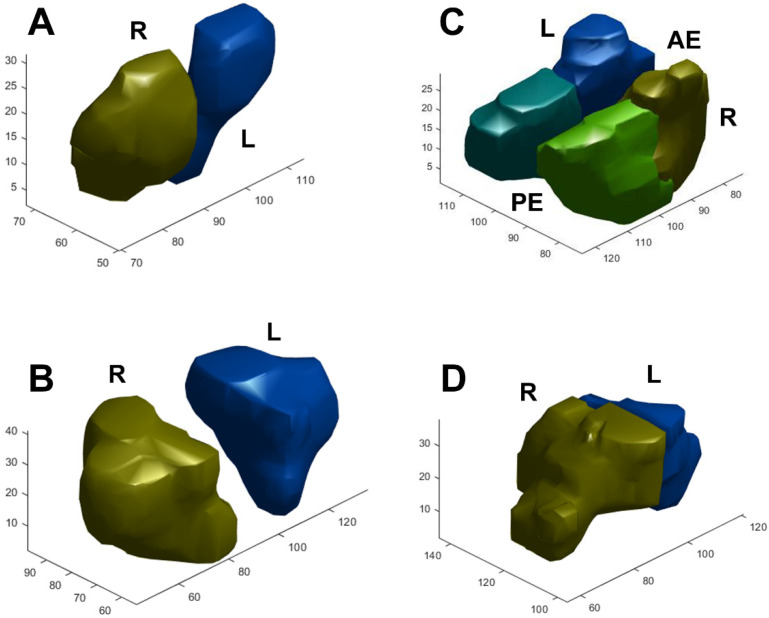
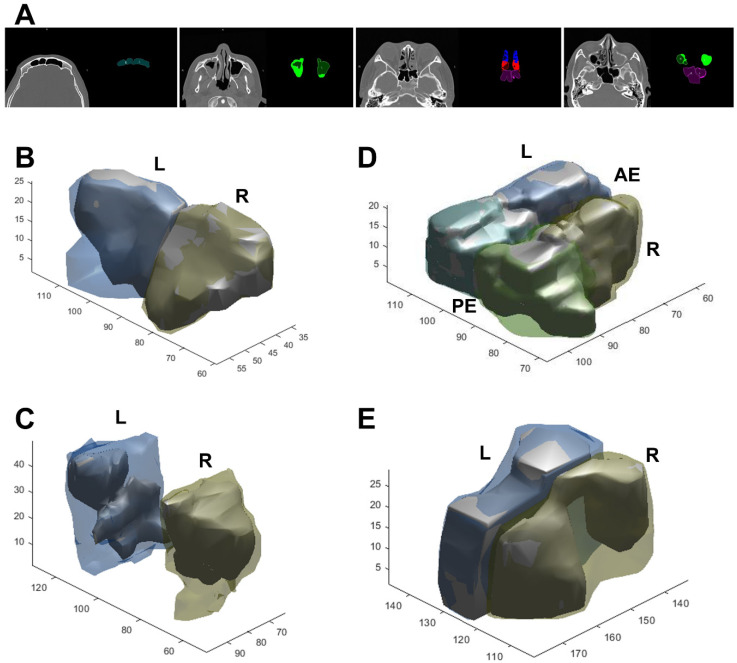
Semi-supervised learning with pseudo-labels used for self-training was adopted to train our convolutional neural networks, with the algorithm including a combination of MobileNet, SENet, and ResNet. A total of 175 CT sets, with 50 participants that would undergo sinus surgery, were recruited. The Sinonasal Outcomes Test-22 (SNOT-22) was used to assess disease-specific symptoms before and after surgery. A 3D-projected view was created and VMLMs were calculated for further comparison.
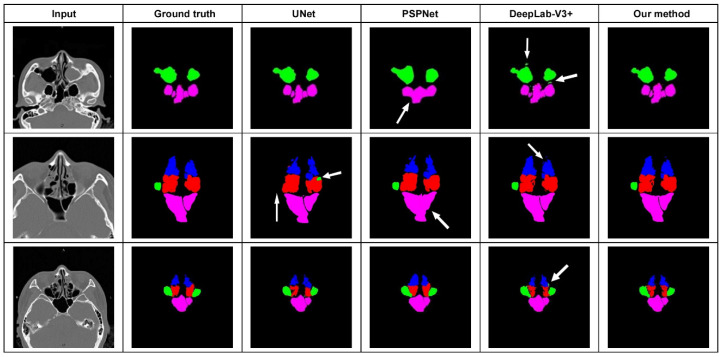
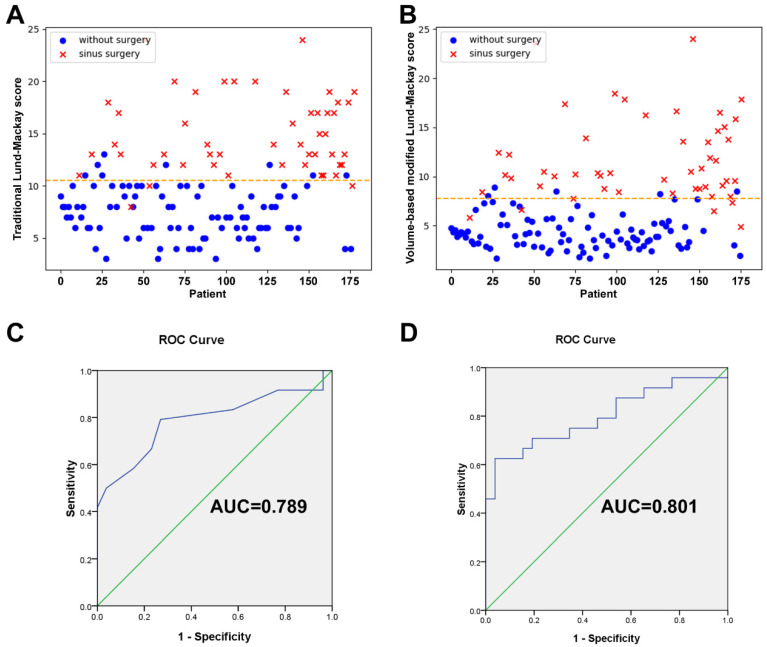
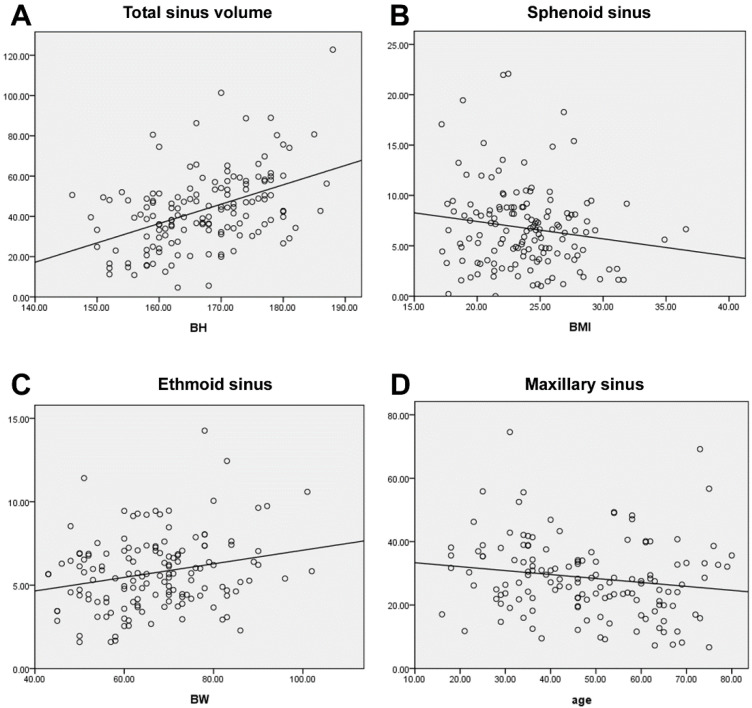
Our methods showed a significant improvement both in sinus classification and segmentation as compared to state-of-the-art networks, with an average Dice coefficient of 91.57%, an MioU of 89.43%, and a pixel accuracy of 99.75%. The sinus volume exhibited sex dimorphism. There was a significant positive correlation between volume and height, but a trend toward a negative correlation between maxillary sinus and age. Subjects who underwent surgery had significantly greater TLMs (14.9 vs. 7.38) and VMLMs (11.65 vs. 4.34) than those who did not. ROC-AUC analyses showed that the VMLMs had excellent discrimination at classifying a high probability of postoperative improvement with SNOT-22 reduction.
Our method is suitable for obtaining detailed information, excellent sinus boundary prediction, and differentiating the target from its surrounding structure. These findings demonstrate the promise of CT-based volumetric analysis of sinus mucosal inflammation.
传统的 Lund-Mackay 评分(TLMs)无法对炎症疾病的体积进行分级。我们旨在提出一种有效的改良方法,并计算基于体积的改良 LM 评分(VMLMs),该评分与临床症状的相关性应强于 TLM。
采用带有伪标签的半监督学习进行自训练,以训练我们的卷积神经网络,该算法包括 MobileNet、SENet 和 ResNet 的组合。共招募了 175 套 CT 扫描,其中 50 名参与者将接受鼻窦手术。使用鼻科疾病生活质量调查问卷-22 (SNOT-22)在手术前后评估疾病特异性症状。创建了 3D 投影视图,并计算了 VMLMs 以进行进一步比较。
与最先进的网络相比,我们的方法在鼻窦分类和分割方面都有显著提高,平均 Dice 系数为 91.57%,MioU 为 89.43%,像素准确率为 99.75%。鼻窦体积存在性别二态性。体积与身高呈显著正相关,但上颌窦与年龄呈负相关趋势。接受手术的患者的 TLM(14.9 比 7.38)和 VMLM(11.65 比 4.34)明显高于未接受手术的患者。ROC-AUC 分析表明,VMLM 对 SNOT-22 降低后术后改善的高概率具有良好的分类能力。
我们的方法适用于获取详细信息、出色的鼻窦边界预测以及区分目标与其周围结构。这些发现表明基于 CT 的鼻窦黏膜炎症容积分析具有广阔的应用前景。