Department of Plant and Microbial Biology, University of California, Berkeley, CA, USA.
ISME J. 2022 Jan;16(1):38-49. doi: 10.1038/s41396-021-01034-5. Epub 2021 Jul 2.
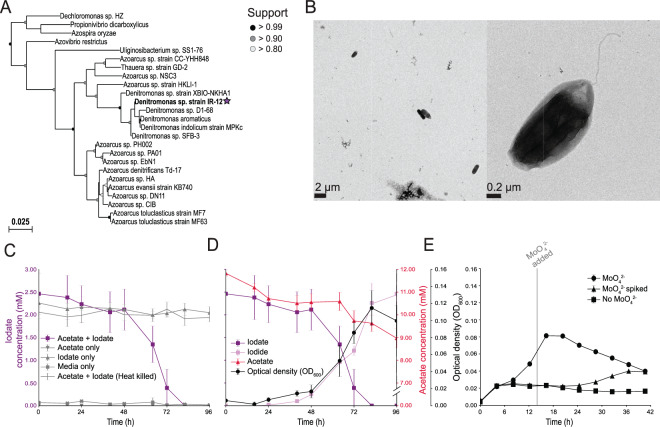
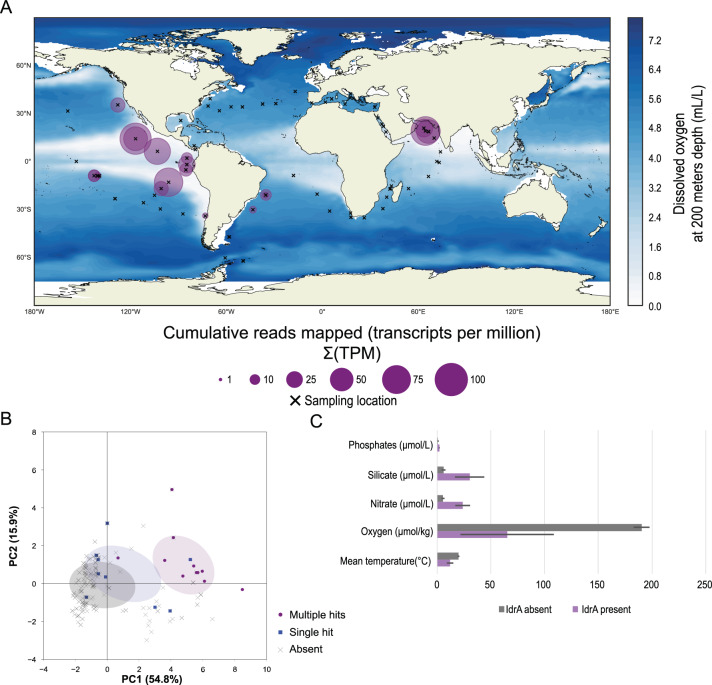
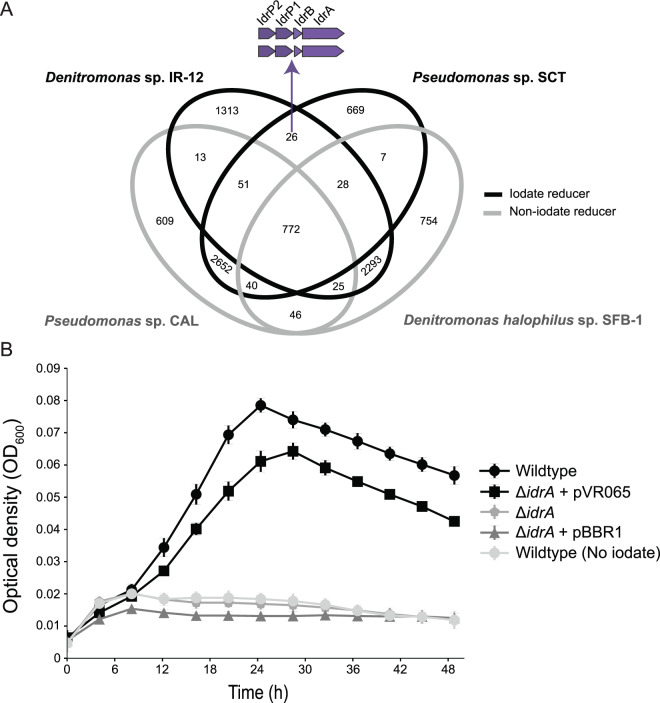
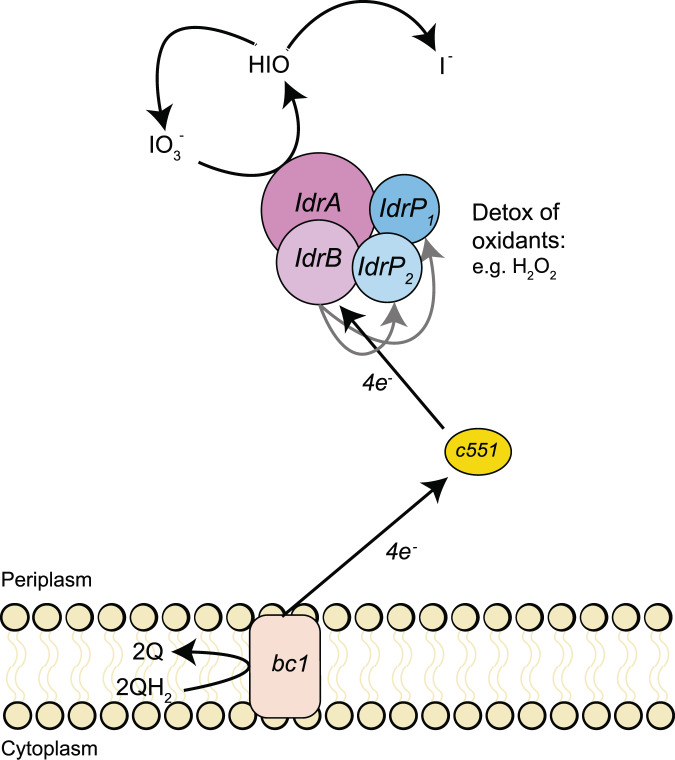
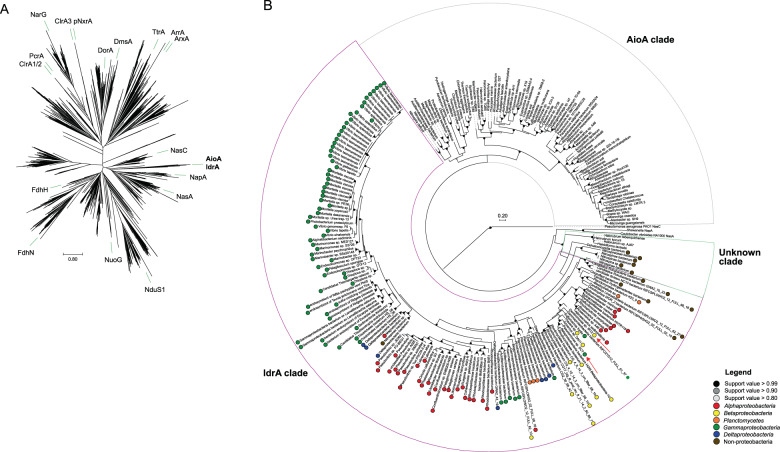
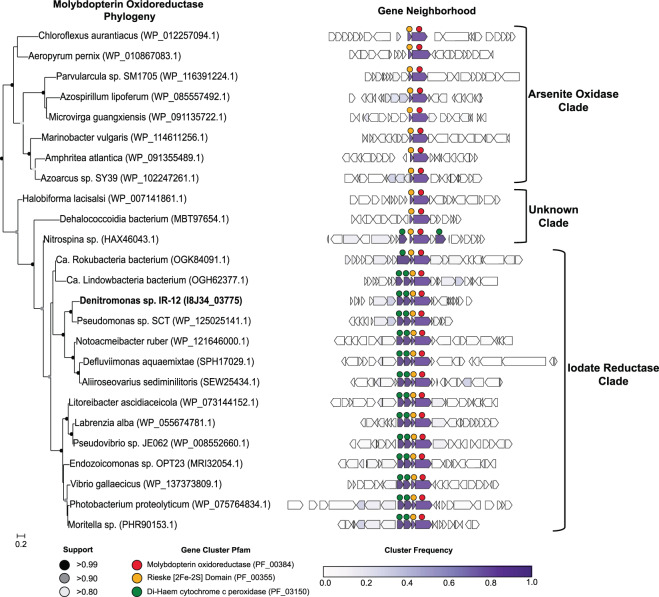
Iodine is oxidized and reduced as part of a biogeochemical cycle that is especially pronounced in the oceans, where the element naturally concentrates. The use of oxidized iodine in the form of iodate (IO) as an electron acceptor by microorganisms is poorly understood. Here, we outline genetic, physiological, and ecological models for dissimilatory IO reduction to iodide (I) by a novel estuarine bacterium, Denitromonas sp. IR-12. Our results show that dissimilatory iodate reduction (DIR) by strain IR-12 is molybdenum-dependent and requires an IO reductase (idrA) and likely other genes in a mobile cluster with a conserved association across known and predicted DIR microorganisms (DIRM). Based on genetic and physiological data, we propose a model where three molecules of IO are likely reduced to three molecules of hypoiodous acid (HIO), which rapidly disproportionate into one molecule of IO and two molecules of iodide (I), in a respiratory pathway that provides an energy yield equivalent to that of nitrate or perchlorate respiration. Consistent with the ecological niche expected of such a metabolism, idrA is enriched in the metagenome sequence databases of marine sites with a specific biogeochemical signature (high concentrations of nitrate and phosphate) and diminished oxygen. Taken together, these data suggest that DIRM help explain the disequilibrium of the IO:I concentration ratio above oxygen-minimum zones and support a widespread iodine redox cycle mediated by microbiology.
碘在生物地球化学循环中被氧化和还原,这在海洋中尤为明显,因为碘在海洋中自然浓缩。微生物利用氧化碘形式的碘酸盐(IO)作为电子受体的作用尚未得到充分理解。在这里,我们概述了一种新型河口细菌——Denitromonas sp.IR-12 对异化碘酸盐(IO)还原为碘化物(I)的遗传、生理和生态模型。我们的结果表明,菌株 IR-12 的异化碘酸盐还原(DIR)是钼依赖性的,需要一种 IO 还原酶(idrA)和可能在一个移动簇中的其他基因,该移动簇在已知和预测的 DIR 微生物(DIRM)中具有保守的关联。基于遗传和生理数据,我们提出了一个模型,其中三个 IO 分子可能被还原为三个次碘酸(HIO)分子,这些分子迅速歧化为一个 IO 分子和两个 I 分子,在一个呼吸途径中,该途径提供的能量产量与硝酸盐或高氯酸盐呼吸相当。与这种代谢所期望的生态位一致,idrA 在具有特定生物地球化学特征(高浓度硝酸盐和磷酸盐)和低氧的海洋地点的宏基因组序列数据库中富集。综上所述,这些数据表明 DIRM 有助于解释缺氧区上方 IO:I 浓度比的不平衡,并支持由微生物介导的广泛的碘氧化还原循环。