Eni Angela O, Efekemo Oghenevwairhe P, Onile-Ere Olabode A, Pita Justin S
Department of Biological Sciences, College of Science and Technology Covenant University Ota Nigeria.
West African Virus Epidemiology (WAVE) for Root and Tuber Crops Ota Nigeria.
Ann Appl Biol. 2021 May;178(3):466-479. doi: 10.1111/aab.12647. Epub 2020 Oct 19.
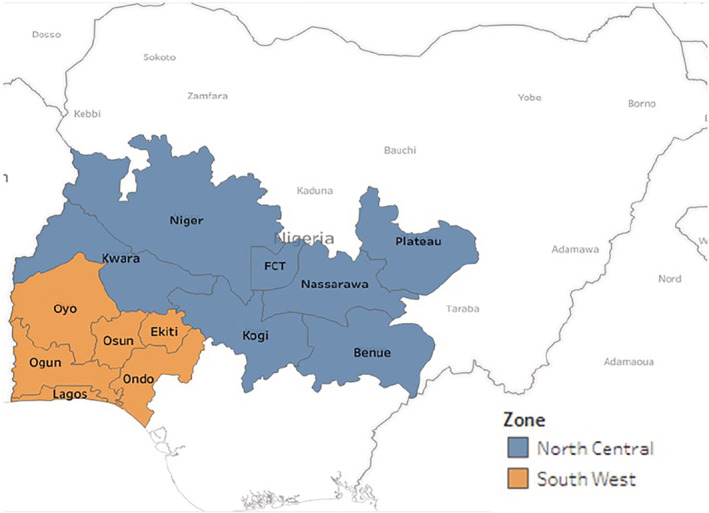
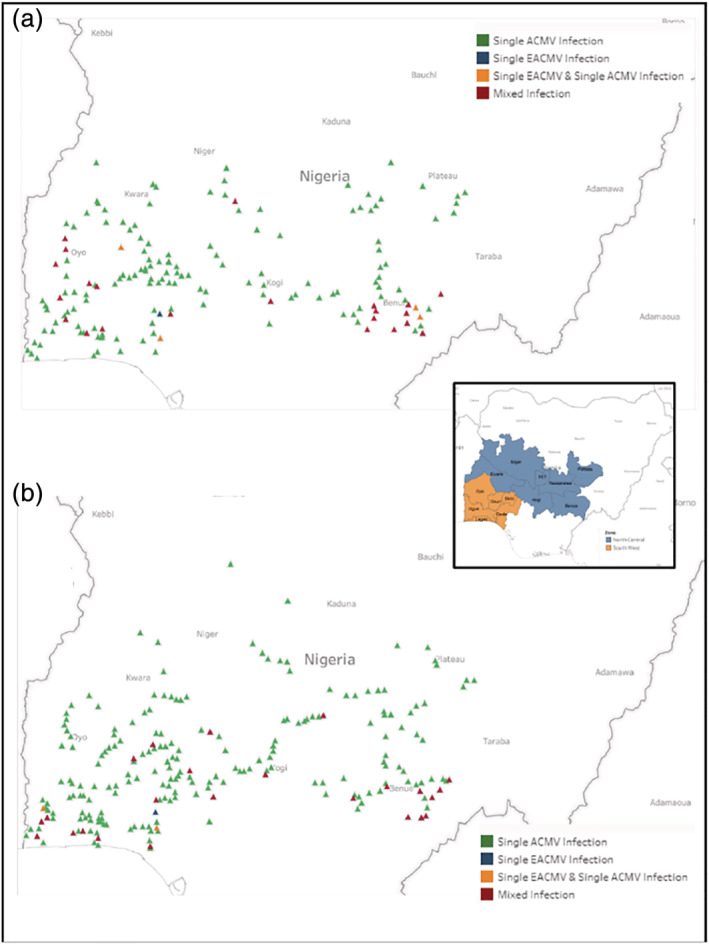
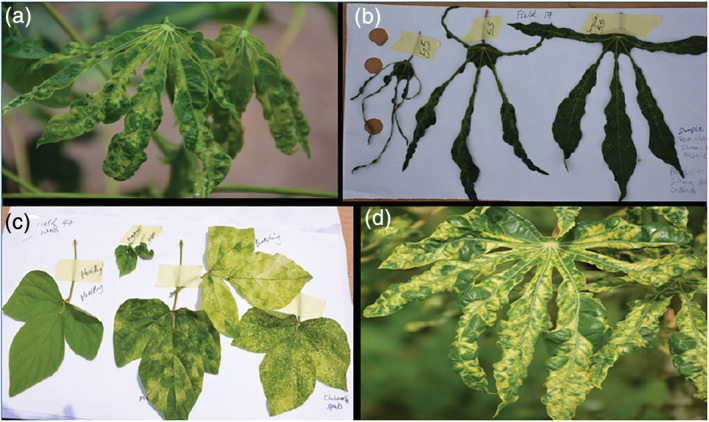
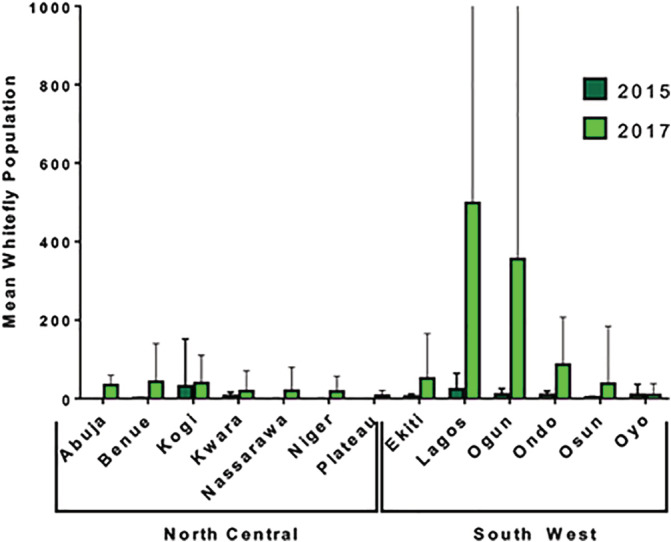
Cassava mosaic disease (CMD), caused by cassava mosaic begomoviruses (CMBs), is a major threat to cassava production in Nigeria. The predominant CMBs in Nigeria are African cassava mosaic virus (ACMV), East African cassava mosaic virus (EACMV) and East African cassava mosaic Cameroon virus (EACMCV), which are transmitted through infected stem cuttings and whitefly vectors. This study was conducted in 2015 and 2017 to assess the epidemiology of CMD and the current distribution of CMBs in cassava farms in South West (SW) and North Central (NC) Nigeria. A survey of cassava farms was undertaken, and samples representative of disease symptoms were collected and assessed using molecular techniques. A total of 184 and 328 cassava farms were sampled in 2015 and 2017, respectively. CMD incidence for both regions surveyed was 43.80 and 12.25% in 2015 and 2017, respectively. Fields in SW recorded a higher incidence rate in 2015 (SW: 45.11%, NC: 42.47%), while the reverse occurred in 2017 (SW: 10.90%, NC: 14.01%). Overall, the CMD incidence in Benue State (NC) was significantly higher than other locations surveyed in both years. CMD symptom severity and mean whitefly population were higher in SW Nigeria in the two survey years. ACMV was widespread across both zones, occurring in 79.1% (453/613) and 54.8% (386/704) of cassava leaf samples analysed in 2015 and 2017, respectively. EACMV was detected in only 6.0% (37/613) and 4.7% (33/704) of all cassava leaf samples analysed in 2015 and 2017, respectively. Overall, a higher proportion of infected samples were found in NC in both 2015 (NC: 85.2%, SW: 75.4%) and 2017 (NC: 73.6%, SW: 45.2%). Detection using strain-specific primers revealed that 97% of EACMV positive samples were indeed infected by the EACMCV strain of the virus. As previously reported, samples with mixed infections showed a higher symptom severity than samples with single ACMV or EACMV infections. This study provides an update to the distribution of CMBs in SW and NC Nigeria and will be useful in development of monitoring and management strategies for the disease in both regions.
木薯花叶病(CMD)由木薯花叶贝古莫病毒(CMB)引起,是尼日利亚木薯生产的主要威胁。尼日利亚主要的CMB是非洲木薯花叶病毒(ACMV)、东非木薯花叶病毒(EACMV)和东非木薯花叶喀麦隆病毒(EACMCV),它们通过受感染的茎切段和粉虱传播。本研究于2015年和2017年进行,旨在评估CMD的流行病学以及CMB在尼日利亚西南部(SW)和中北部(NC)木薯农场的当前分布情况。对木薯农场进行了调查,并采集了具有疾病症状代表性的样本,使用分子技术进行评估。2015年和2017年分别对184个和328个木薯农场进行了采样。两个调查地区的CMD发病率在2015年和2017年分别为43.80%和12.25%。SW地区的田地在2015年发病率较高(SW:45.11%,NC:42.47%),而在2017年情况相反(SW:10.90%,NC:14.01%)。总体而言,贝努埃州(NC)的CMD发病率在这两年均显著高于其他调查地点。在两个调查年份中,尼日利亚西南部的CMD症状严重程度和粉虱平均数量较高。ACMV在两个区域广泛分布,在2015年和2017年分别有79.1%(453/613)和54.8%(386/704)的木薯叶片样本检测到该病毒。在2015年和2017年分别仅在6.0%(37/613)和4.7%(33/704)的所有分析木薯叶片样本中检测到EACMV。总体而言,在2015年(NC:85.2%,SW:75.4%)和2017年(NC:73.6%,SW:45.2%),NC地区感染样本的比例更高。使用菌株特异性引物检测发现,97%的EACMV阳性样本确实感染了该病毒的EACMCV菌株。如先前报道,混合感染的样本比单一ACMV或EACMV感染的样本症状严重程度更高。本研究更新了CMB在尼日利亚西南部和中北部的分布情况,将有助于制定这两个地区该疾病的监测和管理策略。