IRCCS Neuromed, Via Atinense 18, 86077, Pozzilli (IS), Italy.
Human Anatomy, Department of Translational Research and New technologies in Medicine and Surgery, University of Pisa, Via Roma 55, 56126, Pisa (PI), Italy.
Transl Psychiatry. 2021 Jul 5;11(1):366. doi: 10.1038/s41398-021-01492-7.
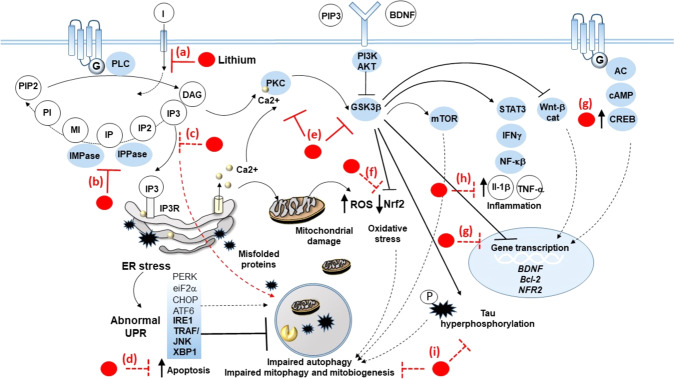
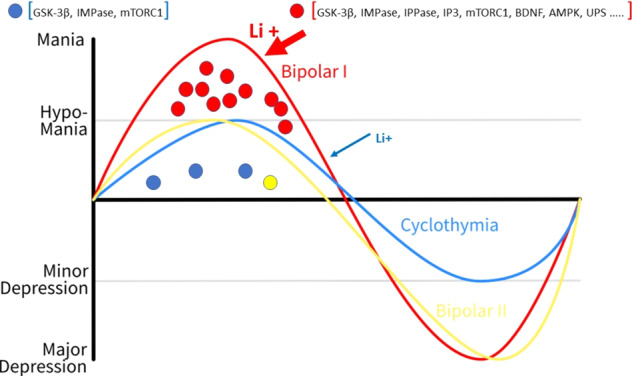
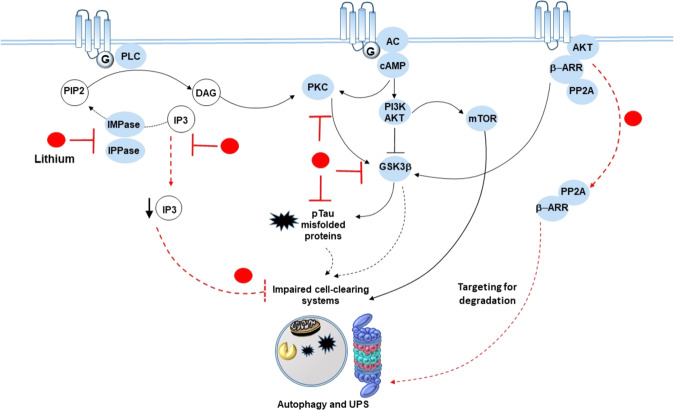
Increasing evidence indicates lithium (Li) efficacy in neuropsychiatry, pointing to overlapping mechanisms that occur within distinct neuronal populations. In fact, the same pathway depending on which circuitry operates may fall in the psychiatric and/or neurological domains. Li restores both neurotransmission and brain structure unveiling that psychiatric and neurological disorders share common dysfunctional molecular and morphological mechanisms, which may involve distinct brain circuitries. Here an overview is provided concerning the therapeutic/neuroprotective effects of Li in different neuropsychiatric disorders to highlight common molecular mechanisms through which Li produces its mood-stabilizing effects and to what extent these overlap with plasticity in distinct brain circuitries. Li mood-stabilizing effects are evident in typical bipolar disorder (BD) characterized by a cyclic course of mania or hypomania followed by depressive episodes, while its efficacy is weaker in the opposite pattern. We focus here on neural adaptations that may underlie psychostimulant-induced psychotic development and to dissect, through the sensitization process, which features are shared in BD and other psychiatric disorders, including schizophrenia. The multiple functions of Li highlighted here prove its exceptional pharmacology, which may help to elucidate its mechanisms of action. These may serve as a guide toward a multi-drug strategy. We propose that the onset of sensitization in a specific BD subtype may predict the therapeutic efficacy of Li. This model may help to infer in BD which molecular mechanisms are relevant to the therapeutic efficacy of Li.
越来越多的证据表明锂(Li)在神经精神医学中的疗效,指向发生在不同神经元群体中的重叠机制。事实上,取决于哪个电路运作的相同途径可能属于精神科和/或神经科领域。Li 恢复了神经传递和大脑结构,揭示了精神和神经疾病具有共同的功能失调的分子和形态机制,这些机制可能涉及不同的大脑电路。在这里,我们提供了关于 Li 在不同神经精神疾病中的治疗/神经保护作用的概述,以突出 Li 产生其稳定情绪作用的共同分子机制,并在多大程度上与不同大脑电路中的可塑性重叠。Li 在典型双相情感障碍(BD)中的稳定情绪作用是明显的,其特征是躁狂或轻躁狂的周期性发作,随后是抑郁发作,而在相反的模式中其疗效较弱。我们在这里关注可能是精神兴奋剂引起的精神病发展的神经适应,通过敏化过程来剖析 BD 和其他精神疾病(包括精神分裂症)共有的特征。Li 的多种功能突出了其特殊的药理学,这可能有助于阐明其作用机制。这些可能作为多药物策略的指南。我们提出,特定 BD 亚型敏化的发生可能预测 Li 的治疗效果。该模型可帮助推断 Li 治疗效果的相关分子机制。