Liu Yanfang, Lin Yuping, Guo Yufeng, Wu Fengli, Zhang Yuanyuan, Qi Xianni, Wang Zhen, Wang Qinhong
CAS Key Laboratory of Systems Microbial Biotechnology, Tianjin Institute of Industrial Biotechnology, Chinese Academy of Sciences, Tianjin, China.
National Technology Innovation Center of Synthetic Biology, Tianjin, China.
Biotechnol Biofuels. 2021 Jul 6;14(1):155. doi: 10.1186/s13068-021-02005-w.
Saccharomyces cerevisiae is widely used in traditional brewing and modern fermentation industries to produce biofuels, chemicals and other bioproducts, but challenged by various harsh industrial conditions, such as hyperosmotic, thermal and ethanol stresses. Thus, its stress tolerance enhancement has been attracting broad interests. Recently, CRISPR/Cas-based genome editing technology offers unprecedented tools to explore genetic modifications and performance improvement of S. cerevisiae.
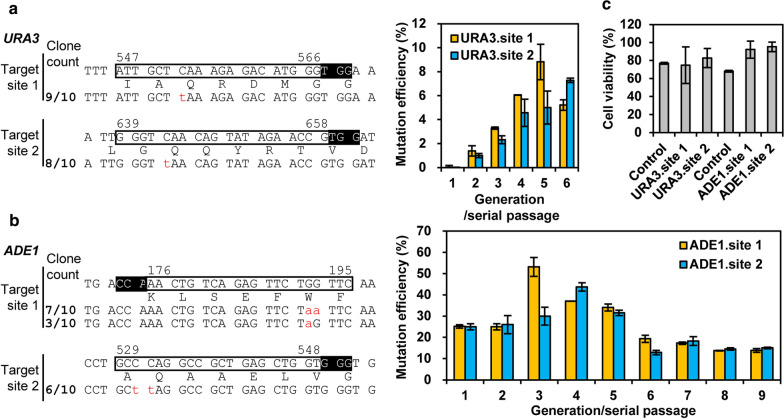
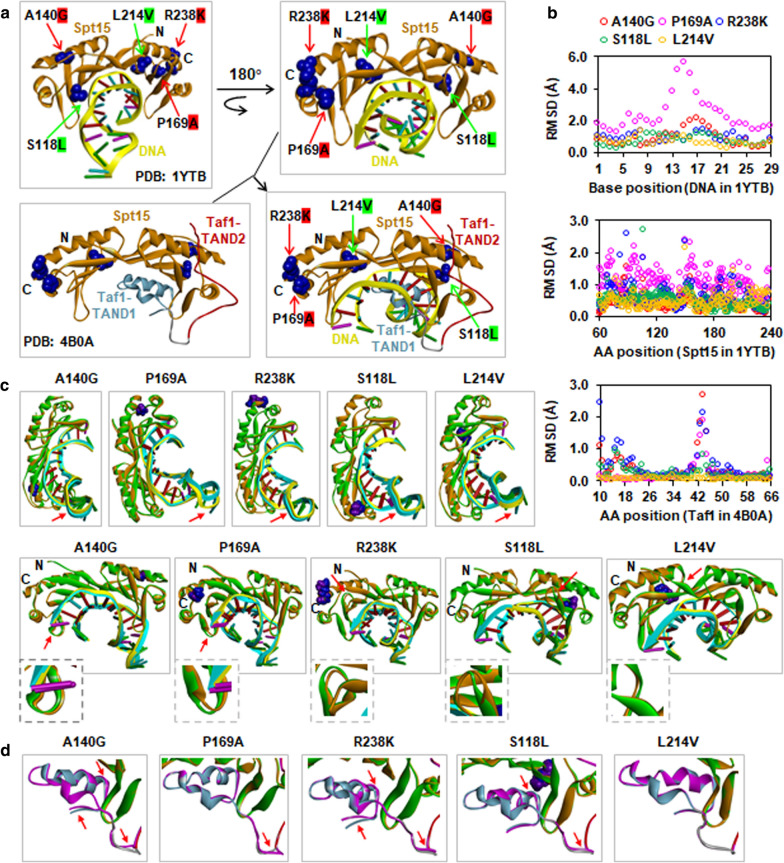
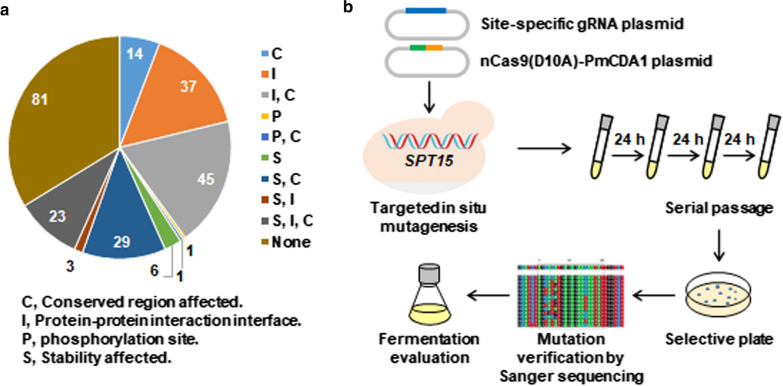
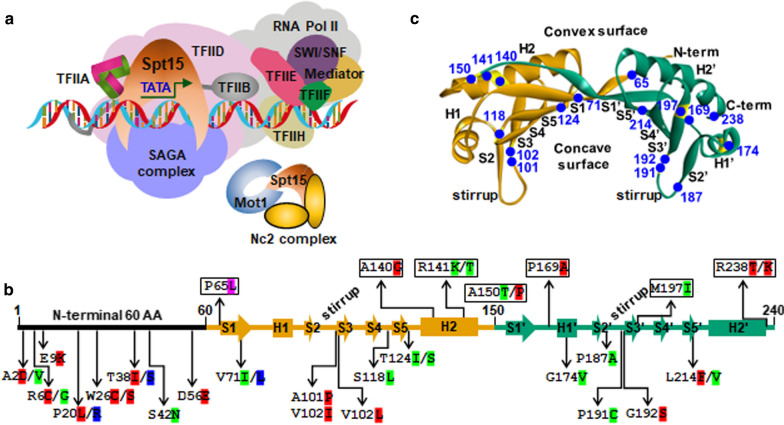
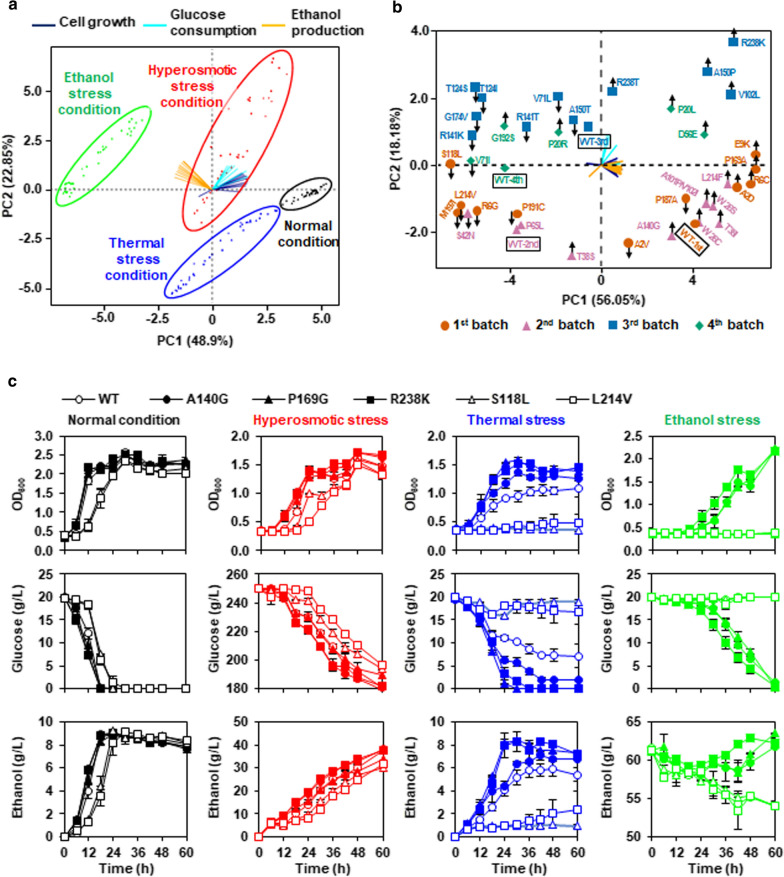
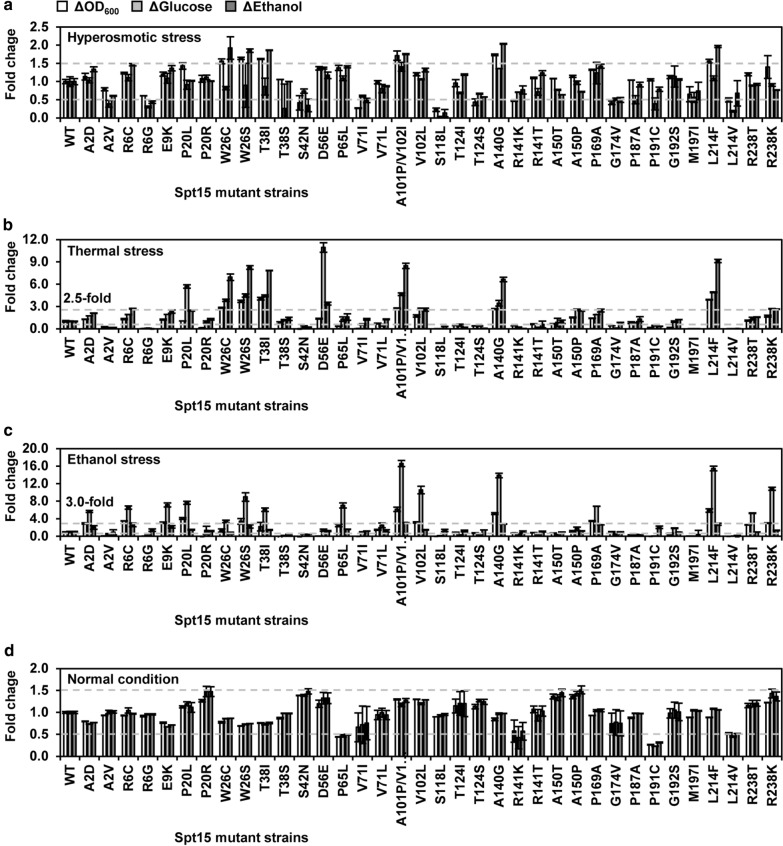
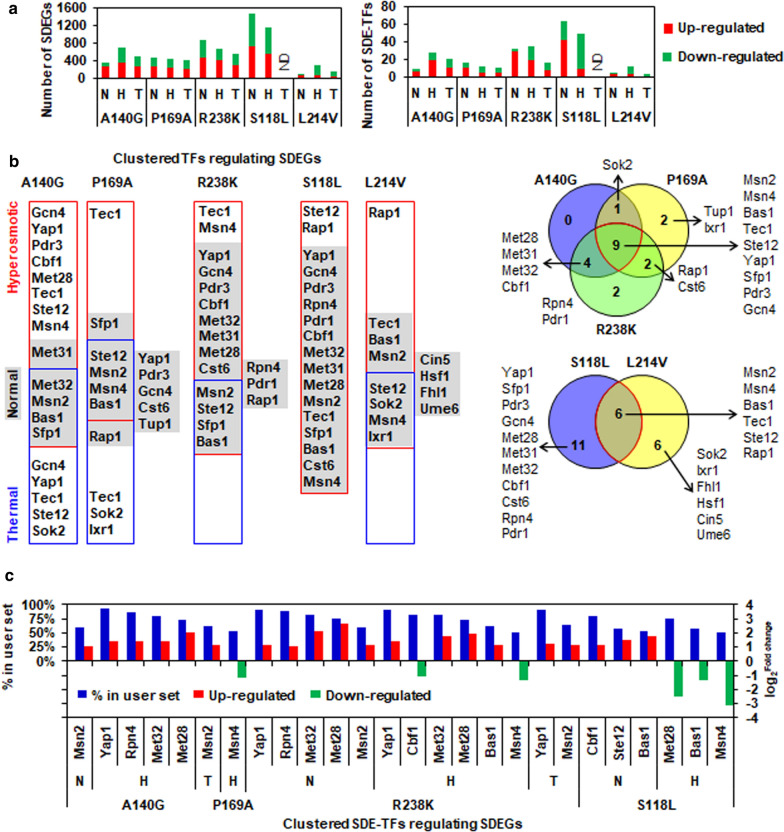
Here, we presented that the Target-AID (activation-induced cytidine deaminase) base editor of enabling C-to-T substitutions could be harnessed to generate in situ nucleotide changes on the S. cerevisiae genome, thereby introducing protein point mutations in cells. The general transcription factor gene SPT15 was targeted, and total 36 mutants with diversified stress tolerances were obtained. Among them, the 18 tolerant mutants against hyperosmotic, thermal and ethanol stresses showed more than 1.5-fold increases of fermentation capacities. These mutations were mainly enriched at the N-terminal region and the convex surface of the saddle-shaped structure of Spt15. Comparative transcriptome analysis of three most stress-tolerant (A140G, P169A and R238K) and two most stress-sensitive (S118L and L214V) mutants revealed common and distinctive impacted global transcription reprogramming and transcriptional regulatory hubs in response to stresses, and these five amino acid changes had different effects on the interactions of Spt15 with DNA and other proteins in the RNA Polymerase II transcription machinery according to protein structure alignment analysis.
Taken together, our results demonstrated that the Target-AID base editor provided a powerful tool for targeted in situ mutagenesis in S. cerevisiae and more potential targets of Spt15 residues for enhancing yeast stress tolerance.
酿酒酵母在传统酿造和现代发酵工业中被广泛用于生产生物燃料、化学品及其他生物制品,但受到各种恶劣工业条件的挑战,如高渗、热和乙醇胁迫。因此,提高其胁迫耐受性引起了广泛关注。最近,基于CRISPR/Cas的基因组编辑技术为探索酿酒酵母的基因改造和性能提升提供了前所未有的工具。
在此,我们展示了能够实现C到T替换的Target-AID(激活诱导胞嘧啶脱氨酶)碱基编辑器可用于在酿酒酵母基因组上产生原位核苷酸变化,从而在细胞中引入蛋白质点突变。靶向通用转录因子基因SPT15,共获得36个具有不同胁迫耐受性的突变体。其中,18个对高渗、热和乙醇胁迫具有耐受性的突变体发酵能力提高了1.5倍以上。这些突变主要富集在Spt15的N端区域和鞍形结构的凸面。对三个耐受性最强(A140G、P169A和R238K)和两个耐受性最弱(S118L和L214V)的突变体进行比较转录组分析,揭示了响应胁迫时共同和独特的影响全局转录重编程和转录调控枢纽,并且根据蛋白质结构比对分析,这五个氨基酸变化对Spt15在RNA聚合酶II转录机制中与DNA和其他蛋白质的相互作用有不同影响。
综上所述,我们的结果表明Target-AID碱基编辑器为酿酒酵母中的靶向原位诱变提供了一个强大工具,并且为增强酵母胁迫耐受性提供了更多Spt15残基的潜在靶点。