The Turner Institute for Brain and Mental Health, School of Psychological Sciences, and Monash Biomedical Imaging, Monash University, Melbourne, VIC, Australia.
School of Physics, The University of Sydney, Camperdown, NSW, Australia.
Nat Commun. 2021 Jul 9;12(1):4237. doi: 10.1038/s41467-021-24306-2.
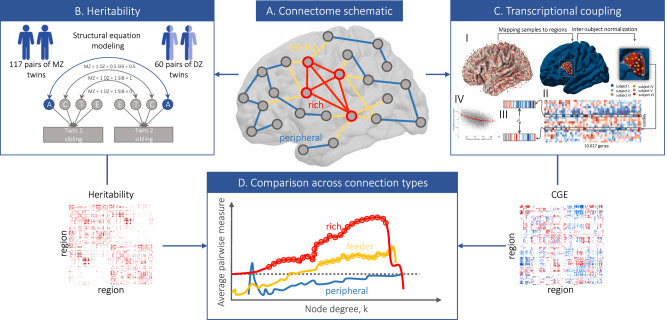
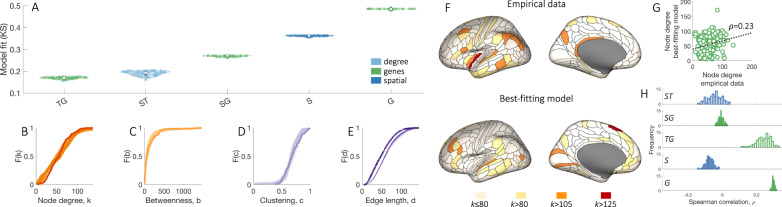
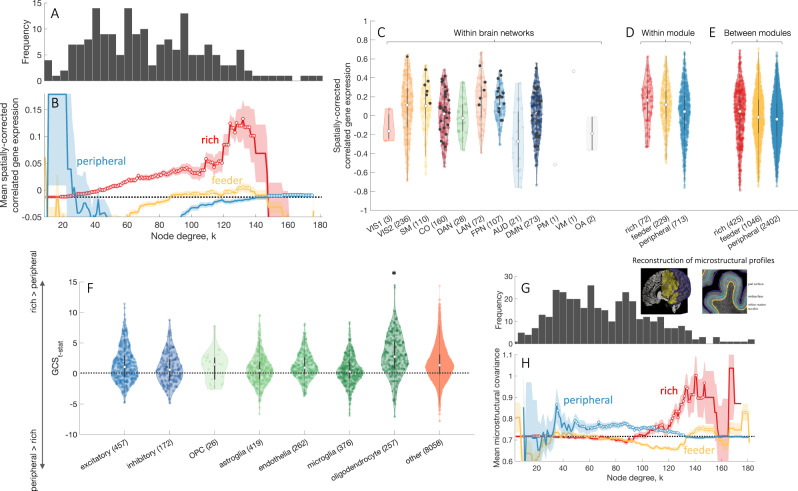
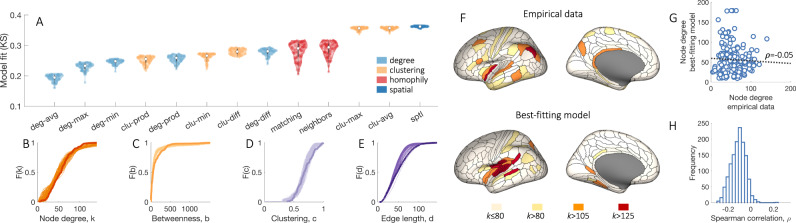
Brain network hubs are both highly connected and highly inter-connected, forming a critical communication backbone for coherent neural dynamics. The mechanisms driving this organization are poorly understood. Using diffusion-weighted magnetic resonance imaging in twins, we identify a major role for genes, showing that they preferentially influence connectivity strength between network hubs of the human connectome. Using transcriptomic atlas data, we show that connected hubs demonstrate tight coupling of transcriptional activity related to metabolic and cytoarchitectonic similarity. Finally, comparing over thirteen generative models of network growth, we show that purely stochastic processes cannot explain the precise wiring patterns of hubs, and that model performance can be improved by incorporating genetic constraints. Our findings indicate that genes play a strong and preferential role in shaping the functionally valuable, metabolically costly connections between connectome hubs.
脑网络枢纽具有高度的连接性和互联性,构成了连贯的神经动力学的关键通信骨干。驱动这种组织的机制还了解甚少。我们利用双胞胎的弥散加权磁共振成像发现,基因在其中起着主要作用,表明它们优先影响人类连接组网络枢纽之间的连接强度。利用转录组图谱数据,我们表明连接枢纽表现出与代谢和细胞构筑相似性相关的转录活性的紧密耦合。最后,比较十三个以上的网络增长生成模型,我们表明纯粹的随机过程不能解释枢纽的精确布线模式,并且通过纳入遗传约束可以提高模型性能。我们的研究结果表明,基因在塑造连接组枢纽之间具有功能价值且代谢成本高的连接方面起着强大而优先的作用。