Petrovic Dunja, Kouroussis Emilia, Vignane Thibaut, Filipovic Milos R
Leibniz-Institut für Analytische Wissenschaften - ISAS - e.V., Dortmund, Germany.
Front Aging Neurosci. 2021 Jun 23;13:674135. doi: 10.3389/fnagi.2021.674135. eCollection 2021.
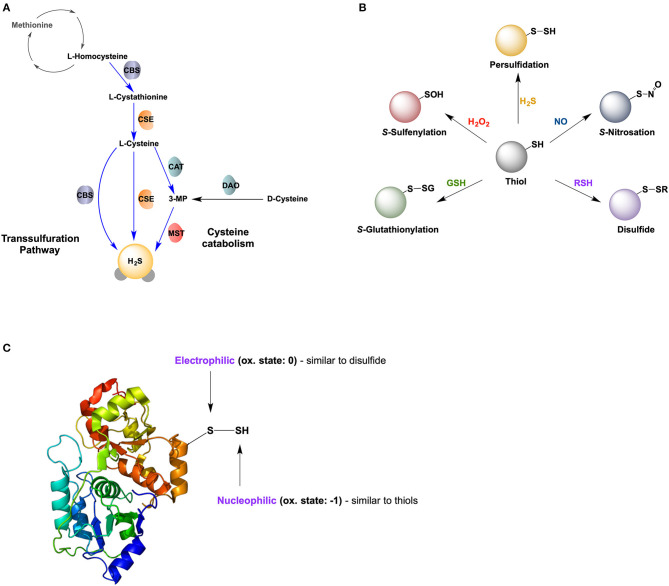
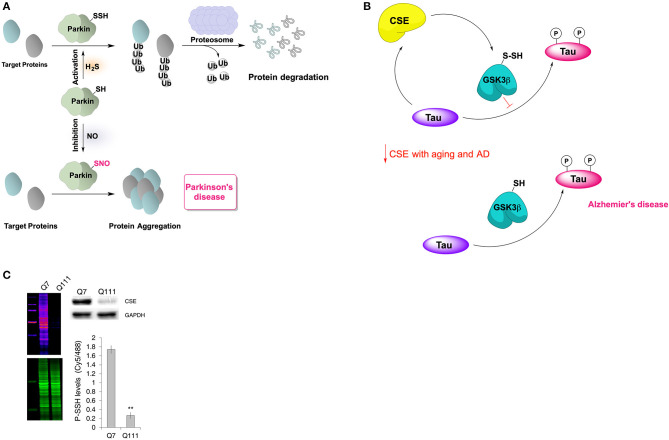
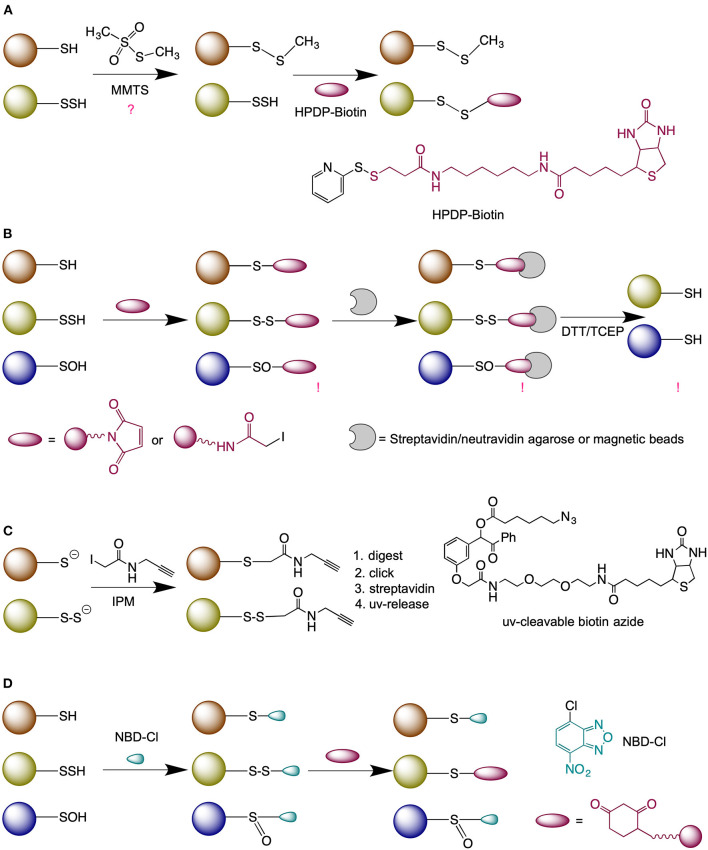
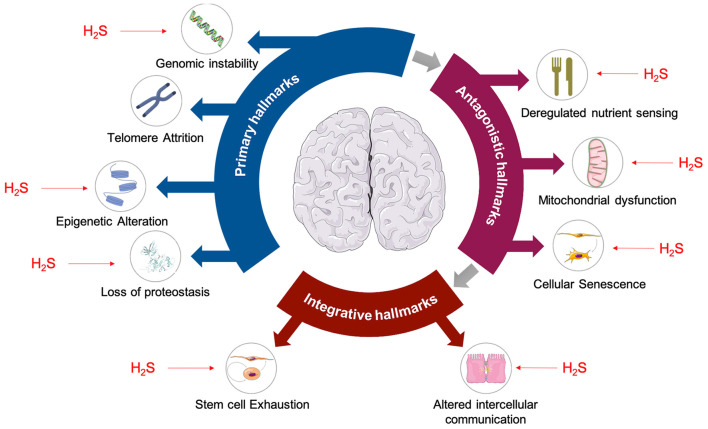
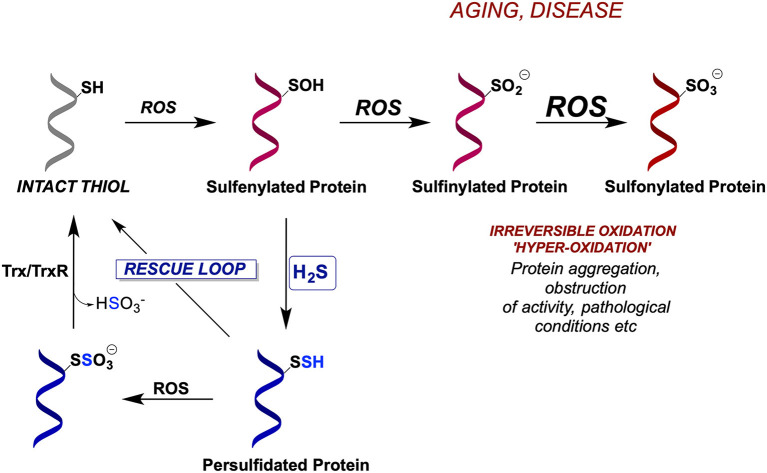
Hydrogen sulfide (HS), originally considered a toxic gas, is now a recognized gasotransmitter. Numerous studies have revealed the role of HS as a redox signaling molecule that controls important physiological/pathophysiological functions. The underlying mechanism postulated to serve as an explanation of these effects is protein persulfidation (P-SSH, also known as -sulfhydration), an oxidative posttranslational modification of cysteine thiols. Protein persulfidation has remained understudied due to its instability and chemical reactivity similar to other cysteine modifications, making it very difficult to selectively label. Recent developments of persulfide labeling techniques have started unraveling the role of this modification in (patho)physiology. PSSH levels are important for the cellular defense against oxidative injury, albeit they decrease with aging, leaving proteins vulnerable to oxidative damage. Aging is one of the main risk factors for many neurodegenerative diseases. Persulfidation has been shown to be dysregulated in Parkinson's, Alzheimer's, Huntington's disease, and Spinocerebellar ataxia 3. This article reviews the latest discoveries that link protein persulfidation, aging and neurodegeneration, and provides future directions for this research field that could result in development of targeted drug design.
硫化氢(HS)最初被认为是一种有毒气体,现在是一种公认的气体信号分子。大量研究揭示了HS作为一种氧化还原信号分子,控制重要生理/病理生理功能的作用。作为对这些效应的解释而提出的潜在机制是蛋白质过硫化作用(P-SSH,也称为硫氢化作用),这是一种半胱氨酸硫醇的氧化翻译后修饰。由于蛋白质过硫化作用的不稳定性和与其他半胱氨酸修饰相似的化学反应性,使得其难以选择性标记,因此一直未得到充分研究。过硫化物标记技术的最新进展已开始揭示这种修饰在(病理)生理学中的作用。蛋白质过硫化水平对于细胞抵御氧化损伤很重要,尽管它们会随着衰老而降低,使蛋白质易受氧化损伤。衰老是许多神经退行性疾病的主要危险因素之一。已证明在帕金森病、阿尔茨海默病、亨廷顿病和脊髓小脑共济失调3型中,蛋白质过硫化作用失调。本文综述了将蛋白质过硫化、衰老和神经退行性变联系起来的最新发现,并为该研究领域提供了未来方向,这可能会导致靶向药物设计的发展。