Ferreira Juliana C, Fadl Samar, Villanueva Adrian J, Rabeh Wael M
Science Division, New York University Abu Dhabi, Abu Dhabi, United Arab Emirates.
Front Chem. 2021 Jun 24;9:692168. doi: 10.3389/fchem.2021.692168. eCollection 2021.
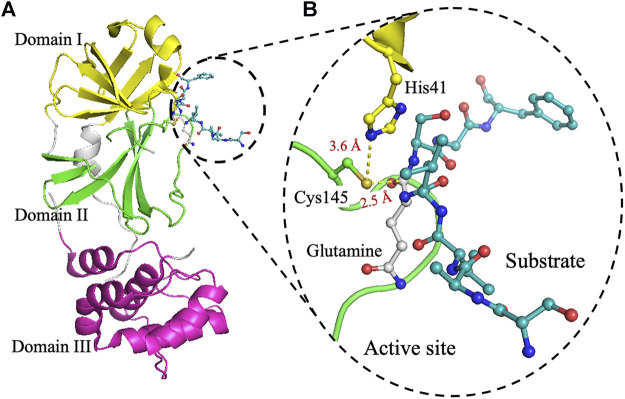
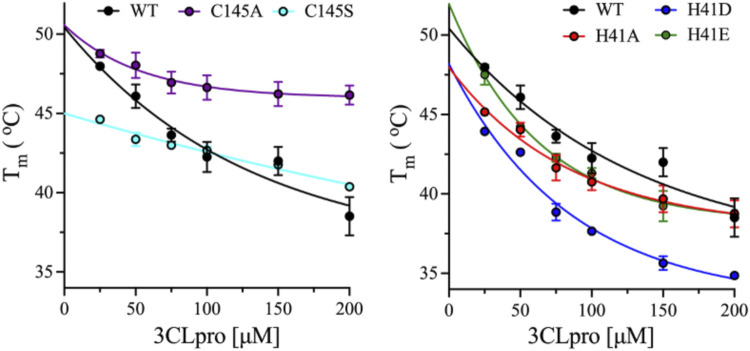
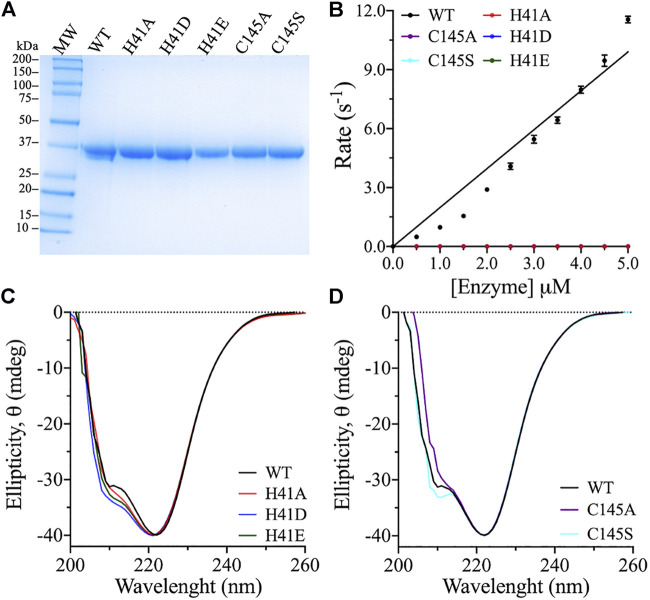
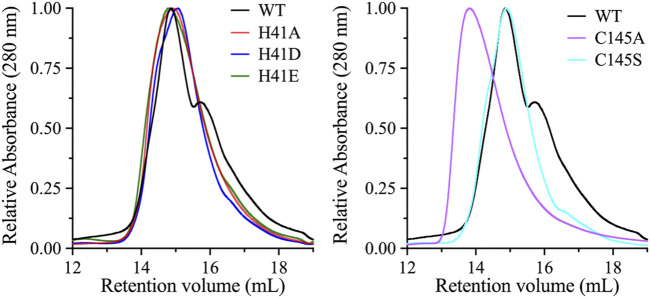
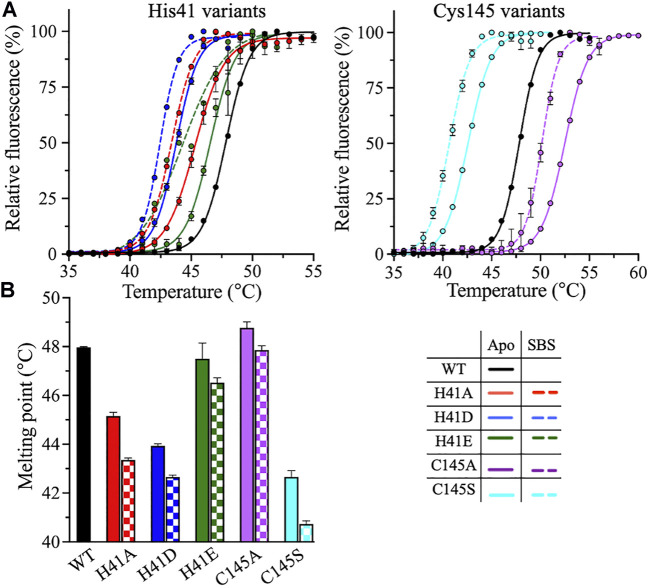
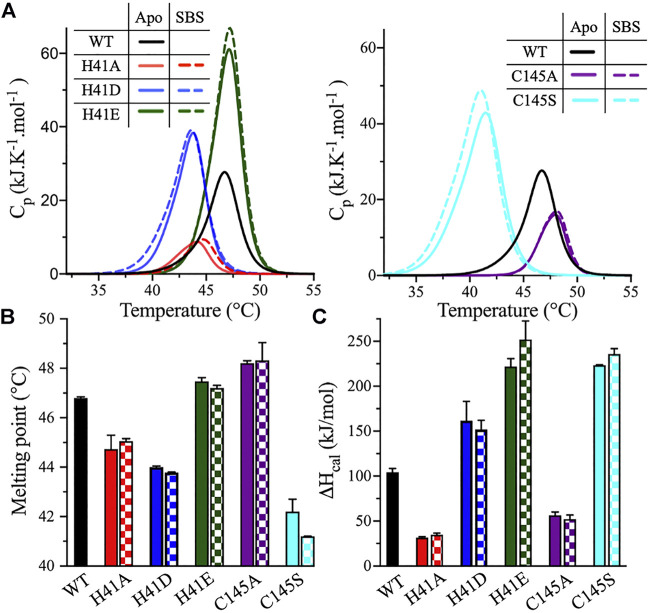
Coronaviruses are responsible for multiple pandemics and millions of deaths globally, including the current pandemic of coronavirus disease 2019 (COVID-19). Development of antivirals against coronaviruses, including the severe acute respiratory syndrome-coronavirus 2 (SARS-CoV-2) responsible for COVID-19, is essential for containing the current and future coronavirus outbreaks. SARS-CoV-2 proteases represent important targets for the development of antivirals because of their role in the processing of viral polyproteins. 3-Chymotrypsin-like protease (3CLpro) is one such protease. The cleavage of SARS-CoV-2 polyproteins by 3CLpro is facilitated by a Cys145-His41 catalytic dyad. We here characterized the catalytic roles of the cysteine-histidine pair for improved understanding of the 3CLpro reaction mechanism, to inform the development of more effective antivirals against Sars-CoV-2. The catalytic dyad residues were substituted by site-directed mutagenesis. All substitutions tested (H41A, H41D, H41E, C145A, and C145S) resulted in a complete inactivation of 3CLpro, even when amino acids with a similar catalytic function to that of the original residues were used. The integrity of the structural fold of enzyme variants was investigated by circular dichroism spectroscopy to test if the catalytic inactivation of 3CLpro was caused by gross changes in the enzyme secondary structure. C145A, but not the other substitutions, shifted the oligomeric state of the enzyme from dimeric to a higher oligomeric state. Finally, the thermodynamic stability of 3CLpro H41A, H41D, and C145S variants was reduced relative the wild-type enzyme, with a similar stability of the H41E and C145A variants. Collectively, the above observations confirm the roles of His41 and Cys145 in the catalytic activity and the overall conformational fold of 3CLpro SARS-CoV-2. We conclude that the cysteine-histidine pair should be targeted for inhibition of 3CLpro and development of antiviral against COVID-19 and coronaviruses.
冠状病毒在全球范围内引发了多次大流行,并导致数百万人死亡,包括当前的2019冠状病毒病(COVID-19)大流行。开发针对冠状病毒的抗病毒药物,包括导致COVID-19的严重急性呼吸综合征冠状病毒2(SARS-CoV-2),对于控制当前和未来的冠状病毒爆发至关重要。SARS-CoV-2蛋白酶因其在病毒多聚蛋白加工过程中的作用而成为抗病毒药物开发的重要靶点。3-胰凝乳蛋白酶样蛋白酶(3CLpro)就是这样一种蛋白酶。3CLpro对SARS-CoV-2多聚蛋白的切割由Cys145-His41催化二元体促进。我们在此表征了半胱氨酸-组氨酸对的催化作用,以更好地理解3CLpro反应机制,为开发更有效的抗Sars-CoV-2抗病毒药物提供信息。通过定点诱变替换催化二元体残基。所有测试的替换(H41A、H41D、H41E、C145A和C145S)都导致3CLpro完全失活,即使使用与原始残基具有相似催化功能的氨基酸也是如此。通过圆二色光谱研究酶变体结构折叠的完整性,以测试3CLpro的催化失活是否由酶二级结构的总体变化引起。C145A,但不是其他替换,将酶的寡聚状态从二聚体转变为更高的寡聚状态。最后,与野生型酶相比,3CLpro H41A、H41D和C145S变体的热稳定性降低,H41E和C145A变体具有相似的稳定性。总体而言,上述观察结果证实了His41和Cys145在3CLpro SARS-CoV-2的催化活性和整体构象折叠中的作用。我们得出结论,半胱氨酸-组氨酸对应作为抑制3CLpro以及开发抗COVID-19和冠状病毒抗病毒药物的靶点。