National Translational Science Center for Molecular Medicine and Department of Cell Biology, Fourth Military Medical University, Xi'an, China.
Department of Urology, Shenzhen Institute of Translational Medicine, The First Affiliated Hospital of Shenzhen University, Shenzhen Second People's Hospital, Shenzhen, China.
Signal Transduct Target Ther. 2021 Jul 14;6(1):268. doi: 10.1038/s41392-021-00677-2.
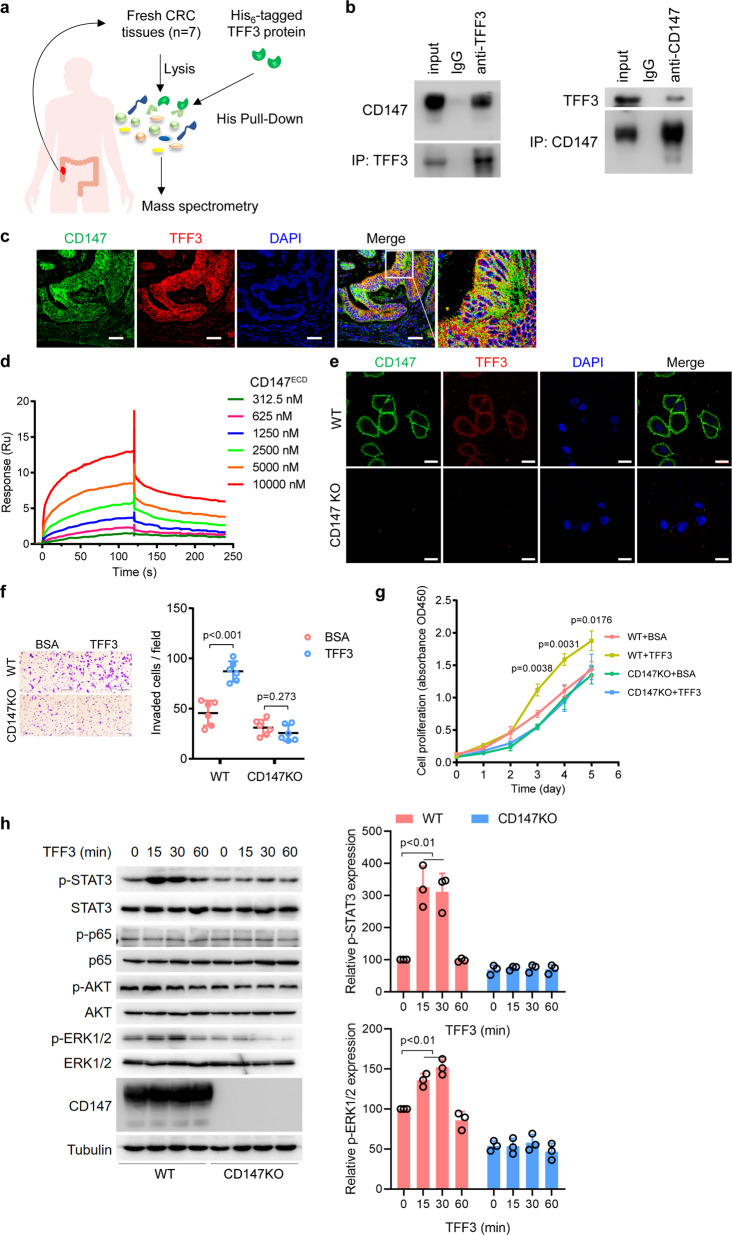
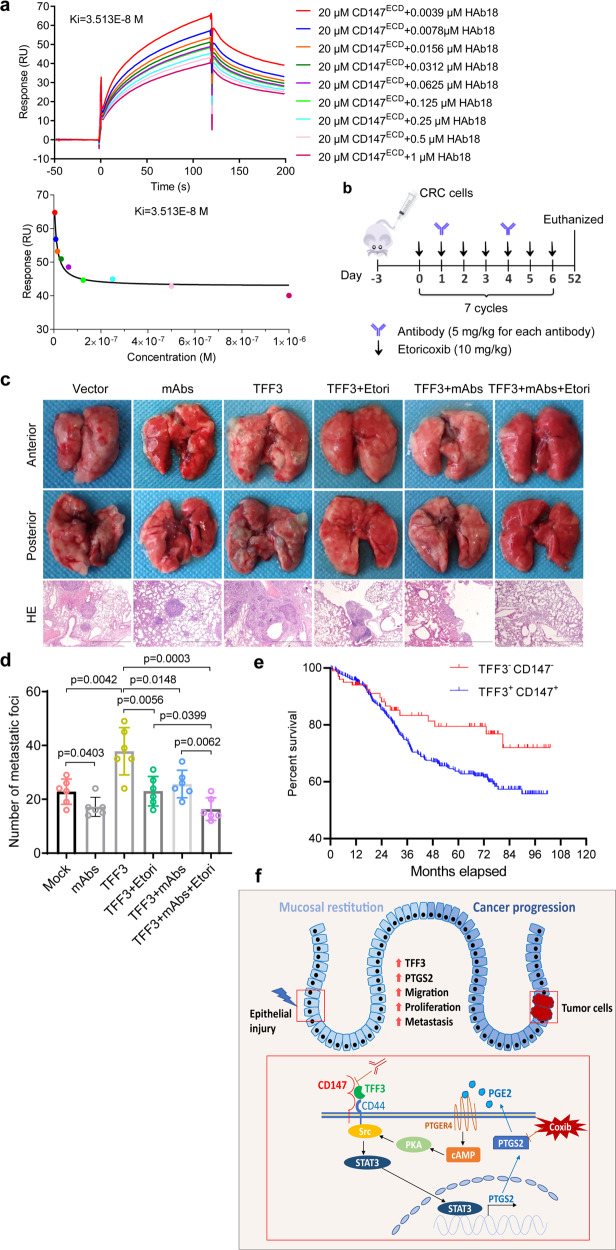
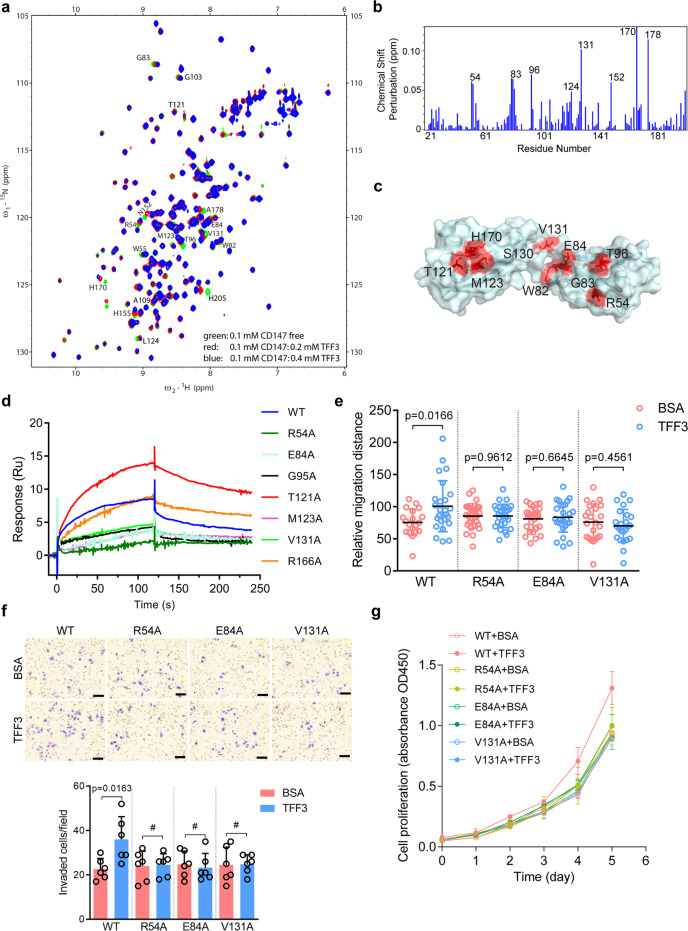
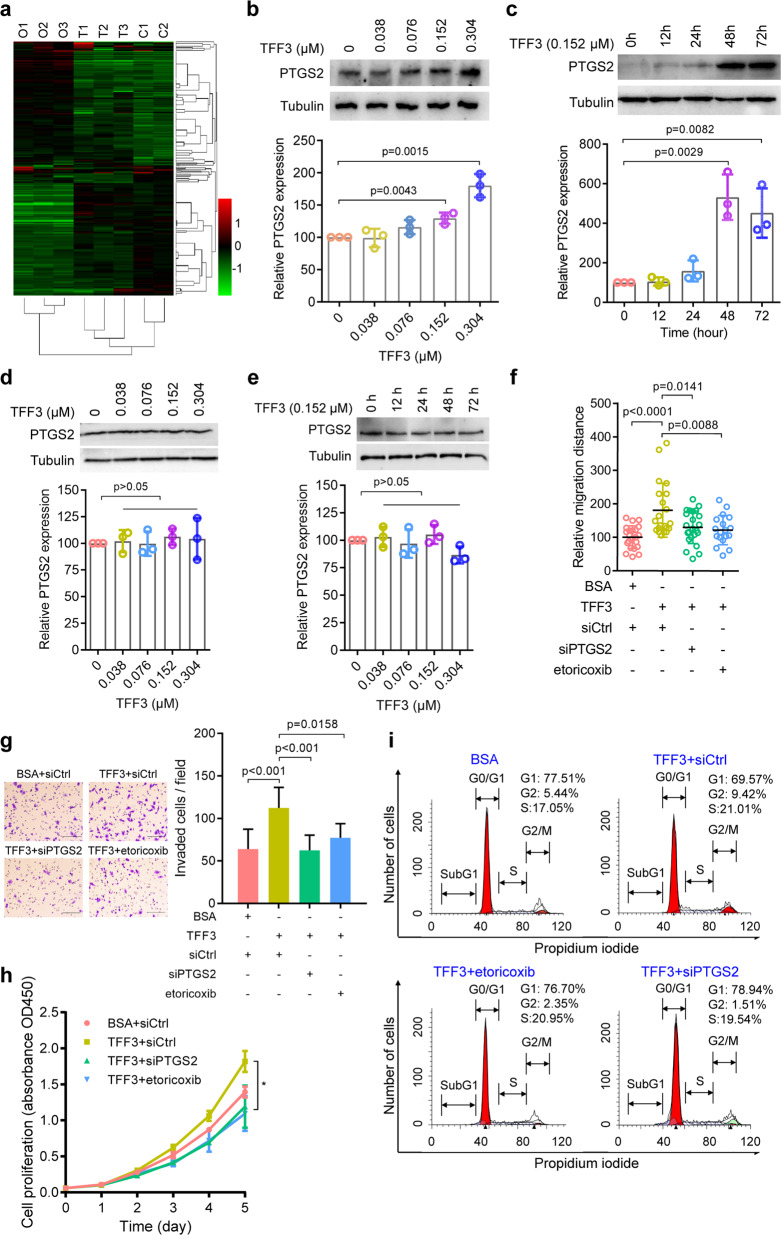
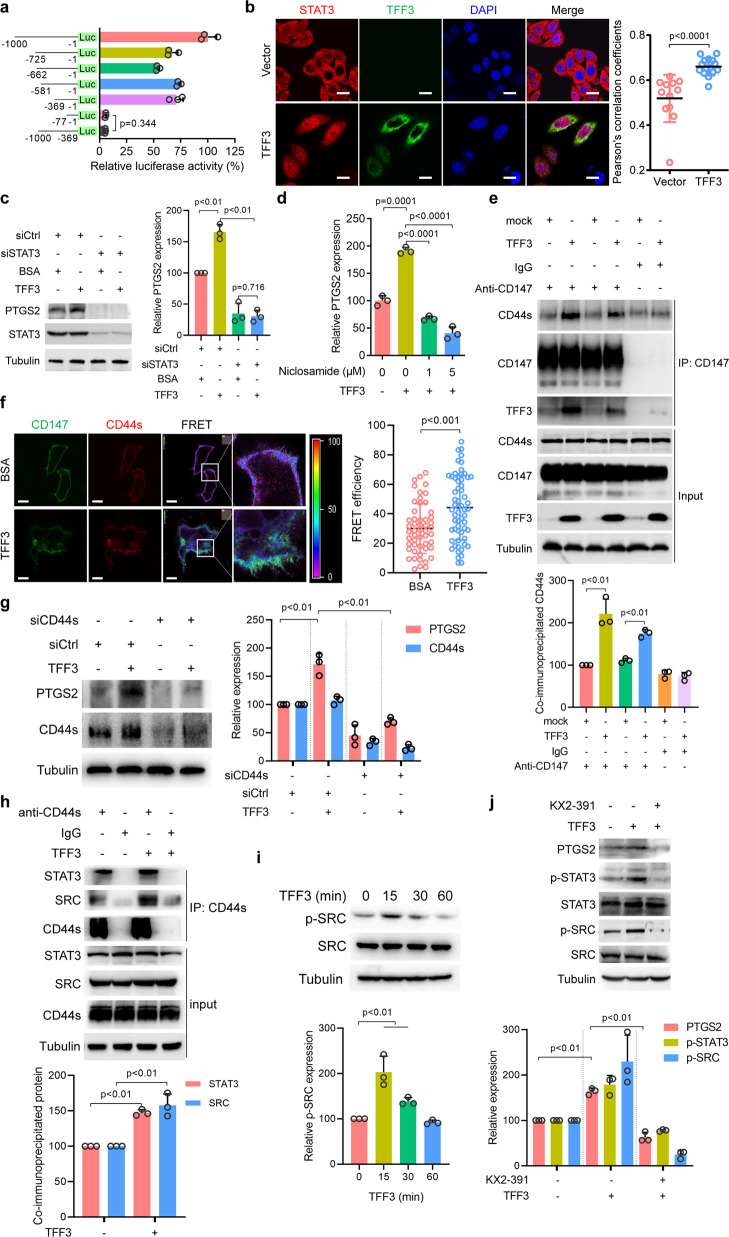
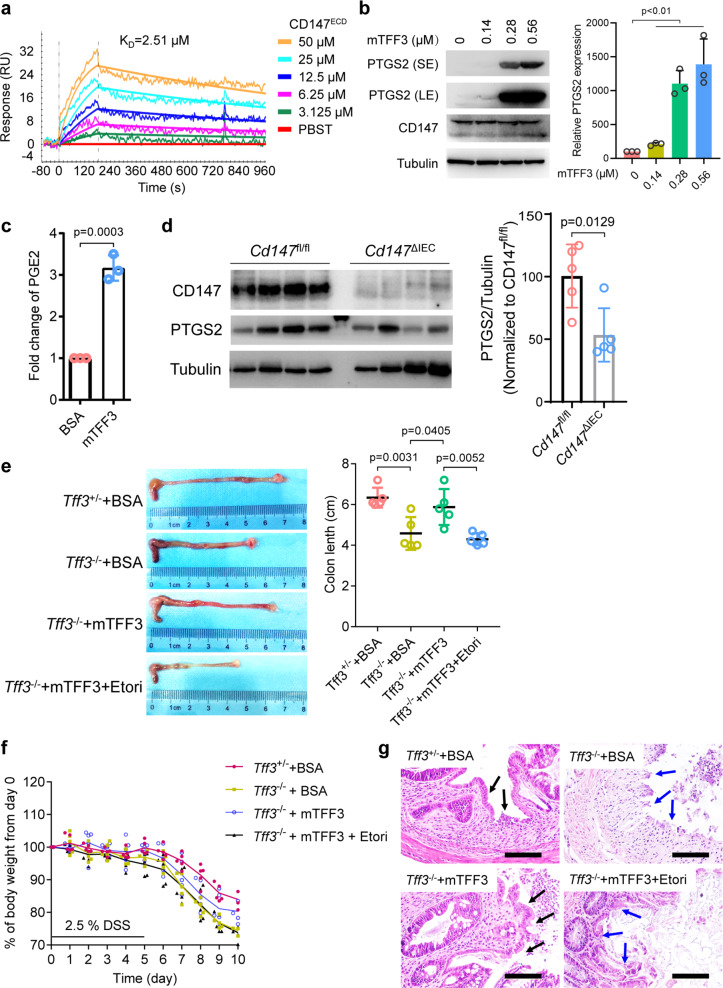
Major gaps in understanding the molecular mechanisms of colorectal cancer (CRC) progression and intestinal mucosal repair have hampered therapeutic development for gastrointestinal disorders. Trefoil factor 3 (TFF3) has been reported to be involved in CRC progression and intestinal mucosal repair; however, how TFF3 drives tumors to become more aggressive or metastatic and how TFF3 promotes intestinal mucosal repair are still poorly understood. Here, we found that the upregulated TFF3 in CRC predicted a worse overall survival rate. TFF3 deficiency impaired mucosal restitution and adenocarcinogenesis. CD147, a membrane protein, was identified as a binding partner for TFF3. Via binding to CD147, TFF3 enhanced CD147-CD44s interaction, resulting in signal transducer and activator of transcription 3 (STAT3) activation and prostaglandin G/H synthase 2 (PTGS2) expression, which were indispensable for TFF3-induced migration, proliferation, and invasion. PTGS2-derived PGE2 bound to prostaglandin E2 receptor EP4 subtype (PTGER4) and contributed to TFF3-stimulated CRC progression. Solution NMR studies of the TFF3-CD147 interaction revealed the key residues critical for TFF3 binding and the induction of PTGS2 expression. The ability of TFF3 to enhance mucosal restitution was weakened by a PTGS2 inhibitor. Blockade of TFF3-CD147 signaling using competitive inhibitory antibodies or a PTGS2 inhibitor reduced CRC lung metastasis in mice. Our findings bring strong evidence that CD147 is a novel receptor for TFF3 and PTGS2 signaling is critical for TFF3-induced mucosal restitution and CRC progression, which widens and deepens the understanding of the molecular function of trefoil factors.
在理解结直肠癌(CRC)进展和肠黏膜修复的分子机制方面存在重大差距,这阻碍了胃肠道疾病的治疗发展。三叶因子 3(TFF3)已被报道参与 CRC 进展和肠黏膜修复;然而,TFF3 如何驱动肿瘤变得更具侵袭性或转移性,以及 TFF3 如何促进肠黏膜修复,仍知之甚少。在这里,我们发现 CRC 中上调的 TFF3 预测总体生存率更差。TFF3 缺乏会损害黏膜修复和腺癌发生。膜蛋白 CD147 被鉴定为 TFF3 的结合伴侣。通过与 CD147 结合,TFF3 增强了 CD147-CD44s 的相互作用,导致信号转导和转录激活因子 3(STAT3)的激活和前列腺素 G/H 合酶 2(PTGS2)的表达,这对于 TFF3 诱导的迁移、增殖和侵袭是必不可少的。PTGS2 衍生的 PGE2 与前列腺素 E2 受体 EP4 亚型(PTGER4)结合,并有助于 TFF3 刺激的 CRC 进展。TFF3-CD147 相互作用的溶液 NMR 研究揭示了 TFF3 结合和诱导 PTGS2 表达的关键残基。PTGS2 抑制剂削弱了 TFF3 增强黏膜修复的能力。使用竞争性抑制抗体或 PTGS2 抑制剂阻断 TFF3-CD147 信号可减少小鼠 CRC 肺转移。我们的研究结果提供了强有力的证据,表明 CD147 是 TFF3 的一种新型受体,PTGS2 信号对于 TFF3 诱导的黏膜修复和 CRC 进展至关重要,这拓宽并深化了对三叶因子分子功能的理解。