Mohammadi Mohammad Aqa, Cheng Yan, Aslam Mohammad, Jakada Bello Hassan, Wai Myat Hnin, Ye Kangzhuo, He Xiaoxue, Luo Tiantian, Ye Li, Dong Chunxing, Hu Bin, Priyadarshani S V G N, Wang-Pruski Gefu, Qin Yuan
Joint FAFU-Dalhousie Lab, College of Horticulture, Fujian Agriculture and Forestry University, Fuzhou, China.
State Key Laboratory of Ecological Pest Control for Fujian and Taiwan Crops, Fujian Provincial Key Laboratory of Haixia Applied Plant Systems Biology, College of Life Sciences, Center for Genomics and Biotechnology, Fujian Agriculture and Forestry University, Fuzhou, China.
Front Microbiol. 2021 Jul 1;12:631318. doi: 10.3389/fmicb.2021.631318. eCollection 2021.
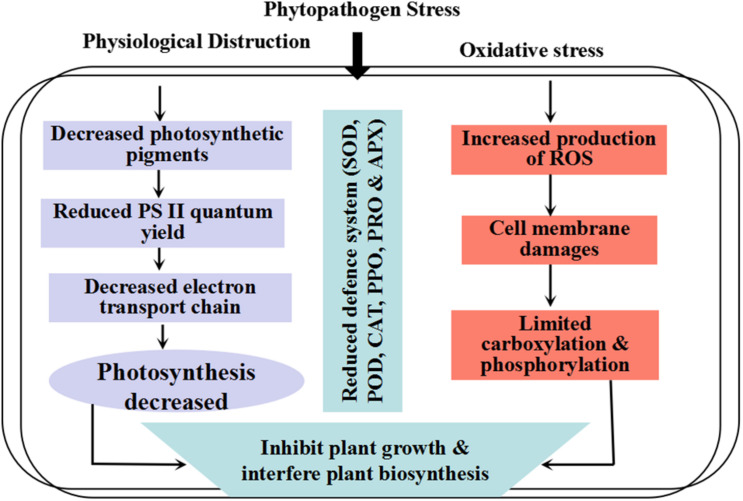
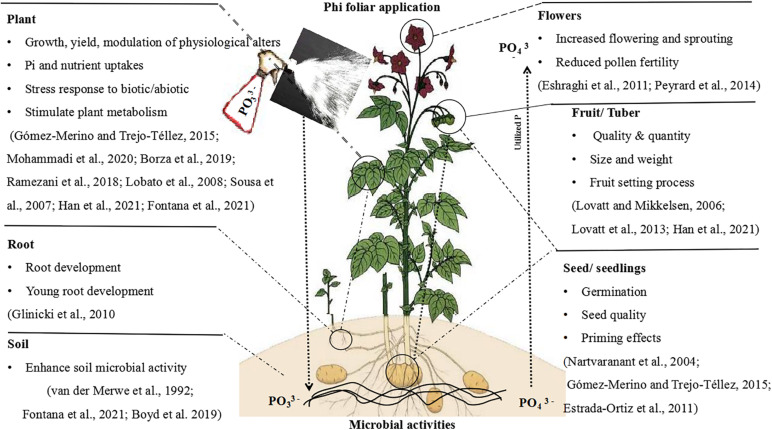
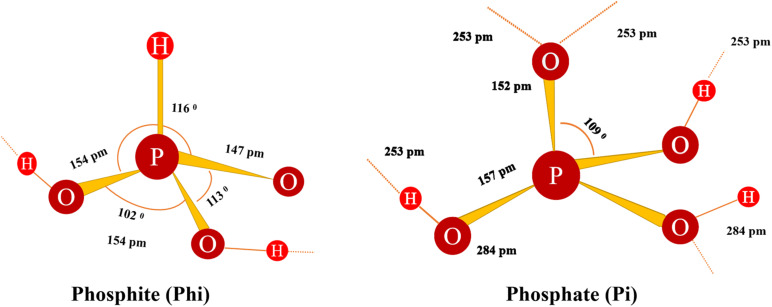
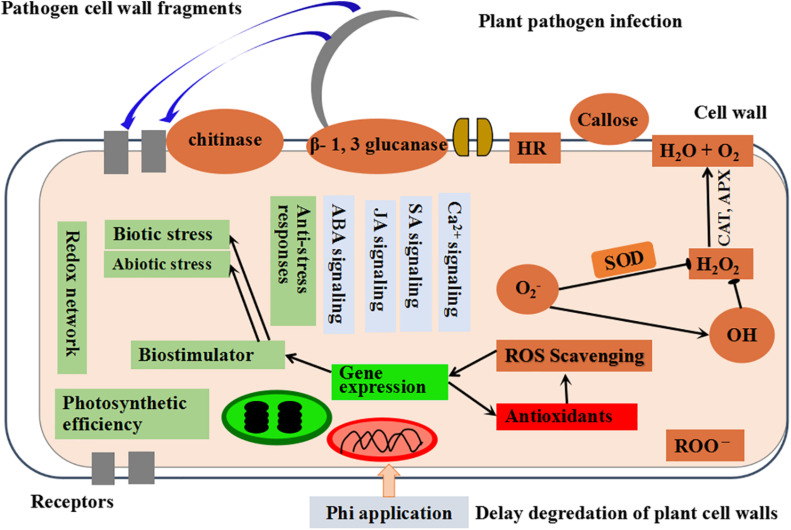
Phosphite (Phi) is a chemical analog of orthophosphate [HPO ]. It is a systemic pesticide generally known to control the prevalence of oomycetes and soil-borne diseases such as , , and species. Phi can also control disease symptoms and the spread of pathogenic bacteria, fungi, and nematodes. Phi plays critical roles as a fungicide, pesticide, fertilizer, or biostimulator. Overall, Phi can alleviate the severity of the disease caused by oomycete, fungi, pathogenic bacteria, and nematodes (leave, stem, fruit, tuber, and root) in various plants (vegetables, fruits, crops, root/tuber crops, ornamental plants, and forests). Advance research in molecular, physiological, and biochemical approaches has approved the key role of Phi in enhancing crop growth, quantity, and quality of several plant species. Phi is chemically similar to orthophosphate, and inside the cells, it is likely to get involved in different features of phosphate metabolism in both plants and pathogens. In plants, a range of physiobiochemical alterations are induced by plant pathogen stress, which causes lowered photosynthesis activities, enzymatic activities, increased accumulation of reactive oxygen species (ROS), and modification in a large group of genes. To date, several attempts have been made to study plant-pathogen interactions with the intent to minimize the loss of crop productivity. Phi's emerging function as a biostimulant in plants has boost plant yield and tolerance against various stress factors. This review discusses Phi-mediated biostimulant effects against biotic and abiotic stresses.
亚磷酸盐(Phi)是正磷酸盐[HPO]的化学类似物。它是一种系统性农药,通常用于控制卵菌纲和土传病害的流行,如、和物种。Phi还可以控制病害症状以及病原菌、真菌和线虫的传播。Phi作为杀菌剂、杀虫剂、肥料或生物刺激剂发挥着关键作用。总体而言,Phi可以减轻多种植物(蔬菜、水果、作物、块根/块茎作物、观赏植物和森林)中由卵菌纲、真菌、病原菌和线虫(叶、茎、果实、块茎和根)引起的病害严重程度。在分子、生理和生化方法方面的前沿研究已经证实了Phi在促进几种植物物种的作物生长、产量和品质方面的关键作用。Phi在化学上与正磷酸盐相似,在细胞内,它可能参与植物和病原体中磷酸盐代谢的不同特征。在植物中,植物病原体胁迫会诱导一系列生理生化变化,导致光合作用活性降低、酶活性降低、活性氧(ROS)积累增加以及大量基因发生改变。迄今为止,已经进行了几次尝试来研究植物 - 病原体相互作用,以尽量减少作物生产力的损失。Phi作为植物生物刺激剂的新功能提高了植物产量和对各种胁迫因素的耐受性。本综述讨论了Phi介导的对生物和非生物胁迫的生物刺激作用。