Genetic Testing Lab, The Second Affiliated Hospital of Guangzhou University of Chinese Medicine, Guangzhou, China.
Division of Neurosurgery, Department of Surgery, Prince of Wales Hospital, The Chinese University of Hong Kong, Hong Kong, Hong Kong.
Front Immunol. 2021 Jul 2;12:632482. doi: 10.3389/fimmu.2021.632482. eCollection 2021.
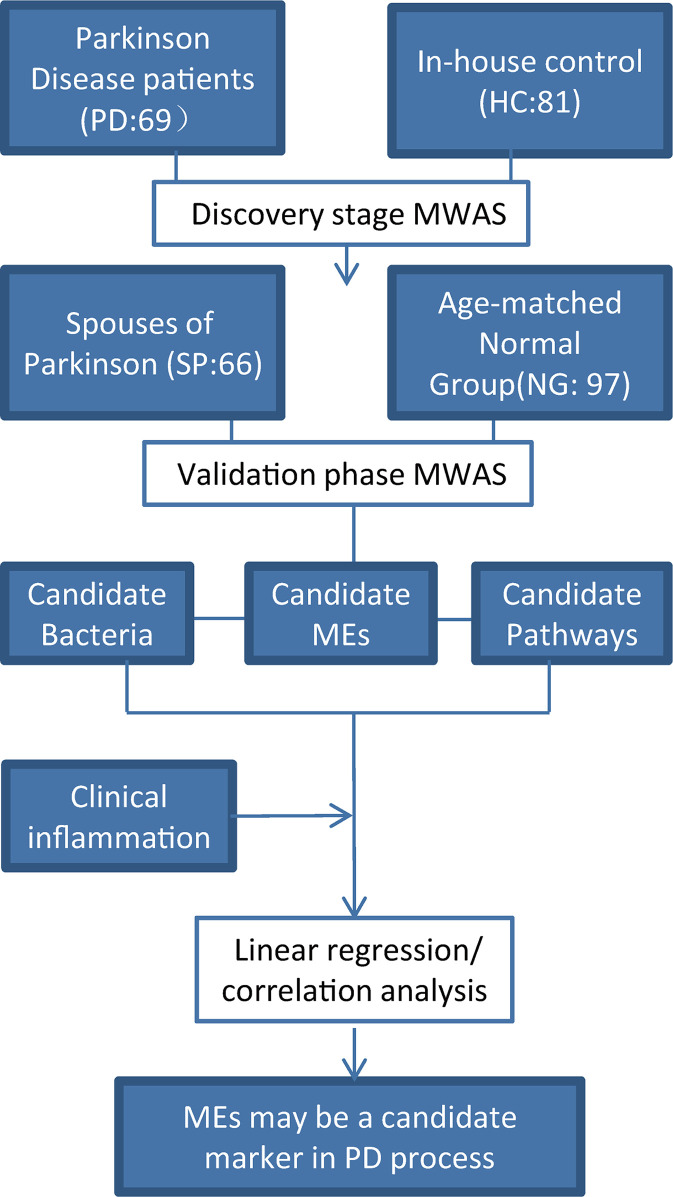
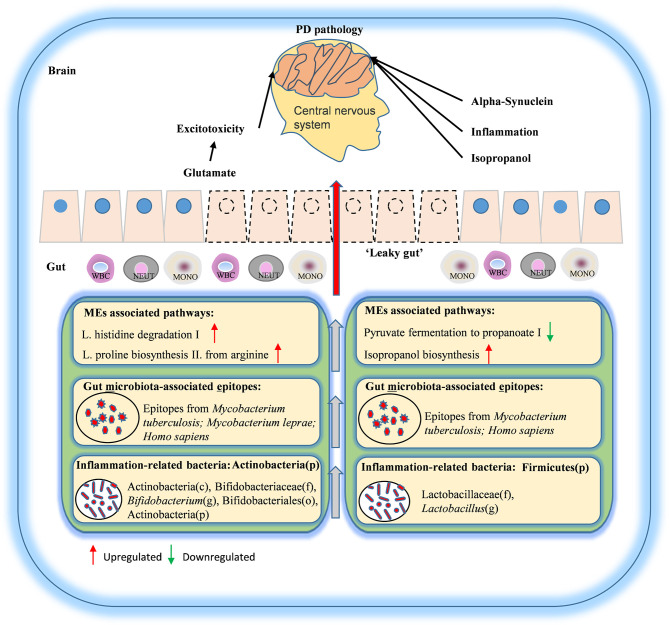
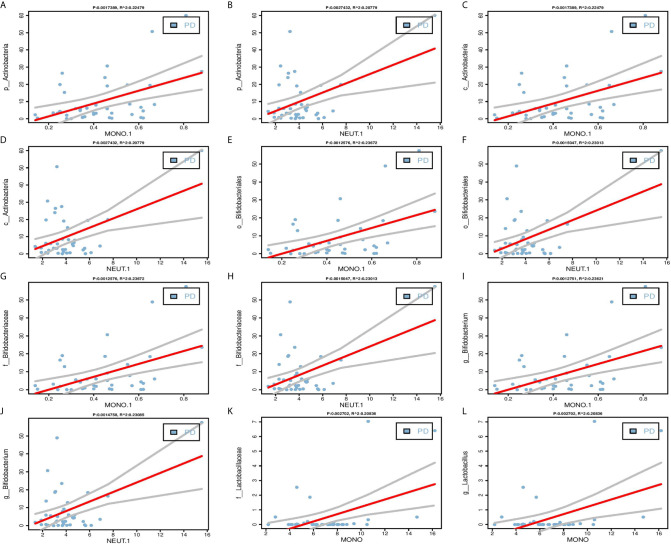
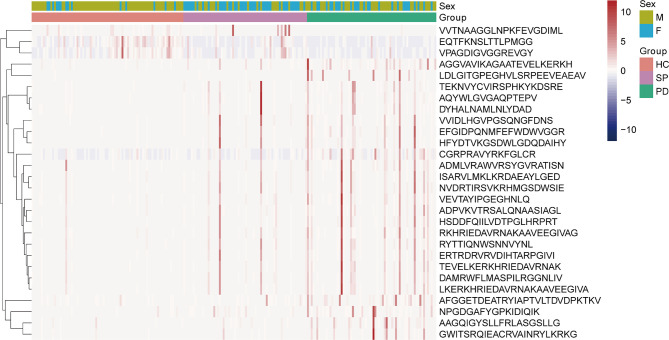
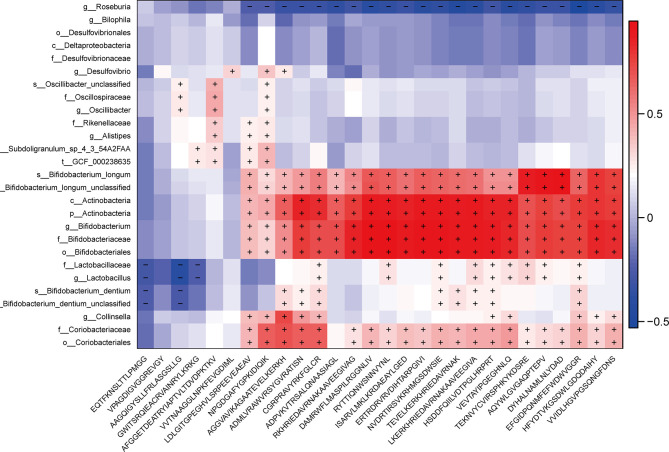
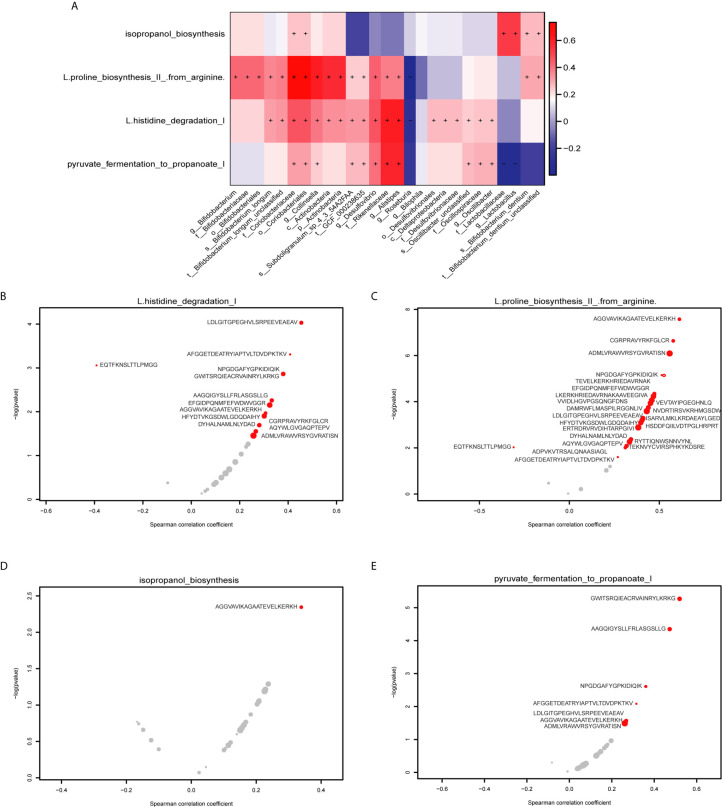
Recent evidence suggests that inflammation was participated in the pathogenesis of PD, thus, to understand the potential mechanism of gut microbiota in the pathogenesis of Parkinson's disease (PD), we performed a metagenomic analysis of fecal samples from PD patient and controls. Using a two-stage metagenome-wide association strategy, fecal DNA samples from 69 PD patients and 244 controls in three groups (comprising 66 spouses, 97 age-matched, and 81 normal samples, respectively) were analyzed, and differences between candidate gut microbiota and microbiota-associated epitopes (MEs) were compared. In the study, 27 candidate bacterial biomarkers and twenty-eight candidate epitope peptides were significantly different between the PD patients and control groups. Further, enriched 4 and 13 MEs in PD were positively associated with abnormal inflammatory indicators [neutrophil percentage (NEUT.1), monocyte count/percentage (MONO/MONO.1), white blood cell count (WBC)] and five candidate bacterial biomarkers (c_Actinobacteria, f_Bifidobacteriaceae, , o_Bifidobacteriales, p_Actinobacteria) from Actinobacteria phylum, and they were also positively associated with histidine degradation and proline biosynthesis pathways, respectively. Additionally, enriched 2 MEs and 1 ME in PD were positively associated with above inflammatory indicators and two bacteria (f_Lactobacillaceae, ) from Firmicutes phylum, and they were also positively associated with pyruvate fermentation to propanoate I and negatively associated with isopropanol biosynthesis, respectively. Of these MEs, two MEs from GROEL2, RPSC were derived from , triggered the T cell immune response, as previously reported. Additionally, other candidate epitope peptides derived from and may also have potential immune effects in PD. In all, the altered MEs in PD may relate to abnormalities in immunity and glutamate and propionate metabolism, which furthers our understanding of the pathogenesis of PD.
最近的证据表明炎症参与了 PD 的发病机制,因此,为了了解肠道微生物群在帕金森病(PD)发病机制中的潜在机制,我们对 PD 患者和对照者的粪便样本进行了宏基因组分析。使用两阶段宏基因组关联策略,分析了来自三组 69 名 PD 患者和 244 名对照者(分别包含 66 对配偶、97 名年龄匹配和 81 名正常样本)的粪便 DNA 样本,并比较了候选肠道微生物群和微生物相关表位(MEs)之间的差异。在研究中,PD 患者和对照组之间有 27 种候选细菌生物标志物和 28 种候选表位肽显著不同。此外,PD 中富集的 4 个和 13 个 ME 与异常炎症指标[中性粒细胞百分比(NEUT.1)、单核细胞计数/百分比(MONO/MONO.1)、白细胞计数(WBC)]和 5 种来自放线菌门的候选细菌生物标志物(c_Actinobacteria、f_Bifidobacteriaceae、o_Bifidobacteriales、p_Actinobacteria)呈正相关,它们也与组氨酸降解和脯氨酸生物合成途径呈正相关。此外,PD 中富集的 2 个 ME 和 1 个 ME 与上述炎症指标和来自厚壁菌门的两种细菌(f_Lactobacillaceae、)呈正相关,它们也与丙酮酸发酵到丙酸 I 呈正相关,与异丙醇生物合成呈负相关。在这些 ME 中,来自 GROEL2、RPSC 的两个 ME 是由先前报道的触发 T 细胞免疫反应的 衍生而来。此外,来自 和 的其他候选表位肽也可能在 PD 中具有潜在的免疫作用。总之,PD 中改变的 ME 可能与免疫、谷氨酸和丙酸盐代谢异常有关,这进一步加深了我们对 PD 发病机制的理解。