Suresh Anagha Priya, Kalarikkal Sreeram Peringattu, Pullareddy Bhoomireddy, Sundaram Gopinath M
Department of Molecular Nutrition, CSIR-Central Food Technological Research Institute, Mysuru, Karnataka 570020, India.
Academy of Scientific and Innovative Research (AcSIR), CSIR-CFTRI Campus, Mysuru, Karnataka 570020, India.
ACS Omega. 2021 Jul 1;6(27):17635-17641. doi: 10.1021/acsomega.1c02162. eCollection 2021 Jul 13.
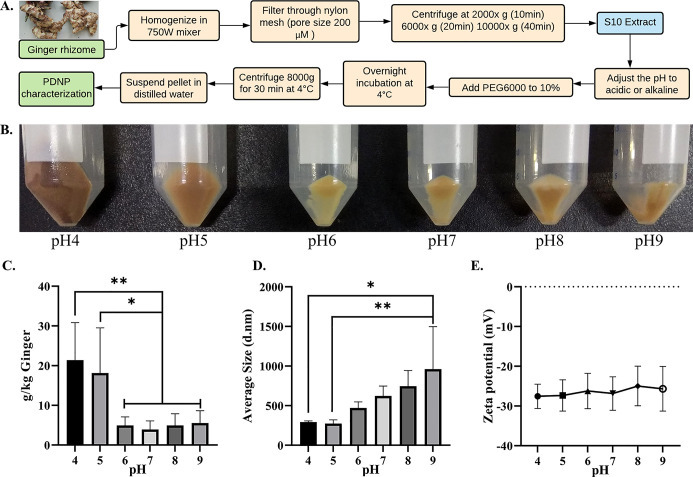
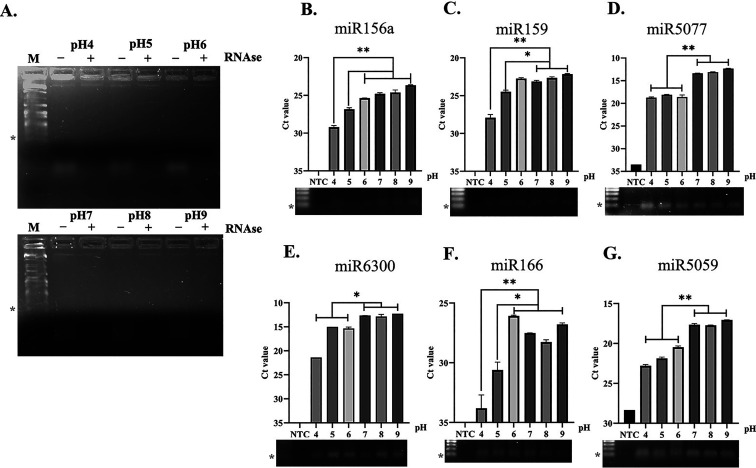
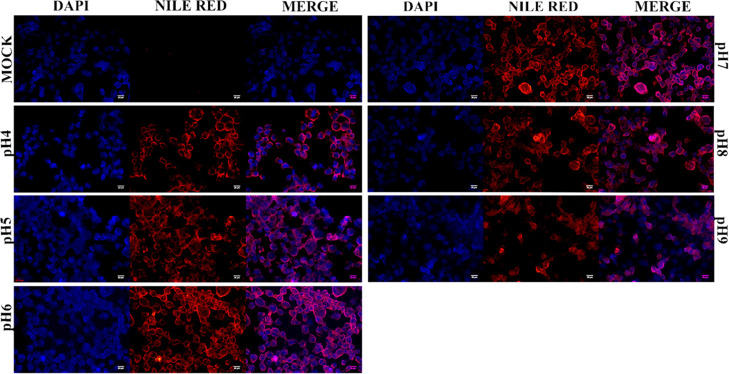
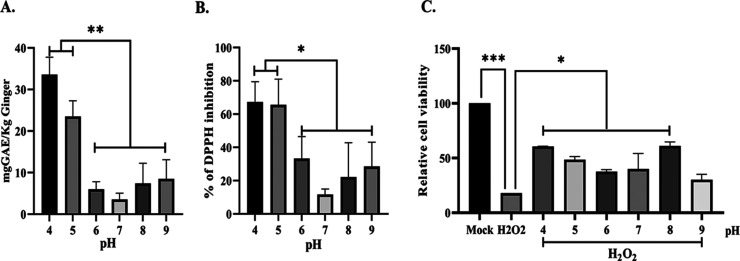
Plant-derived nanoparticles (PDNPs) are naturally occurring exosome-like nanovesicles derived from dietary plants containing key plant bioactives. Ginger-derived PDNPs have a therapeutic effect on alcohol-induced liver injury, inflammatory bowel disease, and colon cancer. PDNPs are conventionally purified by differential ultracentrifugation, a technique not amenable for scale up. We have recently developed a polyethylene glycol (PEG) 6000-based method for cost-effective purification of ginger PDNPs, with comparable efficiency to differential ultracentrifugation ( , (1), 4456.). Herein, we report a 4-5-fold higher ginger PDNP recovery when PEG precipitation was carried out in low pH conditions (pH 4 and 5). Low pH-derived ginger PDNPs were smaller in size without an overt change in zeta potential. The spontaneous intracellular entry and protection against oxidative stress in A431 cells were similar between ginger PDNPs purified under low, neutral, and alkaline pH. Low-pH purified ginger PDNPs had higher levels of total polyphenolic content compared to PDNPs purified under neutral and alkaline pH. Recently, ginger PDNP-derived microRNAs have been shown to exhibit cross-kingdom regulation by targeting human, gut microbiome, and viral transcripts. Using qRT-PCR, we also verified the presence of miRNAs that were predicted to target SARS-CoV-2 in ginger PDNPs purified under low pH. Thus, we have developed a method to purify ginger PDNPs in high yields by using low-pH conditions without affecting the major bioactive contents of PDNPs.
植物源纳米颗粒(PDNPs)是天然存在的类似外泌体的纳米囊泡,源自含有关键植物生物活性成分的食用植物。生姜源PDNPs对酒精性肝损伤、炎症性肠病和结肠癌具有治疗作用。传统上,PDNPs通过差速超速离心法纯化,这是一种不适合扩大规模的技术。我们最近开发了一种基于聚乙二醇(PEG)6000的方法,用于经济高效地纯化生姜PDNPs,其效率与差速超速离心法相当(,(1),4456)。在此,我们报告当在低pH条件(pH 4和5)下进行PEG沉淀时,生姜PDNPs的回收率提高了4-5倍。低pH条件下获得的生姜PDNPs尺寸更小,zeta电位没有明显变化。在低pH、中性和碱性pH条件下纯化的生姜PDNPs对A431细胞的自发细胞内进入和抗氧化应激保护作用相似。与在中性和碱性pH条件下纯化的PDNPs相比,低pH纯化的生姜PDNPs的总多酚含量更高。最近,已证明生姜PDNP衍生的微小RNA通过靶向人类、肠道微生物群和病毒转录本表现出跨界调控。使用qRT-PCR,我们还验证了在低pH条件下纯化的生姜PDNPs中存在预测靶向SARS-CoV-2的微小RNA。因此,我们开发了一种方法,通过使用低pH条件以高产量纯化生姜PDNPs,而不影响PDNPs的主要生物活性成分。