Department of Psychiatry, Psychosomatic Medicine and Psychotherapy, University Hospital Frankfurt, Frankfurt, Germany.
Department of Psychiatry and Psychotherapy, University Medical Center Mainz, Mainz, Germany.
Transl Psychiatry. 2021 Jul 17;11(1):392. doi: 10.1038/s41398-021-01508-2.
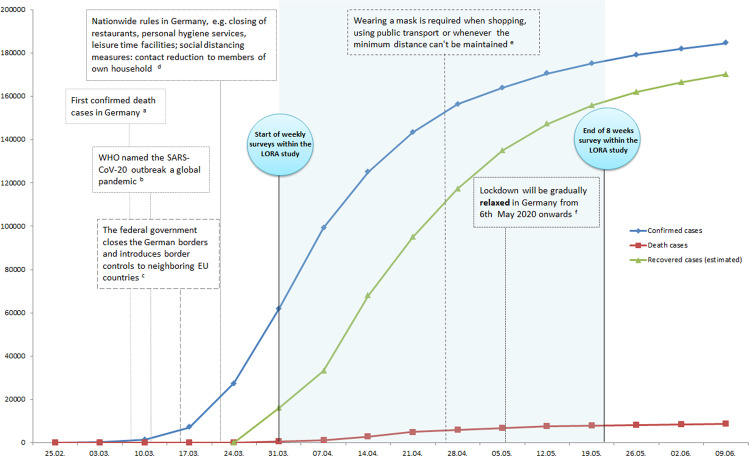
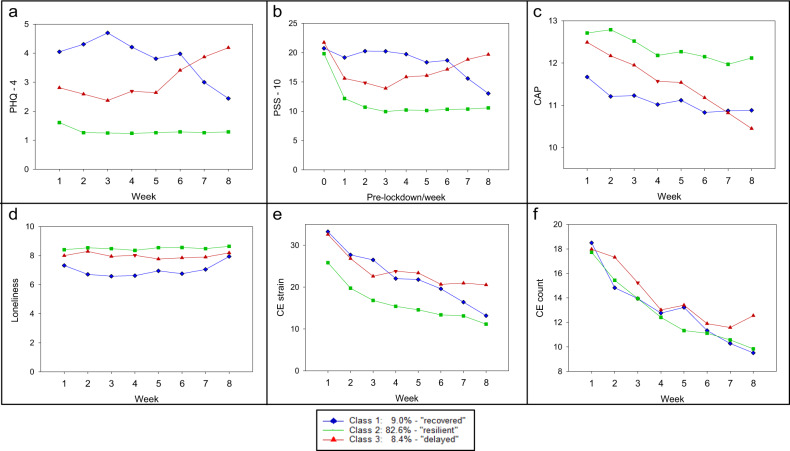
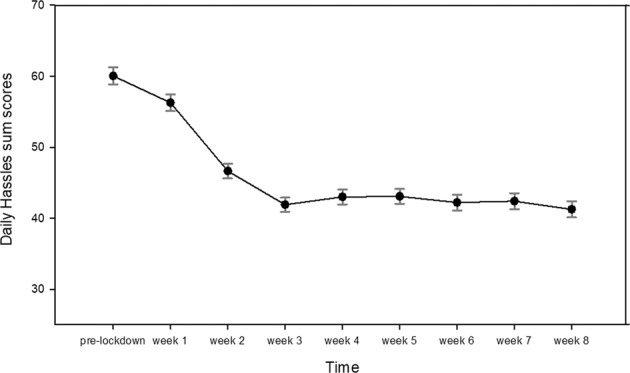
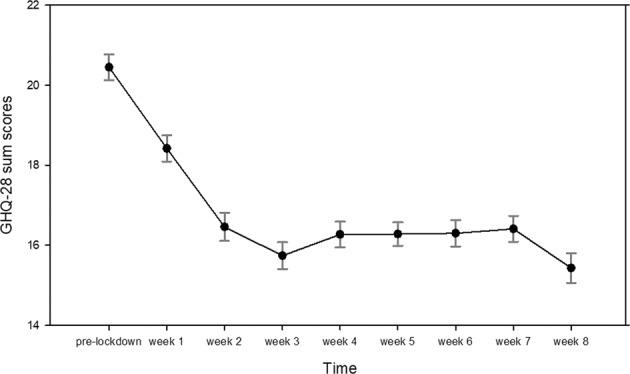
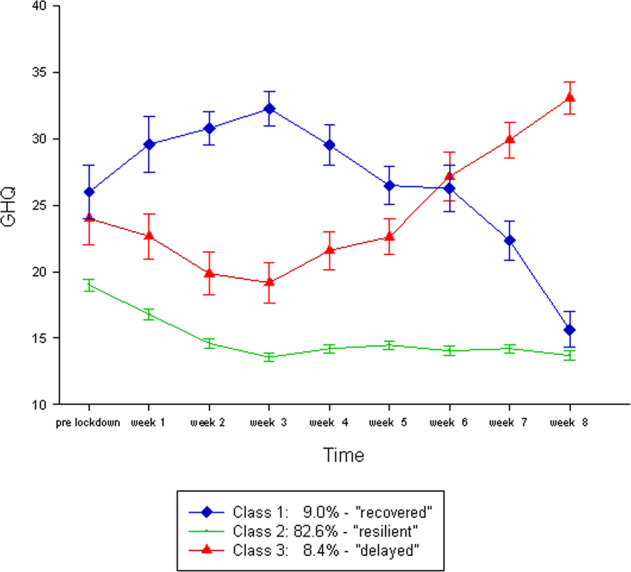
The COVID-19 pandemic and resulting measures can be regarded as a global stressor. Cross-sectional studies showed rather negative impacts on people's mental health, while longitudinal studies considering pre-lockdown data are still scarce. The present study investigated the impact of COVID-19 related lockdown measures in a longitudinal German sample, assessed since 2017. During lockdown, 523 participants completed additional weekly online questionnaires on e.g., mental health, COVID-19-related and general stressor exposure. Predictors for and distinct trajectories of mental health outcomes were determined, using multilevel models and latent growth mixture models, respectively. Positive pandemic appraisal, social support, and adaptive cognitive emotion regulation were positively, whereas perceived stress, daily hassles, and feeling lonely negatively related to mental health outcomes in the entire sample. Three subgroups ("recovered," 9.0%; "resilient," 82.6%; "delayed dysfunction," 8.4%) with different mental health responses to initial lockdown measures were identified. Subgroups differed in perceived stress and COVID-19-specific positive appraisal. Although most participants remained mentally healthy, as observed in the resilient group, we also observed inter-individual differences. Participants' psychological state deteriorated over time in the delayed dysfunction group, putting them at risk for mental disorder development. Consequently, health services should especially identify and allocate resources to vulnerable individuals.
新冠疫情及其相关措施可被视为全球性应激源。横断面研究显示其对人们心理健康有负面影响,而考虑到封锁前数据的纵向研究仍相对较少。本研究在一个自 2017 年起开始追踪的纵向德国样本中,调查了新冠疫情相关封锁措施的影响。封锁期间,523 名参与者完成了每周额外的在线问卷,内容包括心理健康、与新冠相关和一般应激源暴露等。使用多层模型和潜在增长混合模型分别确定了心理健康结果的预测因素和不同轨迹。在整个样本中,积极的大流行病评估、社会支持和适应性认知情绪调节与心理健康结果呈正相关,而感知压力、日常困扰和孤独感与心理健康结果呈负相关。确定了三个对初始封锁措施有不同心理健康反应的亚组(“恢复”组,9.0%;“韧性”组,82.6%;“延迟功能障碍”组,8.4%)。亚组在感知压力和新冠特定的积极评估方面存在差异。尽管大多数参与者如在韧性组中观察到的那样保持心理健康,但我们也观察到了个体间的差异。在延迟功能障碍组中,参与者的心理状态随时间恶化,使他们面临精神障碍发展的风险。因此,卫生服务部门应特别识别和分配资源给弱势群体。