Okanagan Microelectronics and Gigahertz Applications Laboratory, School of Engineering, University of British Columbia, Kelowna, BC, V1V 1V7, Canada.
Sci Rep. 2021 Jul 20;11(1):14775. doi: 10.1038/s41598-021-94139-y.
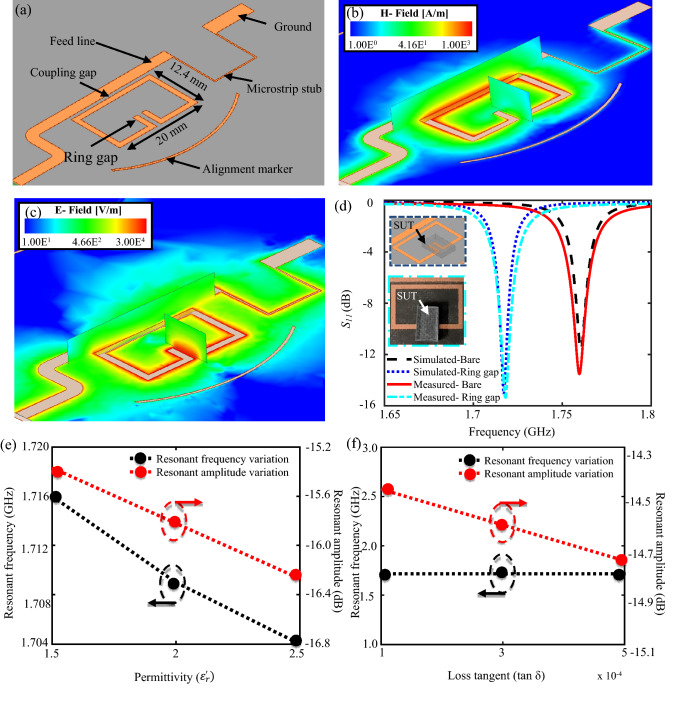
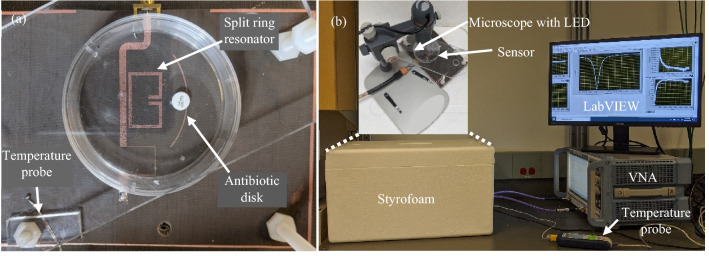
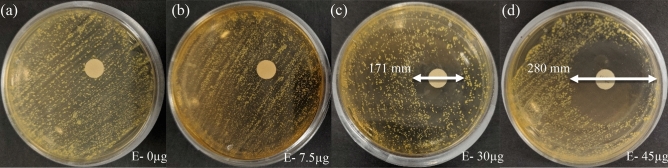
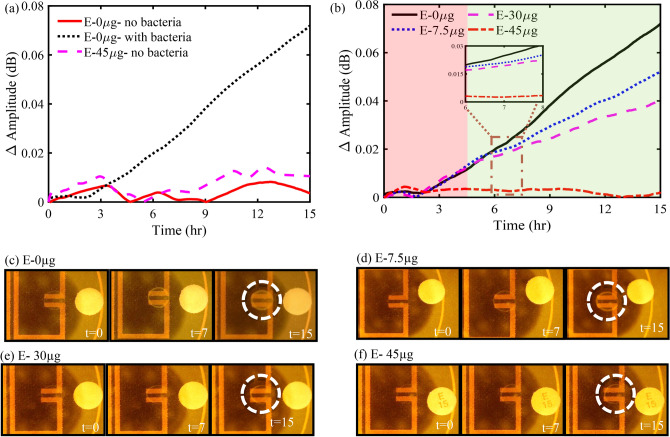
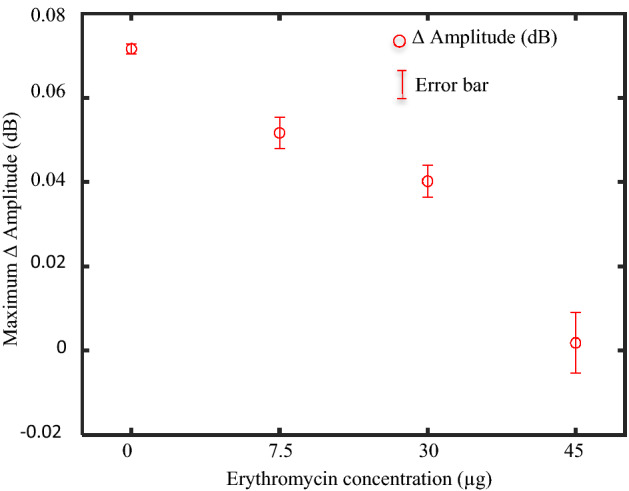
Infection diagnosis and antibiotic susceptibility testing (AST) are pertinent clinical microbiology practices that are in dire need of improvement, due to the inadequacy of current standards in early detection of bacterial response to antibiotics and affordability of contemporarily used methods. This paper presents a novel way to conduct AST which hybridizes disk diffusion AST with microwave resonators for rapid, contactless, and non-invasive sensing and monitoring. In this research, the effect of antibiotic (erythromycin) concentrations on test bacterium, Escherichia coli (E. coli) cultured on solid agar medium (MH agar) are monitored through employing a microwave split-ring resonator. A one-port microwave resonator operating at a 1.76 GHz resonant frequency, featuring a 5 mm sensitive sensing region, was designed and optimized to perform this. Upon introducing uninhibited growth of the bacteria, the sensor measured 0.005 dB/hr, with a maximum change of 0.07 dB over the course of 15 hours. The amplitude change decreased to negligible values to signify inhibited growth of the bacteria at higher concentrations of antibiotics, such as a change of 0.005 dB in resonant amplitude variation while using 45 µg of antibiotic. Moreover, this sensor demonstrated decisive results of antibiotic susceptibility in under 6 hours and shows great promise to expand automation to the intricate AST workflow in clinical settings, while providing rapid, sensitive, and non-invasive detection capabilities.
感染诊断和抗生素药敏试验(AST)是相关的临床微生物学实践,由于当前标准在早期检测抗生素对细菌的反应和现代方法的可负担性方面存在不足,因此迫切需要改进。本文提出了一种新的 AST 方法,该方法将圆盘扩散 AST 与微波谐振器相结合,用于快速、非接触和非侵入式的感应和监测。在这项研究中,通过使用微波分裂环谐振器来监测抗生素(红霉素)浓度对固体琼脂培养基(MH 琼脂)上培养的测试细菌大肠杆菌(E. coli)的影响。设计并优化了一个工作频率为 1.76 GHz 的单端口微波谐振器,其敏感感应区为 5mm。在引入不受抑制的细菌生长后,传感器测量到 0.005dB/hr,在 15 小时内最大变化为 0.07dB。随着抗生素浓度的升高,细菌生长受到抑制,幅度变化减小到可忽略的值,例如,在使用 45μg 抗生素时,谐振幅度变化的变化为 0.005dB。此外,该传感器在 6 小时内显示出明确的抗生素药敏结果,并有望在临床环境中扩展自动化,实现复杂的 AST 工作流程,同时提供快速、敏感和非侵入式的检测能力。