BioMEMS and Bioinspired Microfluidic Laboratory, Department of Mechanical and Manufacturing Engineering, University of Calgary, Calgary, AB, T2N 2N1, Canada.
Biomedical Engineering Graduate Program, University of Calgary, 2500 University Dr. NW, Calgary, AB, T2N 1N4, Canada.
Sci Rep. 2018 Oct 25;8(1):15807. doi: 10.1038/s41598-018-34001-w.
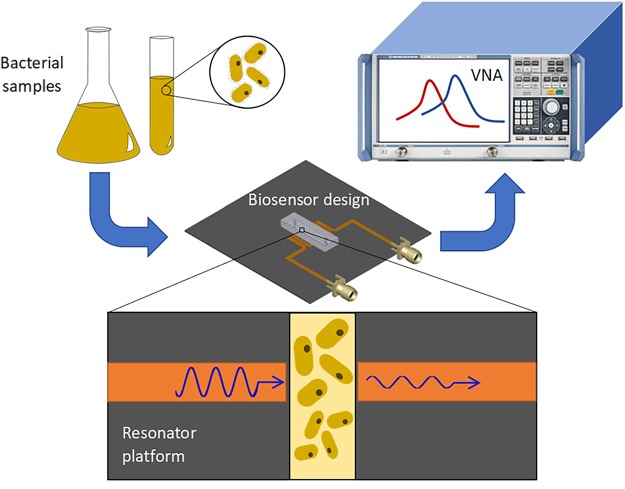
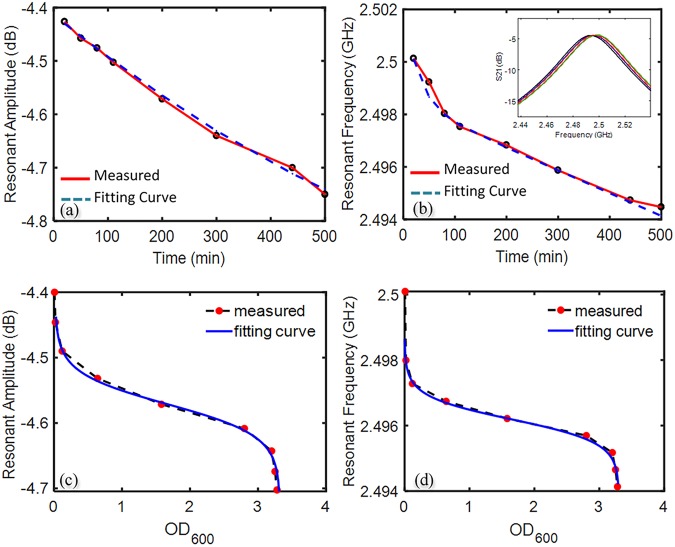
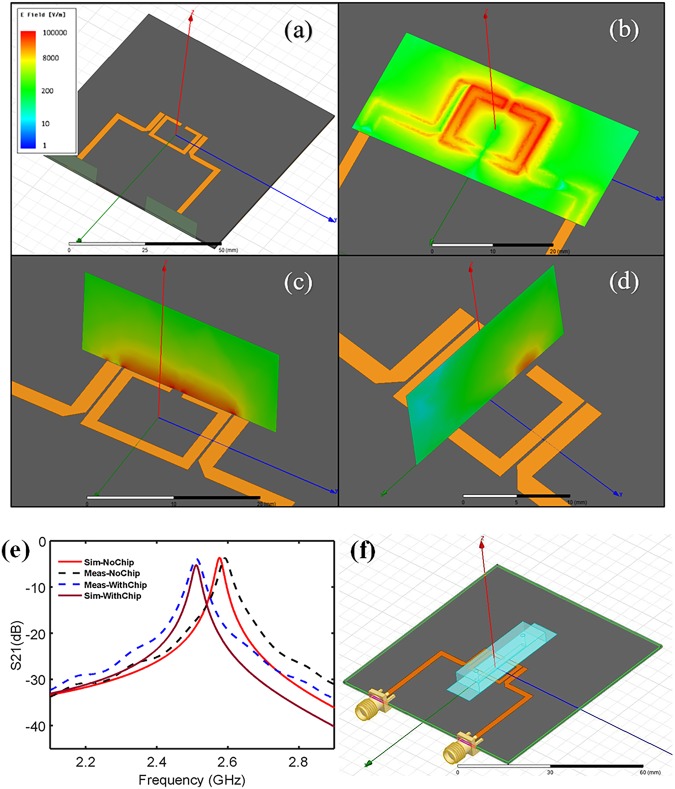
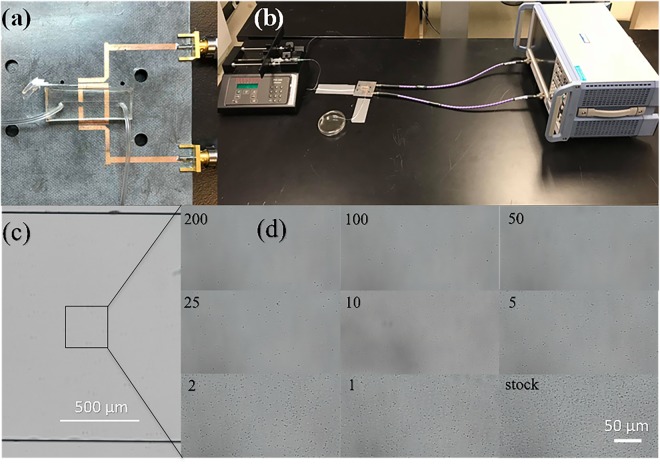
Infection diagnosis and antibiotic susceptibility testing (AST) are time-consuming and often laborious clinical practices. This paper presents a microwave-microfluidic biosensor for rapid, contactless and non-invasive device for testing the concentration and growth of Escherichia Coli (E. Coli) in medium solutions of different pH to increase the efficacy of clinical microbiology practices. The thin layer interface between the microfluidic channel and the microwave resonator significantly enhanced the detection sensitivity. The microfluidic chip, fabricated using standard soft lithography, was injected with bacterial samples and incorporated with a microwave microstrip ring resonator sensor with an operation frequency of 2.5 GHz and initial quality factor of 83 for detecting the concentration and growth of bacteria. The resonator had a coupling gap area on of 1.5 × 1.5 mm as of its sensitive region. The presence of different concentrations of bacteria in different pH solutions were detected via screening the changes in resonant amplitude and frequency responses of the microwave system. The sensor device demonstrated near immediate response to changes in the concentration of bacteria and maximum sensitivity of 3.4 MHz compared to a logarithm value of bacteria concentration. The minimum prepared optical transparency of bacteria was tested at an OD value of 0.003. The sensor's resonant frequency and amplitude parameters were utilized to monitor bacteria growth during a 500-minute time frame, which demonstrated a stable response with respect to detecting the bacterial proliferation. A highly linear response was demonstrated for detecting bacteria concentration at various pH values. The growth of bacteria analyzed over the resonator showed an exponential growth curve with respect to time and concurred with the lag-log-stationary-death model of cell growth. This biosensor is one step forward to automate the complex AST workflow of clinical microbiology laboratories for rapid and automated detection of bacteria as well as screening the bacteria proliferation in response to antibiotics.
感染诊断和抗生素药敏试验(AST)是既耗时又费力的临床实践。本文提出了一种微波微流控生物传感器,用于快速、非接触和非侵入式检测不同 pH 值介质溶液中大肠杆菌(E. coli)的浓度和生长情况,以提高临床微生物学实践的效果。微流道与微波谐振器之间的薄层界面显著提高了检测灵敏度。微流控芯片采用标准软光刻技术制造,注入细菌样本,并与工作频率为 2.5GHz、初始品质因数为 83 的微波微带环形谐振器传感器结合,用于检测细菌的浓度和生长。谐振器的敏感区域的耦合间隙面积为 1.5×1.5mm。通过筛选微波系统的谐振幅度和频率响应变化,检测不同 pH 值溶液中不同浓度的细菌。该传感器设备对细菌浓度变化的响应速度非常快,与细菌浓度的对数相比,其最大灵敏度为 3.4MHz。测试了最低的细菌制备光学透明度为 OD 值 0.003。利用传感器的谐振频率和幅度参数,在 500 分钟的时间内监测细菌的生长情况,结果表明该传感器在检测细菌增殖方面具有稳定的响应。在各种 pH 值下,该传感器对细菌浓度的检测表现出高度线性的响应。在谐振器上分析的细菌生长情况显示出与时间相关的指数增长曲线,并且与细胞生长的滞后-对数-稳定-死亡模型一致。这种生物传感器是朝着自动化临床微生物学实验室复杂 AST 工作流程迈出的一步,用于快速自动检测细菌,并筛选细菌对抗生素的增殖反应。