Deng X, Hasan A, Elsharkawy S, Tejeda-Montes E, Tarakina N V, Greco G, Nikulina E, Stormonth-Darling J M, Convery N, Rodriguez-Cabello J C, Boyde A, Gadegaard N, Pugno N M, Al-Jawad M, Mata A
School of Engineering and Materials Science, Queen Mary University of London, London, E1 4NS, UK.
Institute of Bioengineering, Queen Mary University of London, London, E1 4NS, UK.
Mater Today Bio. 2021 Jun 9;11:100119. doi: 10.1016/j.mtbio.2021.100119. eCollection 2021 Jun.
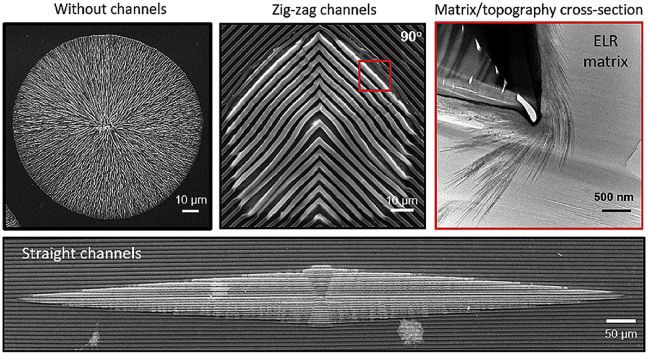
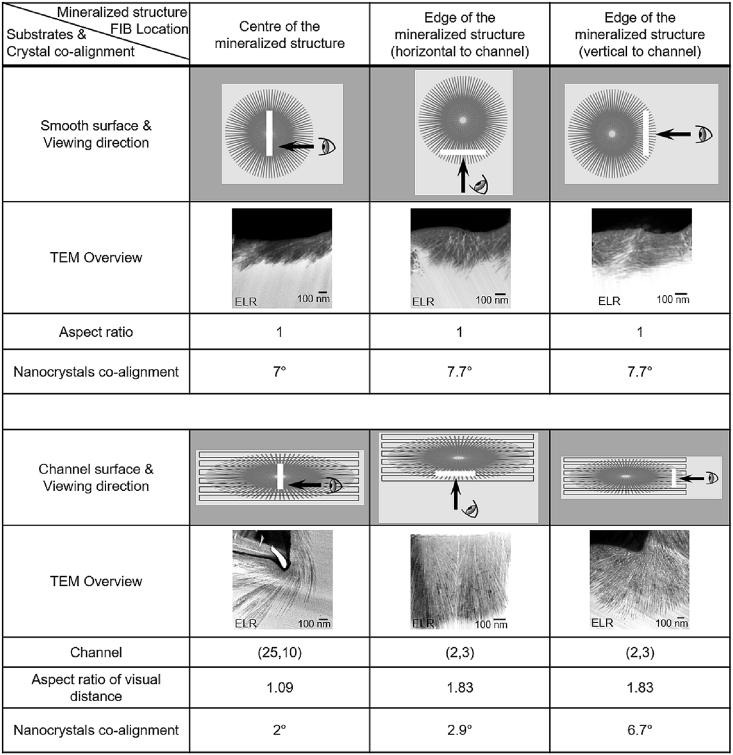
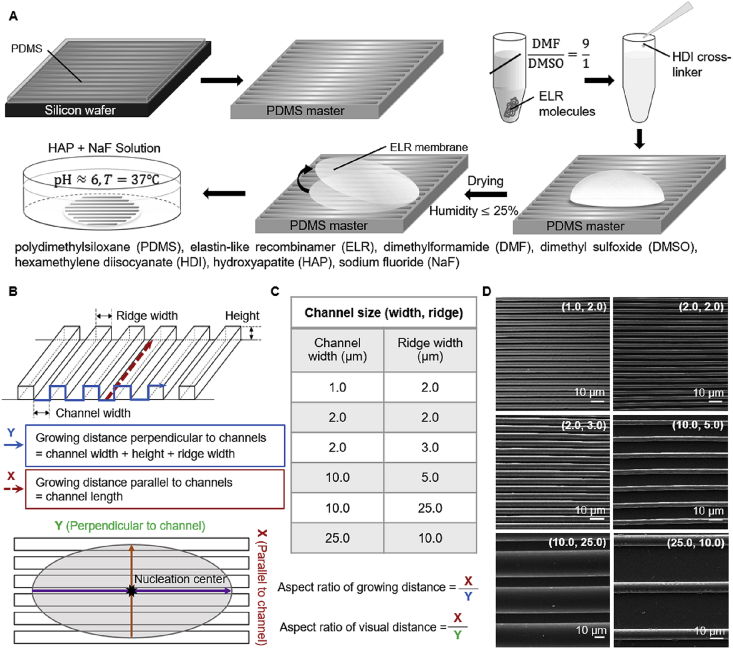
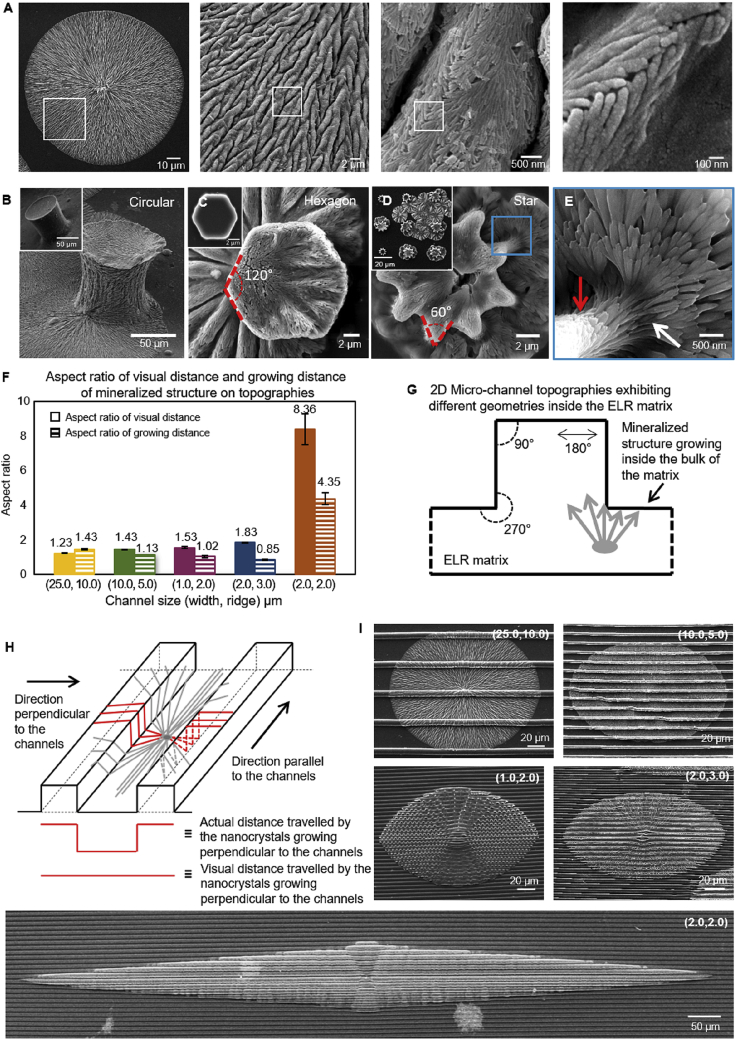
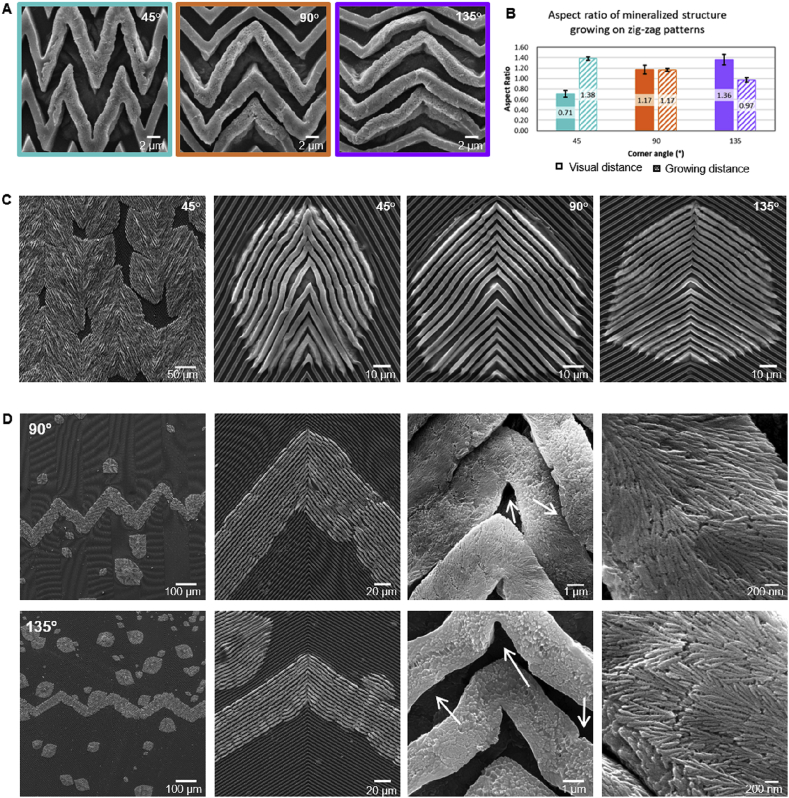
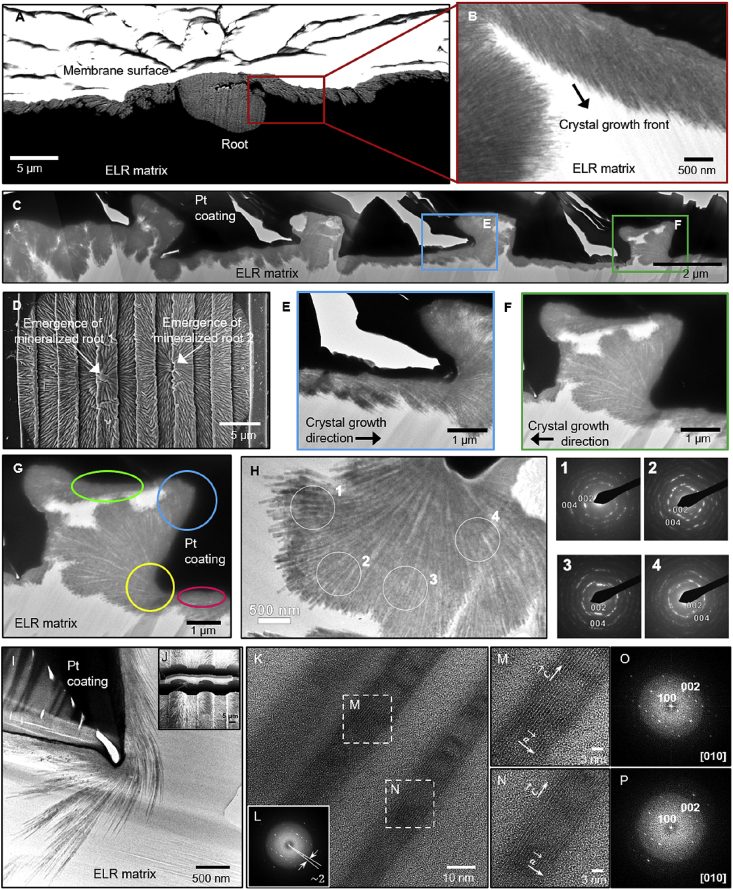
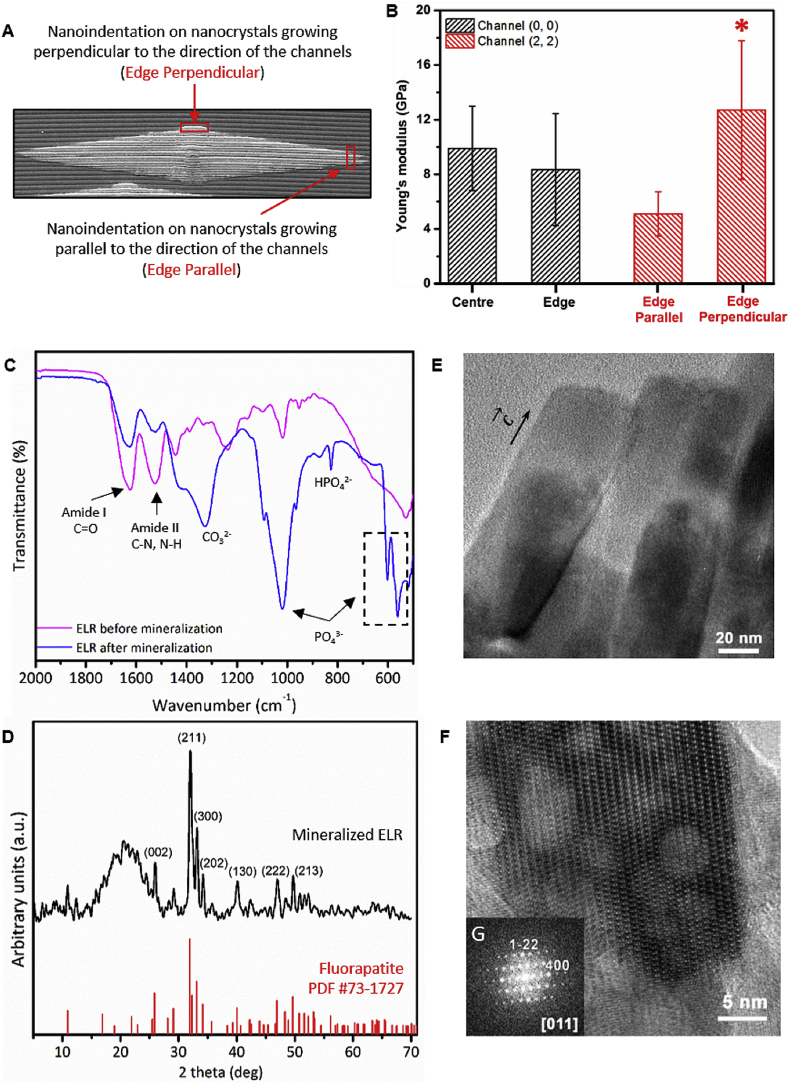
Material platforms based on interaction between organic and inorganic phases offer enormous potential to develop materials that can recreate the structural and functional properties of biological systems. However, the capability of organic-mediated mineralizing strategies to guide mineralization with spatial control remains a major limitation. Here, we report on the integration of a protein-based mineralizing matrix with surface topographies to grow spatially guided mineralized structures. We reveal how well-defined geometrical spaces defined within the organic matrix by the surface topographies can trigger subtle changes in single nanocrystal co-alignment, which are then translated to drastic changes in mineralization at the microscale and macroscale. Furthermore, through systematic modifications of the surface topographies, we demonstrate the possibility of selectively guiding the growth of hierarchically mineralized structures. We foresee that the capacity to direct the anisotropic growth of such structures would have important implications in the design of biomineralizing synthetic materials to repair or regenerate hard tissues.
基于有机相和无机相之间相互作用的材料平台为开发能够重现生物系统结构和功能特性的材料提供了巨大潜力。然而,有机介导的矿化策略在空间控制下引导矿化的能力仍然是一个主要限制。在此,我们报告了基于蛋白质的矿化基质与表面形貌的整合,以生长空间导向的矿化结构。我们揭示了表面形貌在有机基质中定义的明确几何空间如何能够触发单个纳米晶体共排列中的细微变化,这些变化随后在微观和宏观尺度上转化为矿化的剧烈变化。此外通过对表面形貌的系统修饰,我们证明了选择性引导分级矿化结构生长的可能性。我们预见,指导此类结构各向异性生长的能力将对设计用于修复或再生硬组织的生物矿化合成材料具有重要意义。