Tariq Amna, Banda Juan M, Skums Pavel, Dahal Sushma, Castillo-Garsow Carlos, Espinoza Baltazar, Brizuela Noel G, Saenz Roberto A, Kirpich Alexander, Luo Ruiyan, Srivastava Anuj, Gutierrez Humberto, Chan Nestor Garcia, Bento Ana I, Jimenez-Corona Maria-Eugenia, Chowell Gerardo
Department of Population Health Sciences, School of Public Health, Georgia State University, Atlanta, GA, United States of America.
Department of Computer Science, College of Arts and Sciences, Georgia State University, Atlanta, GA, United States of America.
PLoS One. 2021 Jul 21;16(7):e0254826. doi: 10.1371/journal.pone.0254826. eCollection 2021.
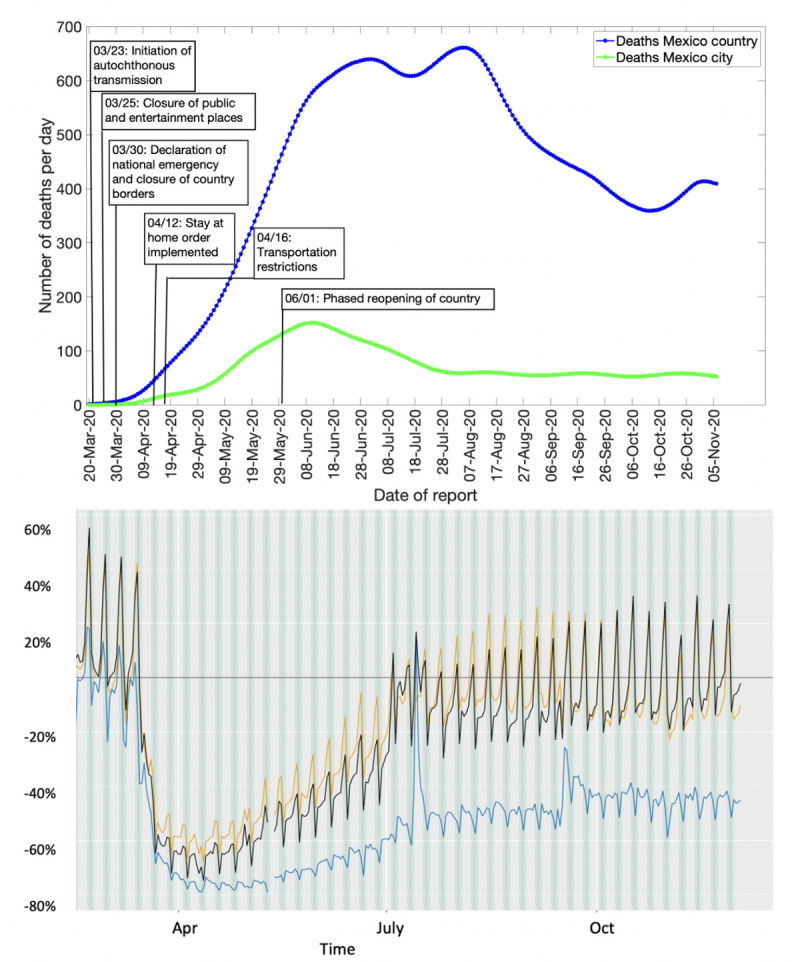
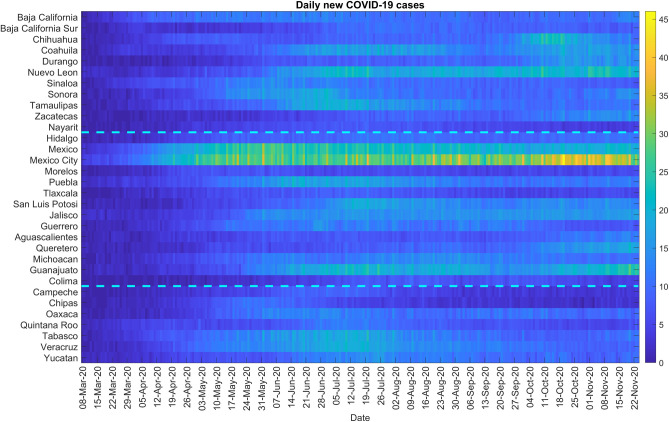
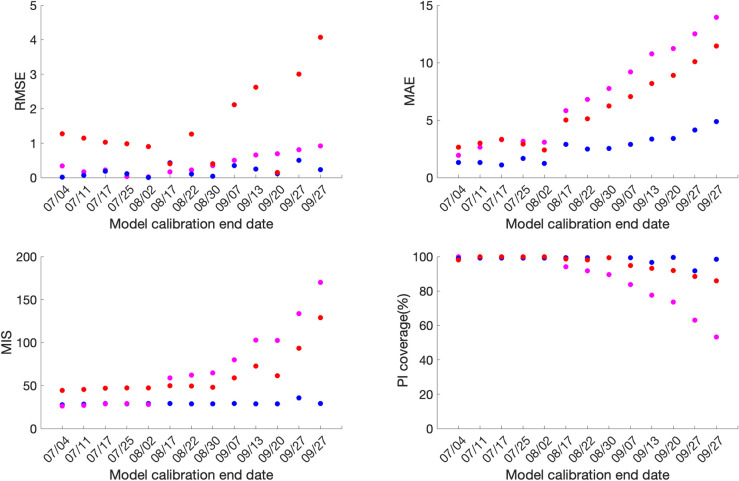
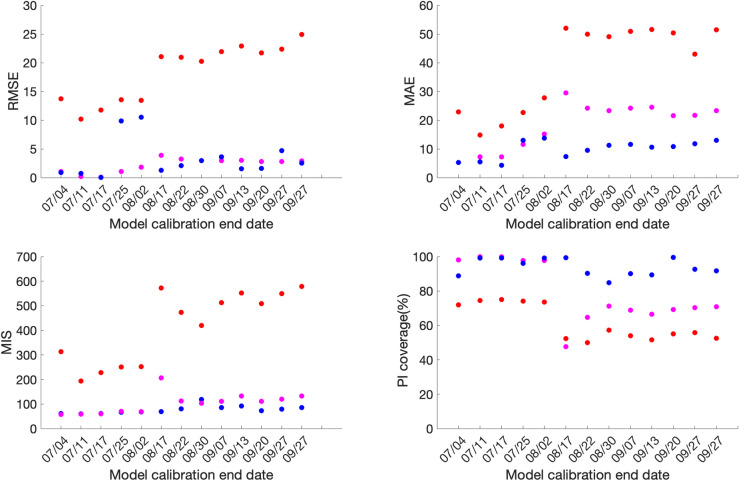
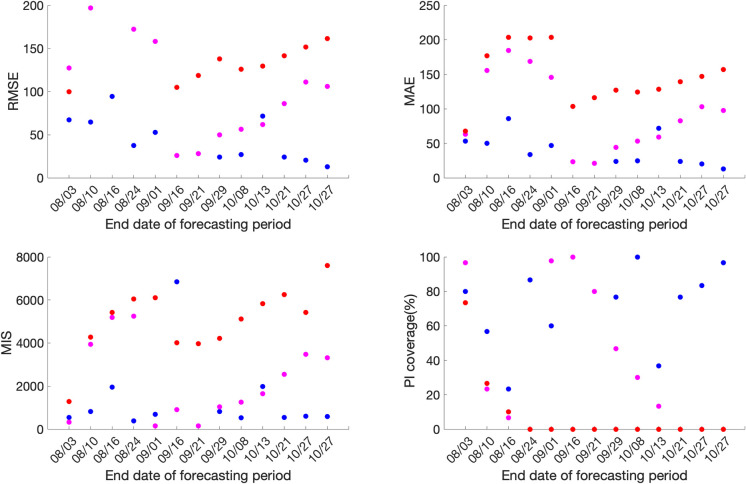
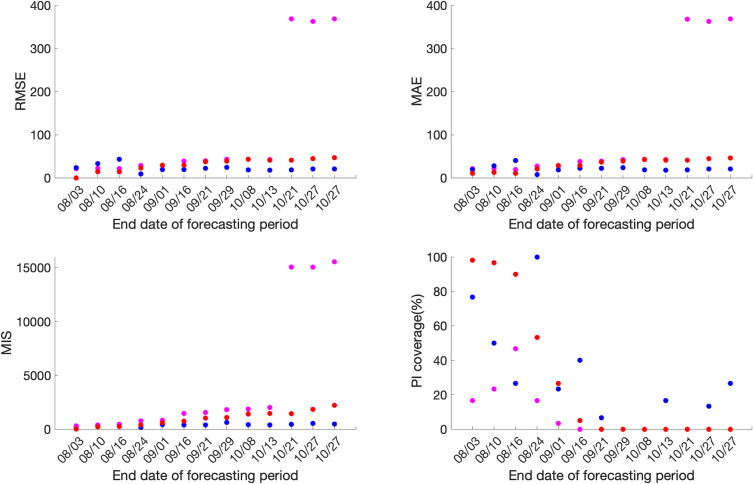
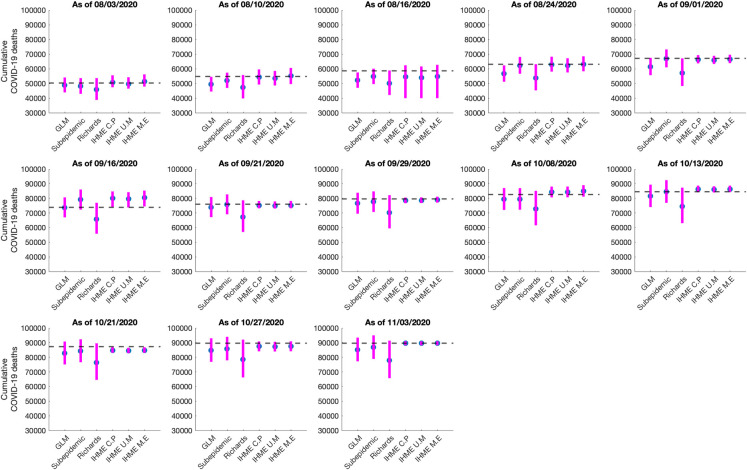
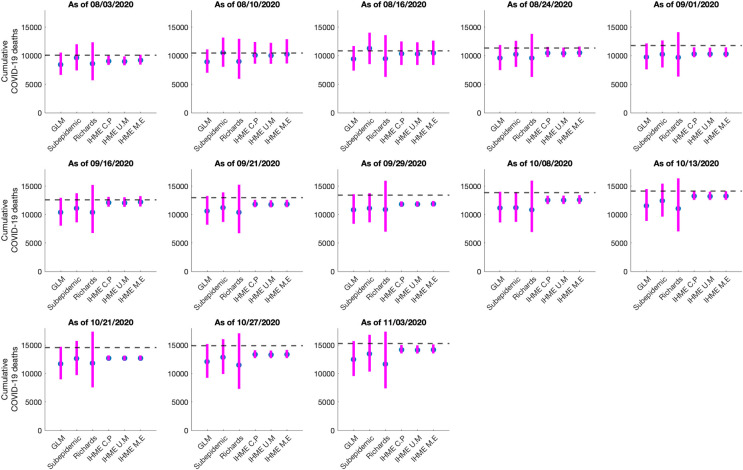
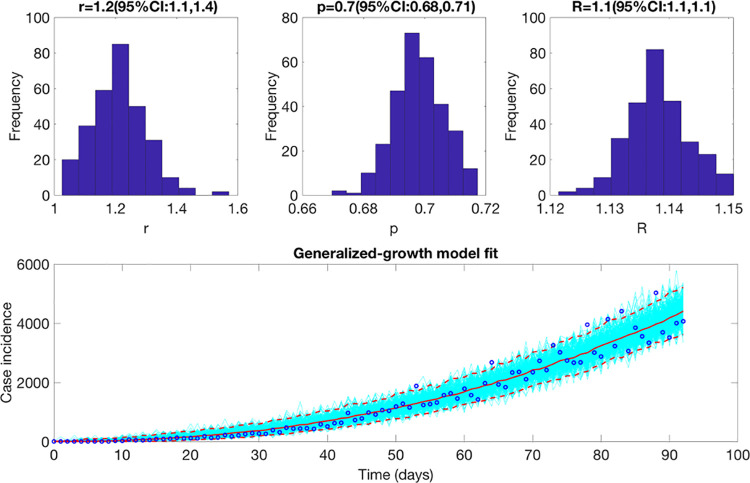
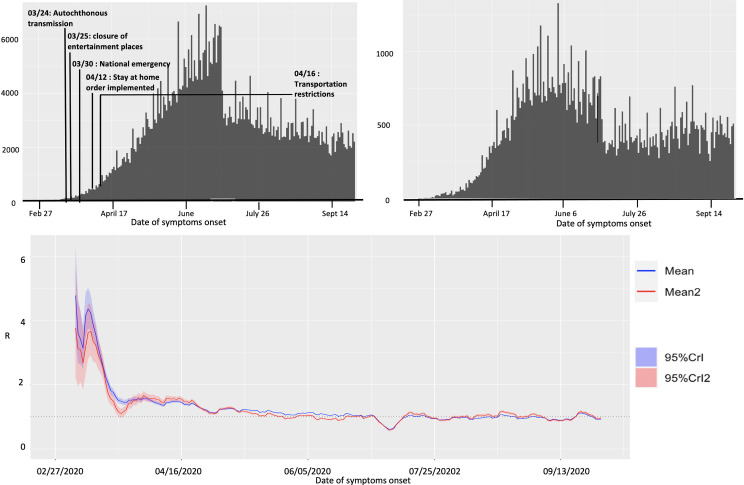
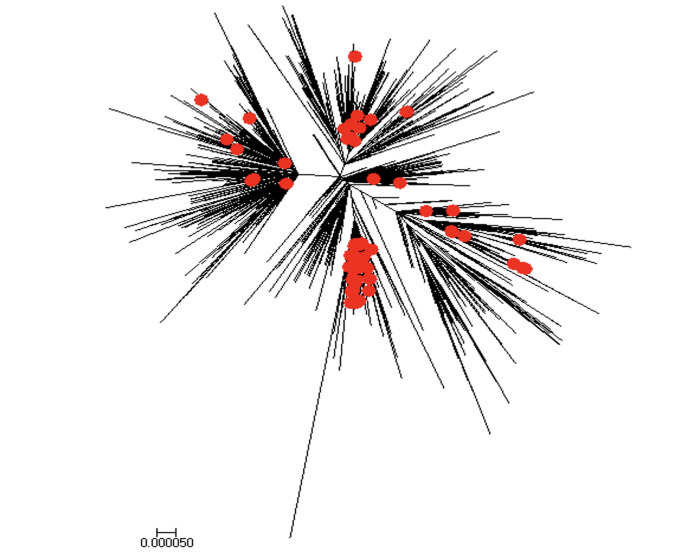
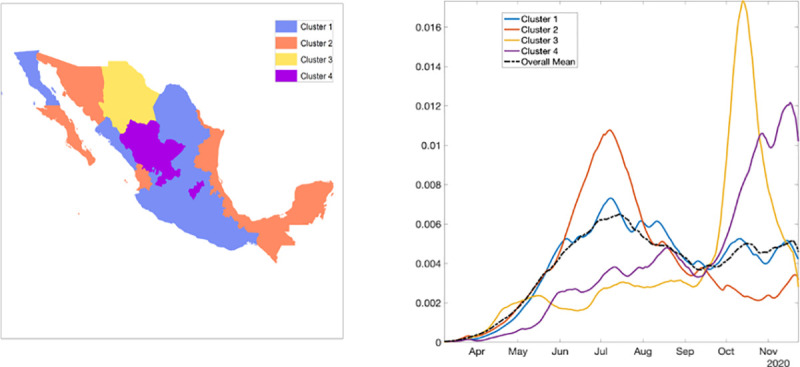
Mexico has experienced one of the highest COVID-19 mortality rates in the world. A delayed implementation of social distancing interventions in late March 2020 and a phased reopening of the country in June 2020 has facilitated sustained disease transmission in the region. In this study we systematically generate and compare 30-day ahead forecasts using previously validated growth models based on mortality trends from the Institute for Health Metrics and Evaluation for Mexico and Mexico City in near real-time. Moreover, we estimate reproduction numbers for SARS-CoV-2 based on the methods that rely on genomic data as well as case incidence data. Subsequently, functional data analysis techniques are utilized to analyze the shapes of COVID-19 growth rate curves at the state level to characterize the spatiotemporal transmission patterns of SARS-CoV-2. The early estimates of the reproduction number for Mexico were estimated between Rt ~1.1-1.3 from the genomic and case incidence data. Moreover, the mean estimate of Rt has fluctuated around ~1.0 from late July till end of September 2020. The spatial analysis characterizes the state-level dynamics of COVID-19 into four groups with distinct epidemic trajectories based on epidemic growth rates. Our results show that the sequential mortality forecasts from the GLM and Richards model predict a downward trend in the number of deaths for all thirteen forecast periods for Mexico and Mexico City. However, the sub-epidemic and IHME models perform better predicting a more realistic stable trajectory of COVID-19 mortality trends for the last three forecast periods (09/21-10/21, 09/28-10/27, 09/28-10/27) for Mexico and Mexico City. Our findings indicate that phenomenological models are useful tools for short-term epidemic forecasting albeit forecasts need to be interpreted with caution given the dynamic implementation and lifting of social distancing measures.
墨西哥是全球新冠肺炎死亡率最高的国家之一。2020年3月下旬社会 distancing 干预措施实施延迟,以及2020年6月该国分阶段重新开放,助长了该地区疾病的持续传播。在本研究中,我们基于健康指标与评估研究所提供的墨西哥和墨西哥城的死亡率趋势,使用先前验证过的增长模型,近乎实时地系统生成并比较提前30天的预测。此外,我们基于依赖基因组数据以及病例发病率数据的方法,估算了新冠病毒的再生数。随后,运用功能数据分析技术,分析州一级新冠肺炎增长率曲线的形状,以表征新冠病毒的时空传播模式。根据基因组和病例发病率数据,墨西哥再生数的早期估计值在Rt约1.1至1.3之间。此外,2020年7月下旬至9月底,Rt的平均估计值在约1.0左右波动。空间分析根据疫情增长率将新冠肺炎在州一级的动态分为具有不同流行轨迹的四组。我们的结果表明,广义线性模型(GLM)和理查兹模型的序贯死亡率预测显示,墨西哥和墨西哥城所有13个预测期的死亡人数呈下降趋势。然而,亚流行模型和健康指标与评估研究所(IHME)模型在预测墨西哥和墨西哥城最后三个预测期(09/21 - 10/21、09/28 - 10/27、09/28 - 10/27)新冠肺炎死亡率趋势的更现实稳定轨迹方面表现更好。我们的研究结果表明,现象学模型是短期疫情预测的有用工具,不过鉴于社会 distancing 措施的动态实施和解除,预测结果需要谨慎解读。