Yang Xu, Haque Anwarul, Matsuzaki Shigenobu, Matsumoto Tetsuya, Nakamura Shigeki
Department of Microbiology, Tokyo Medical University, Tokyo, Japan.
Department of Infectious Diseases, School of Medicine, International University of Health and Welfare, Narita, Japan.
Front Microbiol. 2021 Jul 5;12:682255. doi: 10.3389/fmicb.2021.682255. eCollection 2021.
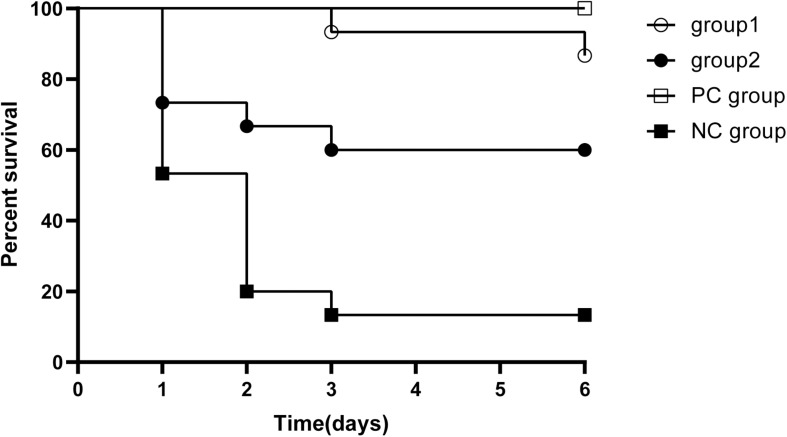
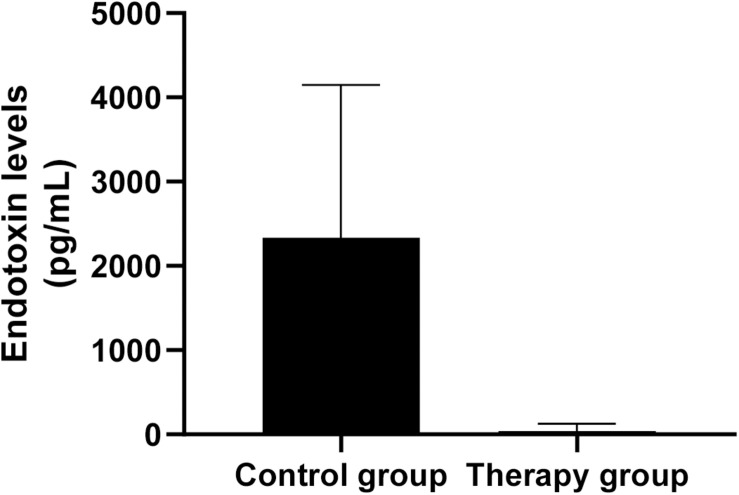
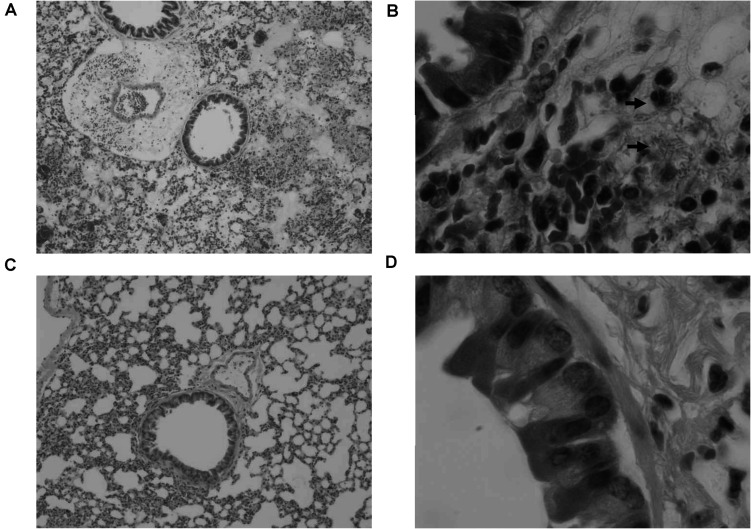
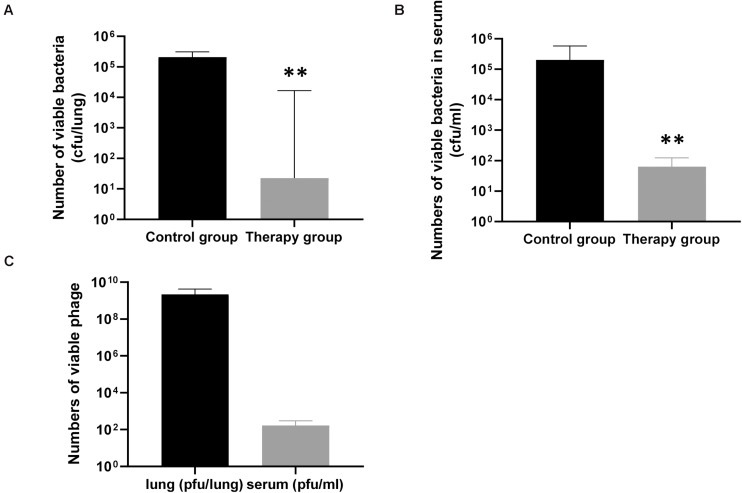
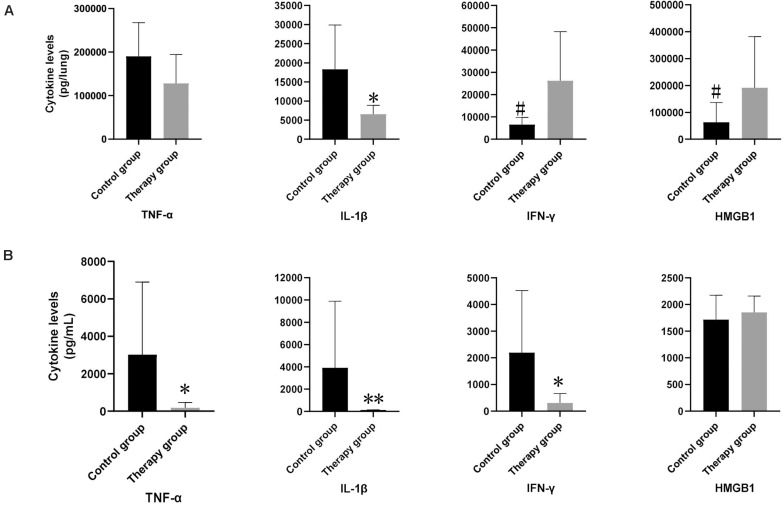
The emergence of multi-drug resistant necessitates the search for treatment options other than antibiotic use. The use of bacteriophages is currently being considered as an alternative to antibiotics for the treatment of bacterial infections. A number of bacteriophages were introduced to treat pneumonia in past reports. However, there are still lack of knowledge regarding the dosages, application time, mechanism and safety of phage therapy against pneumonia. We used the bacteriophage KPP10 against strain D4-induced pneumonia mouse models and observed their outcomes in comparison to control models. We found that the nasal inhalation of highly concentrated KPP10 (MOI = 80) significantly improved survival rate in pneumonia models ( < 0.01). The number of viable bacteria in both lungs and in serum were significantly decreased ( < 0.01) in phage-treated mice in comparison to the control mice. Pathological examination showed that phage-treated group had significantly reduced bleeding, inflammatory cell infiltration, and mucus secretion in lung interstitium. We also measured inflammatory cytokine levels in the serum and lung homogenates of mice. In phage-treated models, serum TNFα, IL-1β, and IFN-γ levels were significantly lower ( < 0.05, < 0.01, and < 0.05, respectively) than those in the control models. In the lung homogenate, the mean IL-1β level in phage-treated models was significantly lower ( < 0.05) than that of the control group. We confirmed the presence of phage in blood and lungs, and evaluated the safety of bacteriophage use in living models since bacteriophage mediated bacterial lysis arise concern of endotoxic shock. The study results suggest that phage therapy can potentially be used in treating lung infections caused by .
多重耐药性的出现使得有必要寻找除使用抗生素之外的治疗选择。目前,噬菌体疗法正被视为治疗细菌感染的抗生素替代方案。过去的报告中曾引入多种噬菌体来治疗肺炎。然而,对于噬菌体治疗肺炎的剂量、应用时间、作用机制和安全性,我们仍然知之甚少。我们使用噬菌体KPP10针对菌株D4诱导的肺炎小鼠模型进行实验,并与对照模型比较观察其结果。我们发现,经鼻腔吸入高浓度KPP10(感染复数=80)可显著提高肺炎模型小鼠的存活率(P<0.01)。与对照小鼠相比,噬菌体治疗组小鼠双肺和血清中的活菌数量均显著减少(P<0.01)。病理检查显示,噬菌体治疗组小鼠肺间质出血、炎症细胞浸润及黏液分泌均显著减少。我们还检测了小鼠血清和肺匀浆中的炎症细胞因子水平。在噬菌体治疗组模型中,血清肿瘤坏死因子α、白细胞介素-1β和干扰素-γ水平均显著低于对照模型(分别为P<0.05、P<0.01和P<0.05)。在肺匀浆中,噬菌体治疗组模型的平均白细胞介素-1β水平显著低于对照组(P<0.05)。我们证实了血液和肺中存在噬菌体,并评估了噬菌体在活体模型中的使用安全性,因为噬菌体介导的细菌裂解引发了对内毒素休克的担忧。研究结果表明,噬菌体疗法有可能用于治疗由……引起的肺部感染。