Division of Internal Medicine, Unnan City Hospital, Shimane, Japan.
Center for Community-Based Healthcare Research and Education (CoHRE), Shimane University, Shimane, Japan.
PLoS One. 2021 Jul 22;16(7):e0252784. doi: 10.1371/journal.pone.0252784. eCollection 2021.
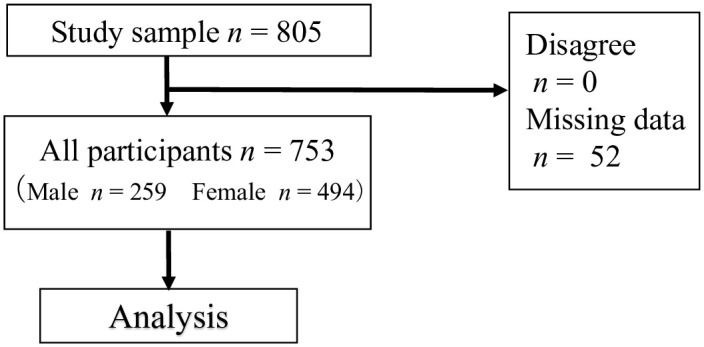
Sarcopenia is intricately related to aging associated diseases, such as neuropsychiatric disorders, oral status, and chronic diseases. Dementia and depression are interconnected and also related to sarcopenia. The preliminary shift from robust to sarcopenia (i.e., pre-sarcopenia) is an important albeit underdiscussed stage and is the focus of this study. Identifying factors associated with pre-sarcopenia may lead to sarcopenia prevention. To separately examine the effects of dementia and depression on pre-sarcopenia/sarcopenia, we conducted multiple analyses. This cross-sectional study used health checkup data from a rural Japanese island. The participants were aged 60 years and above, and the data included muscle mass, gait speed, handgrip strength, oral status (teeth and denture), chronic diseases (e.g., hypertension), dementia (cognitive assessment for dementia, iPad Version), and depression (self-rating depression scale). A total of 753 older adult participants were divided into the sarcopenia (n = 30), pre-sarcopenia (n = 125), and robust (n = 598) groups. An ordered logit regression analysis indicated that age and depression were positively correlated with sarcopenia, while hypertension was negatively associated with it. A multiple logistic regression analysis between the robust and pre-sarcopenia groups showed significant associations between the same three variables. Depression was associated with pre-sarcopenia, but not dementia. There was also a significant association between hypertension and pre-sarcopenia. Further research is needed to reveal whether the management of these factors can prevent sarcopenia.
肌肉减少症与衰老相关疾病密切相关,如神经精神障碍、口腔状况和慢性疾病。痴呆症和抑郁症相互关联,也与肌肉减少症有关。从健壮到肌肉减少症(即预肌肉减少症)的初步转变是一个重要但讨论不足的阶段,也是本研究的重点。确定与预肌肉减少症相关的因素可能有助于预防肌肉减少症。为了分别检查痴呆症和抑郁症对预肌肉减少症/肌肉减少症的影响,我们进行了多项分析。这项横断面研究使用了来自日本一个农村岛屿的健康检查数据。参与者年龄在 60 岁及以上,数据包括肌肉量、步态速度、手握力、口腔状况(牙齿和义齿)、慢性疾病(如高血压)、痴呆症(认知评估痴呆症,iPad 版)和抑郁症(自评抑郁量表)。共有 753 名老年参与者分为肌肉减少症组(n = 30)、预肌肉减少症组(n = 125)和健壮组(n = 598)。有序逻辑回归分析表明,年龄和抑郁与肌肉减少症呈正相关,而高血压与之呈负相关。健壮组和预肌肉减少症组之间的多逻辑回归分析显示,这三个变量之间存在显著关联。抑郁症与预肌肉减少症相关,但与痴呆症无关。高血压与预肌肉减少症也有显著关联。需要进一步研究以揭示是否可以通过管理这些因素来预防肌肉减少症。