Department of Biochemistry, Faculty of Basic Medical Sciences, University of Jos, Jos, Nigeria.
Department of Biochemistry, Faculty of Basic Medical Sciences, University of Jos, Jos, Nigeria.
J Pharmacol Sci. 2021 Sep;147(1):62-71. doi: 10.1016/j.jphs.2021.05.004. Epub 2021 May 23.
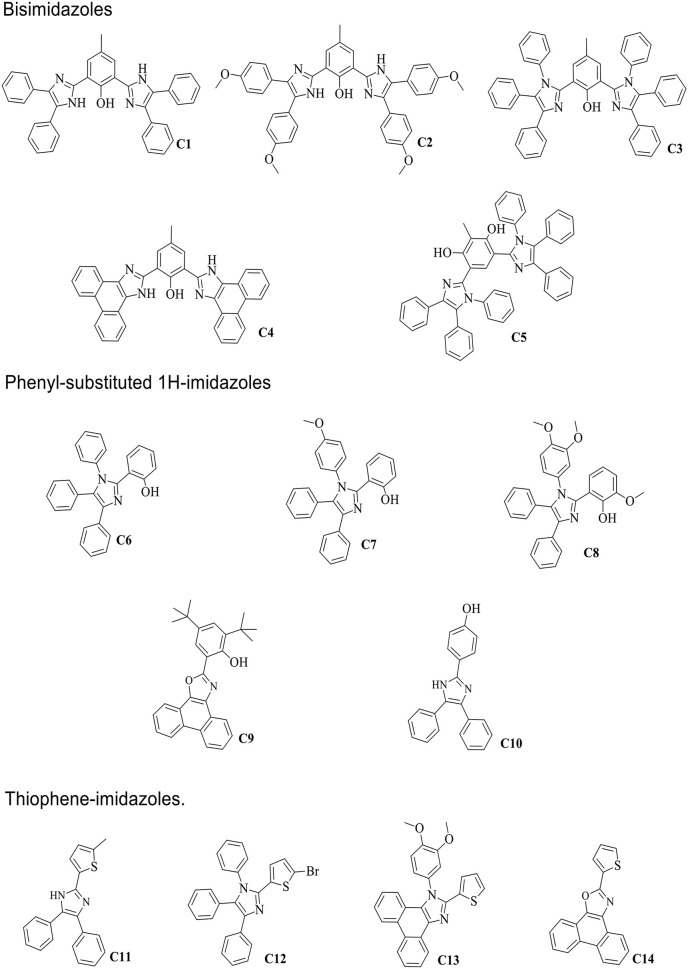
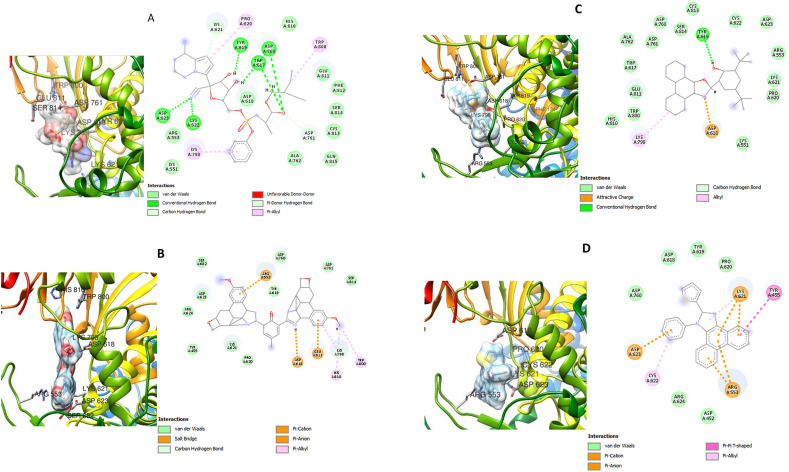
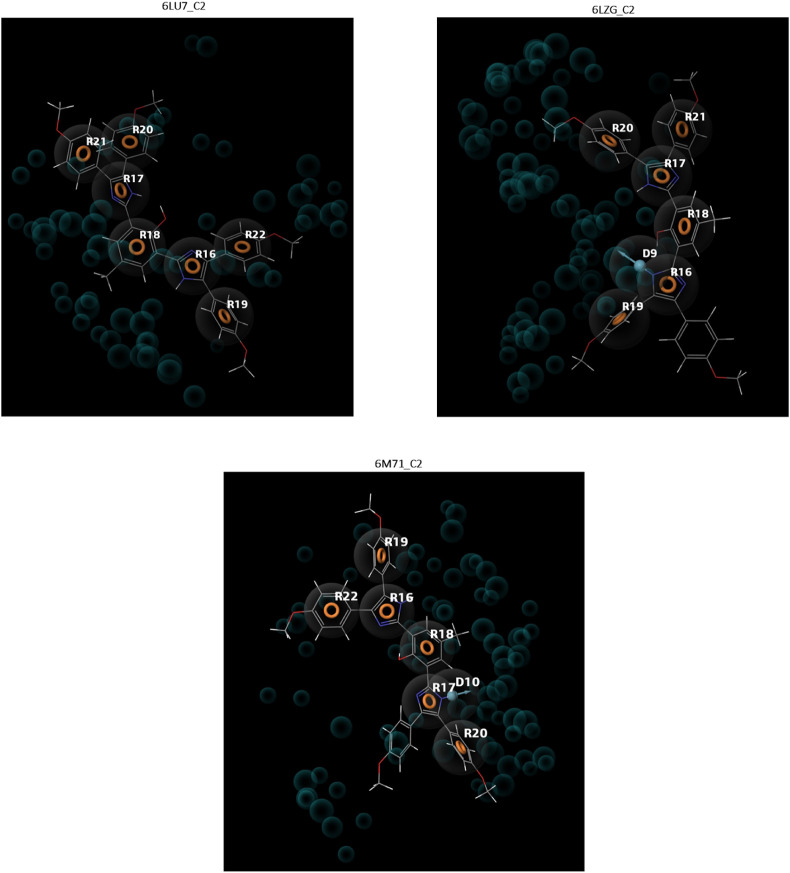
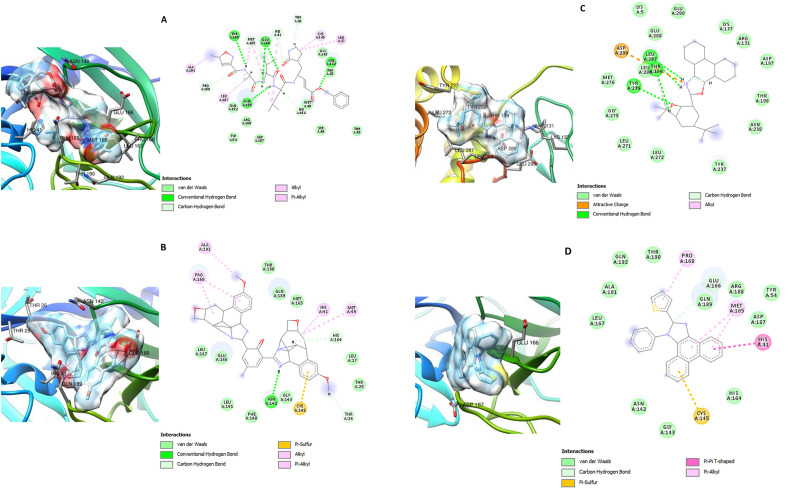
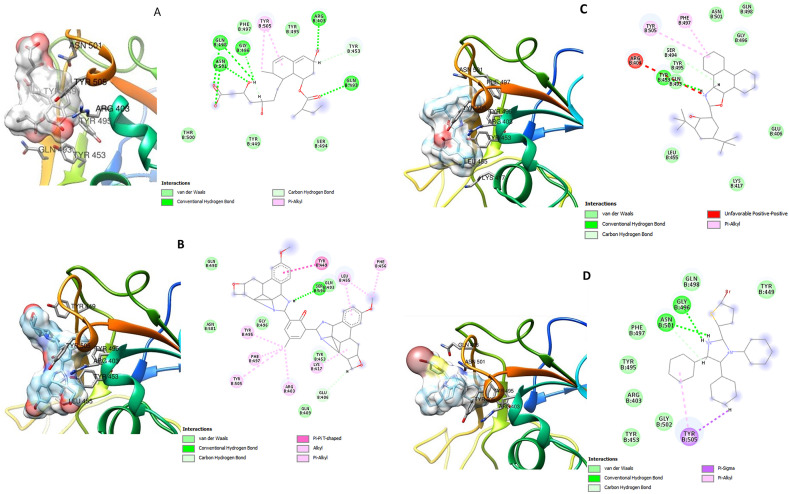
Owing to the urgent need for therapeutic interventions against the SARS-coronavirus 2 (SARS-CoV-2) pandemic, we employed an in silico approach to evaluate the SARS-CoV-2 inhibitory potential of newly synthesized imidazoles. The inhibitory potentials of the compounds against SARS-CoV-2 drug targets - main protease (Mpro), spike protein (Spro) and RNA-dependent RNA polymerase (RdRp) were investigated through molecular docking analysis. The binding free energy of the protein-ligand complexes were estimated, pharmacophore models were generated and the absorption, distribution, metabolism, excretion and toxicity (ADMET) properties of the compounds were determined. The compounds displayed various levels of binding affinities for the SARS-CoV-2 drug targets. Bisimidazole C2 scored highest against all the targets, with its aromatic rings including the two imidazole groups contributing to the binding. Among the phenyl-substituted 1H-imidazoles, C9 scored highest against all targets. C11 scored highest against Spro and C12 against Mpro and RdRp among the thiophene-imidazoles. The compounds interacted with HIS 41 - CYS 145 and GLU 288 - ASP 289 - GLU 290 of Mpro, ASN 501 of Spro receptor binding motif and some active site amino acids of RdRp. These novel imidazole compounds could be further developed as drug candidates against SARS-CoV-2 following lead optimization and experimental studies.
由于迫切需要针对严重急性呼吸系统综合征冠状病毒 2(SARS-CoV-2)大流行的治疗干预措施,我们采用了一种计算机模拟方法来评估新合成的咪唑类化合物对 SARS-CoV-2 的抑制潜力。通过分子对接分析研究了这些化合物对 SARS-CoV-2 药物靶标 - 主要蛋白酶(Mpro)、刺突蛋白(Spro)和 RNA 依赖性 RNA 聚合酶(RdRp)的抑制潜力。估计了蛋白质-配体复合物的结合自由能,生成了药效基团模型,并确定了化合物的吸收、分布、代谢、排泄和毒性(ADMET)特性。这些化合物对 SARS-CoV-2 药物靶标表现出不同程度的结合亲和力。双咪唑 C2 对所有靶标表现出最高的抑制活性,其包括两个咪唑基团的芳环有助于结合。在苯取代的 1H-咪唑中,C9 对所有靶标表现出最高的抑制活性。噻吩-咪唑中,C11 对 Spro 和 C12 对 Mpro 和 RdRp 的抑制活性最高。这些化合物与 Mpro 的 HIS 41 - CYS 145 和 GLU 288 - ASP 289 - GLU 290、Spro 受体结合基序的 ASN 501 和一些 RdRp 的活性位点氨基酸相互作用。这些新型咪唑化合物可以在进行先导优化和实验研究后进一步开发为针对 SARS-CoV-2 的候选药物。