Huan Changchao, Xu Yao, Zhang Wei, Guo Tingting, Pan Haochun, Gao Song
Institutes of Agricultural Science and Technology Development, College of Veterinary Medicine, Yangzhou University, Yangzhou, China.
Jiangsu Co-Innovation Center for Prevention and Control of Important Animal Infectious Diseases and Zoonoses, Yangzhou, China.
Front Pharmacol. 2021 Jul 6;12:680674. doi: 10.3389/fphar.2021.680674. eCollection 2021.
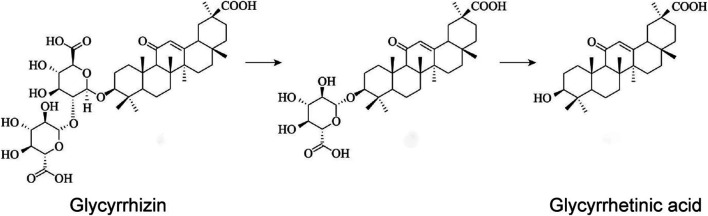
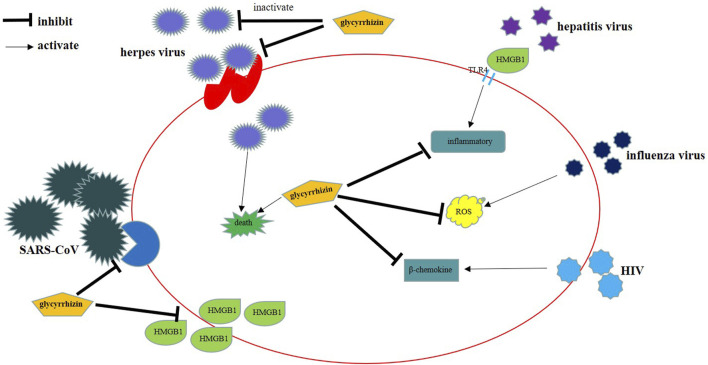
Liquorice is a traditional medicine. Triterpenoids such as glycyrrhizin and glycyrrhetinic acid are the main active constituents of liquorice. Studies have revealed that these compounds exert inhibitory effects on several viruses, including SARS-CoV-2. The main mechanisms of action of these compounds include inhibition of virus replication, direct inactivation of viruses, inhibition of inflammation mediated by HMGB1/TLR4, inhibition of β-chemokines, reduction in the binding of HMGB1 to DNA to weaken the activity of viruses, and inhibition of reactive oxygen species formation. We herein review the research progress on the antiviral effects of glycyrrhizin and its derivatives. In addition, we emphasise the significance of exploring unknown antiviral mechanisms, structural modifications, and drug combinations in future studies.
甘草是一种传统药物。甘草酸和甘草次酸等三萜类化合物是甘草的主要活性成分。研究表明,这些化合物对包括严重急性呼吸综合征冠状病毒2(SARS-CoV-2)在内的多种病毒具有抑制作用。这些化合物的主要作用机制包括抑制病毒复制、直接使病毒失活、抑制高迁移率族蛋白B1(HMGB1)/Toll样受体4(TLR4)介导的炎症、抑制β趋化因子、减少HMGB1与DNA的结合以削弱病毒活性以及抑制活性氧的形成。我们在此综述甘草酸及其衍生物抗病毒作用的研究进展。此外,我们强调在未来研究中探索未知抗病毒机制、结构修饰和药物组合的重要性。