Department of Molecular and Translational Medicine, University of Brescia, 25123 Brescia, Italy.
Genetics Unit, IRCCS Istituto Centro San Giovanni di Dio Fatebenefratelli, 25125 Brescia, Italy.
Int J Mol Sci. 2021 Jul 16;22(14):7629. doi: 10.3390/ijms22147629.
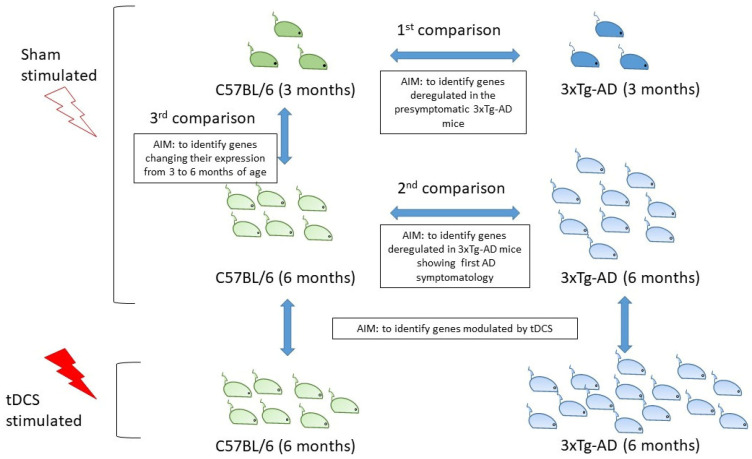
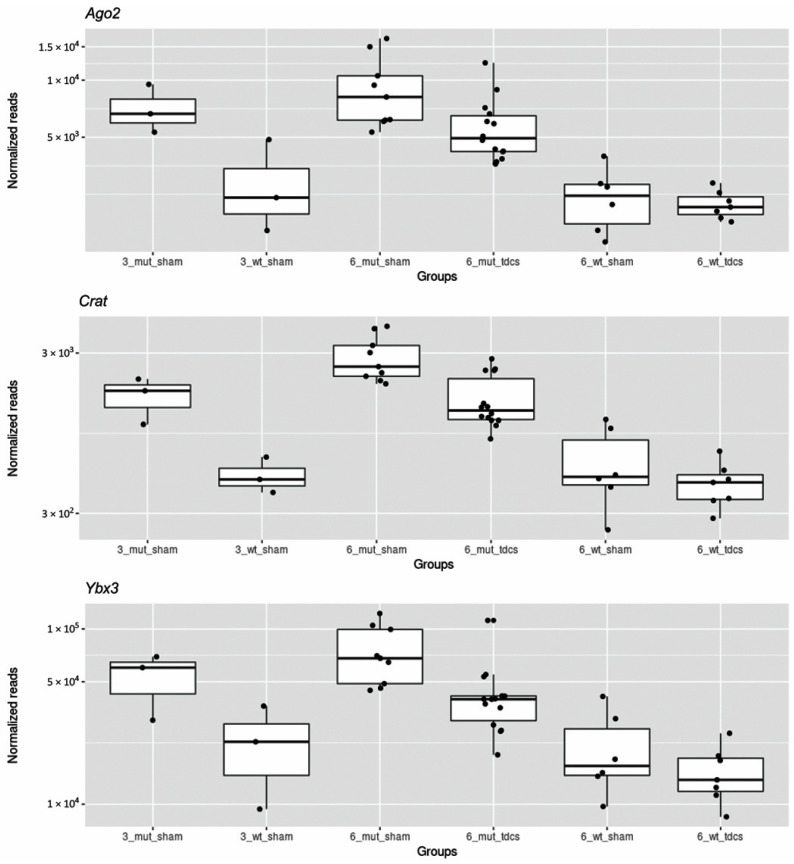
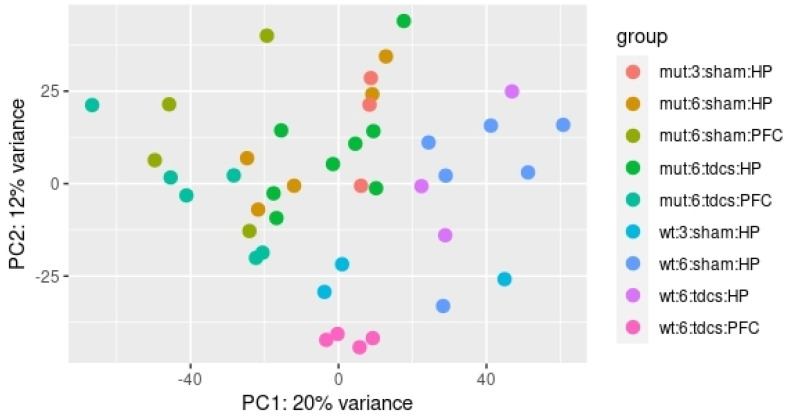
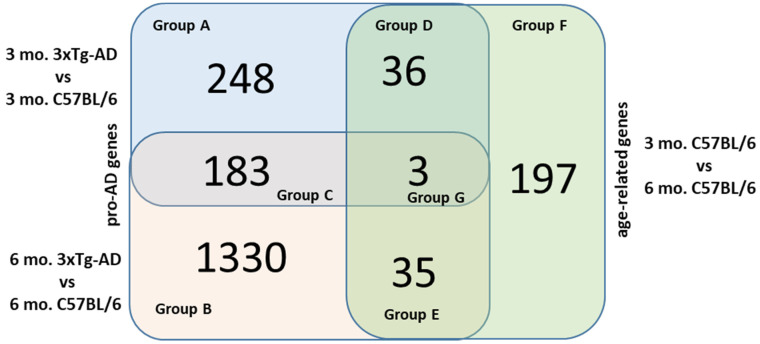
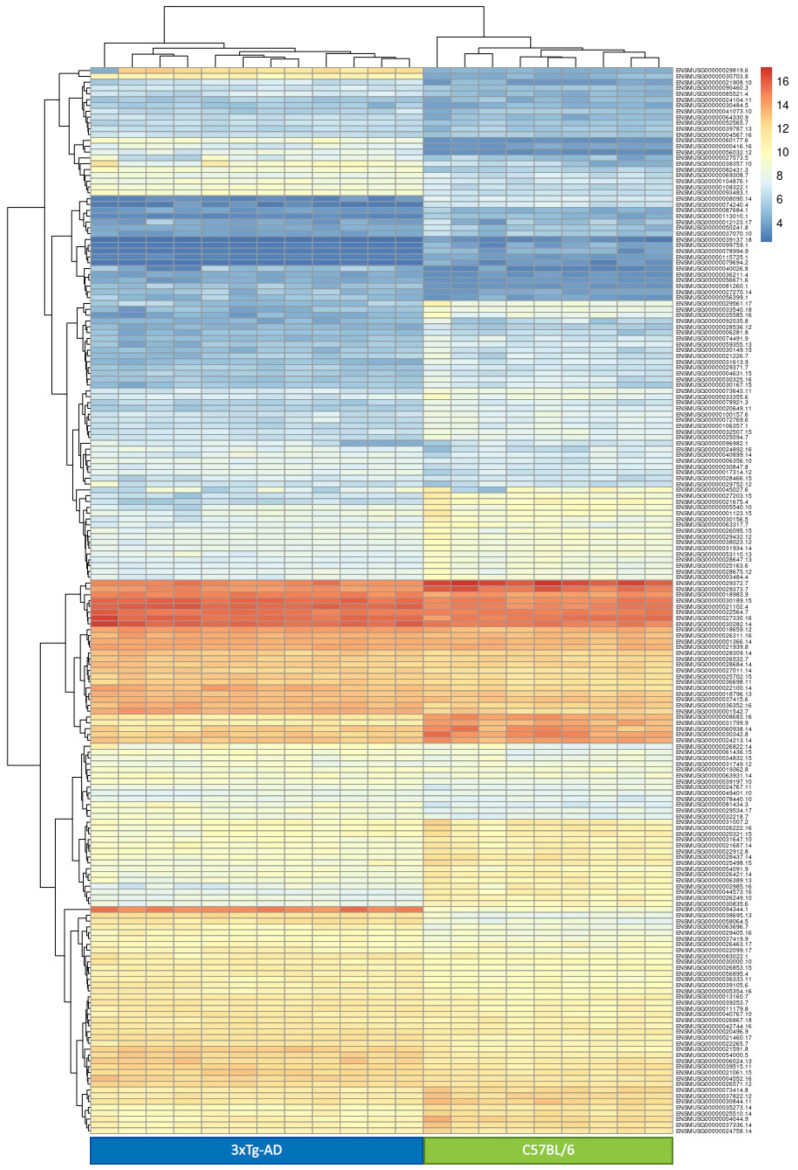
The 3xTg-AD mouse is a widely used model in the study of Alzheimer's Disease (AD). It has been extensively characterized from both the anatomical and behavioral point of view, but poorly studied at the transcriptomic level. For the first time, we characterize the whole blood transcriptome of the 3xTg-AD mouse at three and six months of age and evaluate how its gene expression is modulated by transcranial direct current stimulation (tDCS). RNA-seq analysis revealed 183 differentially expressed genes (DEGs) that represent a direct signature of the genetic background of the mouse. Moreover, in the 6-month-old 3xTg-AD mice, we observed a high number of DEGs that could represent good peripheral biomarkers of AD symptomatology onset. Finally, tDCS was associated with gene expression changes in the 3xTg-AD, but not in the control mice. In conclusion, this study provides an in-depth molecular characterization of the 3xTg-AD mouse and suggests that blood gene expression can be used to identify new biomarkers of AD progression and treatment effects.
3xTg-AD 小鼠是阿尔茨海默病(AD)研究中广泛使用的模型。它从解剖学和行为学的角度得到了广泛的描述,但在转录组学水平上研究甚少。我们首次对 3 个月和 6 个月大的 3xTg-AD 小鼠的全血转录组进行了描述,并评估了经颅直流电刺激(tDCS)对其基因表达的调节作用。RNA-seq 分析显示了 183 个差异表达基因(DEGs),它们代表了小鼠遗传背景的直接特征。此外,在 6 个月大的 3xTg-AD 小鼠中,我们观察到大量的 DEGs,它们可能是 AD 症状发作的良好外周生物标志物。最后,tDCS 与 3xTg-AD 小鼠的基因表达变化相关,但与对照小鼠无关。总之,这项研究提供了对 3xTg-AD 小鼠的深入分子描述,并表明血液基因表达可用于识别 AD 进展和治疗效果的新生物标志物。