Osteoarticular Surgery Research, Hospital La Paz Institute for Health Research-IdiPAZ (La Paz University Hospital-Autonomous University of Madrid), 28046 Madrid, Spain.
Department of Genetic, Physiology and Microbiology, Biology School, Complutense University of Madrid, 28040 Madrid, Spain.
Int J Mol Sci. 2021 Jul 17;22(14):7647. doi: 10.3390/ijms22147647.
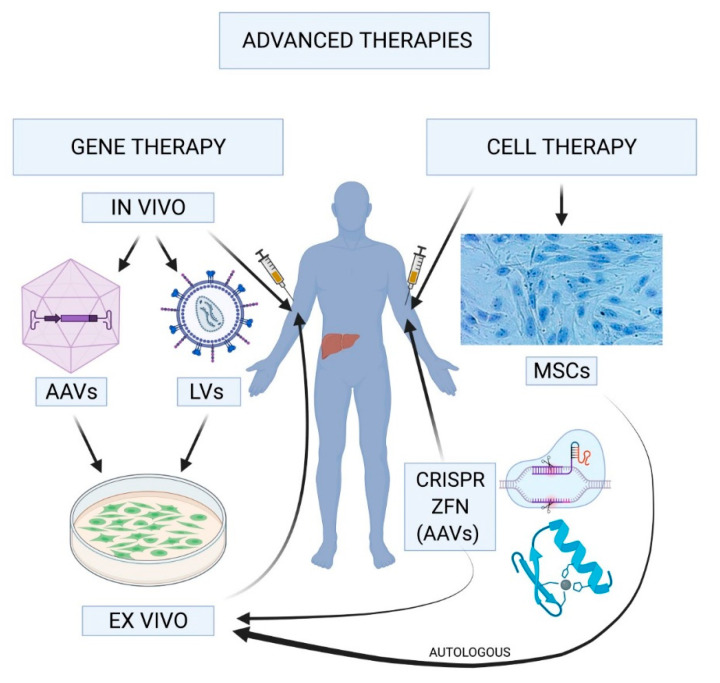
Hemophilia is a monogenic mutational disease affecting coagulation factor VIII or factor IX genes. The palliative treatment of choice is based on the use of safe and effective recombinant clotting factors. Advanced therapies will be curative, ensuring stable and durable concentrations of the defective circulating factor. Results have so far been encouraging in terms of levels and times of expression using mainly adeno-associated vectors. However, these therapies are associated with immunogenicity and hepatotoxicity. Optimizing the vector serotypes and the transgene (variants) will boost clotting efficacy, thus increasing the viability of these protocols. It is essential that both physicians and patients be informed about the potential benefits and risks of the new therapies, and a register of gene therapy patients be kept with information of the efficacy and long-term adverse events associated with the treatments administered. In the context of hemophilia, gene therapy may result in (particularly indirect) cost savings and in a more equitable allocation of treatments. In the case of hemophilia A, further research is needed into how to effectively package the large factor VIII gene into the vector; and in the case of hemophilia B, the priority should be to optimize both the vector serotype, reducing its immunogenicity and hepatotoxicity, and the transgene, boosting its clotting efficacy so as to minimize the amount of vector administered and decrease the incidence of adverse events without compromising the efficacy of the protein expressed.
血友病是一种单基因突变疾病,影响凝血因子 VIII 或因子 IX 基因。姑息治疗的首选方法是基于使用安全有效的重组凝血因子。先进的治疗方法将是治愈性的,确保有缺陷的循环因子的稳定和持久浓度。迄今为止,使用主要的腺相关载体,在表达水平和时间方面的结果令人鼓舞。然而,这些治疗方法与免疫原性和肝毒性有关。优化载体血清型和转基因(变体)将提高凝血功效,从而提高这些方案的可行性。至关重要的是,医生和患者都要了解新疗法的潜在益处和风险,并建立基因治疗患者登记册,记录治疗效果和与治疗相关的长期不良事件。在血友病的情况下,基因治疗可能会导致(特别是间接)成本节约,并更公平地分配治疗方法。在甲型血友病的情况下,需要进一步研究如何有效地将大的因子 VIII 基因包装到载体中;在乙型血友病的情况下,应优先优化载体血清型,降低其免疫原性和肝毒性,以及转基因,提高其凝血功效,从而减少载体的用量,并降低不良事件的发生率,而不影响表达蛋白的功效。