Ukleja-Sokołowska Natalia, Żbikowska-Gotz Magdalena, Lis Kinga, Adamczak Rafał, Bartuzi Zbigniew
Department of Allergology, Clinical Immunology and Internal Medicine, Ludwik Rydygier Collegium Medicum in Bydgoszcz, Nicolaus Copernicus University in Toruń, ul. Ujejskiego 75, 85-168, Bydgoszcz, Poland.
Department of Obstetrics and Gynecology, Ludwik Rydygier Collegium Medicum in Bydgoszcz, Nicolaus Copernicus University in Toruń, Bydgoszcz, Poland.
Allergy Asthma Clin Immunol. 2021 Jul 23;17(1):76. doi: 10.1186/s13223-021-00576-9.
Shrimp allergy is a growing problem among the European population. TSLP, IL-25 and IL-33 are involved in the pathophysiology of allergic diseases, including asthma and atopic dermatitis, as they activate the Th2-dependent immune response.
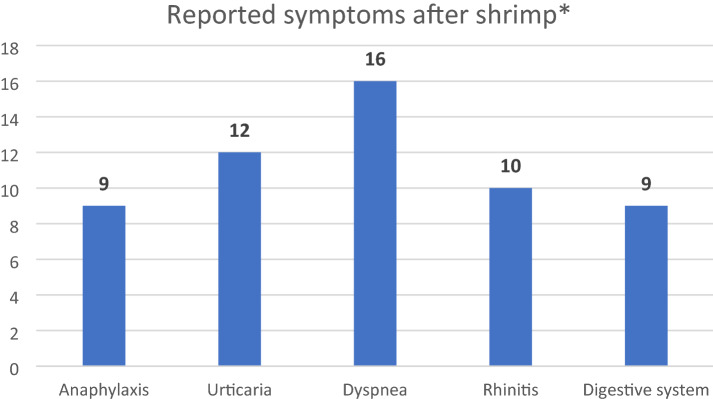
Thirty-seven patients (18 male and 19 female) with a positive history of symptoms associated with shrimp consumption were selected. All patients had blood samples taken to assess the concentration of allergen-specific IgE (sIgE) to house dust mites (HDM) and shrimp (Singleplex, quantitative method with cut off value > 0,35 kAU/L) as well as the level of allergen components using the ImmunoCap ISAC method (Microarray test, semi-quantitative with cut off value > 0,3 ISU-E). The concentrations of TSLP, IL-25 and IL-33 in the patients' blood serum was assessed using the ELISA method (Cusabio). Twenty patients with negative allergy history of allergic disease tests were included in the control group.
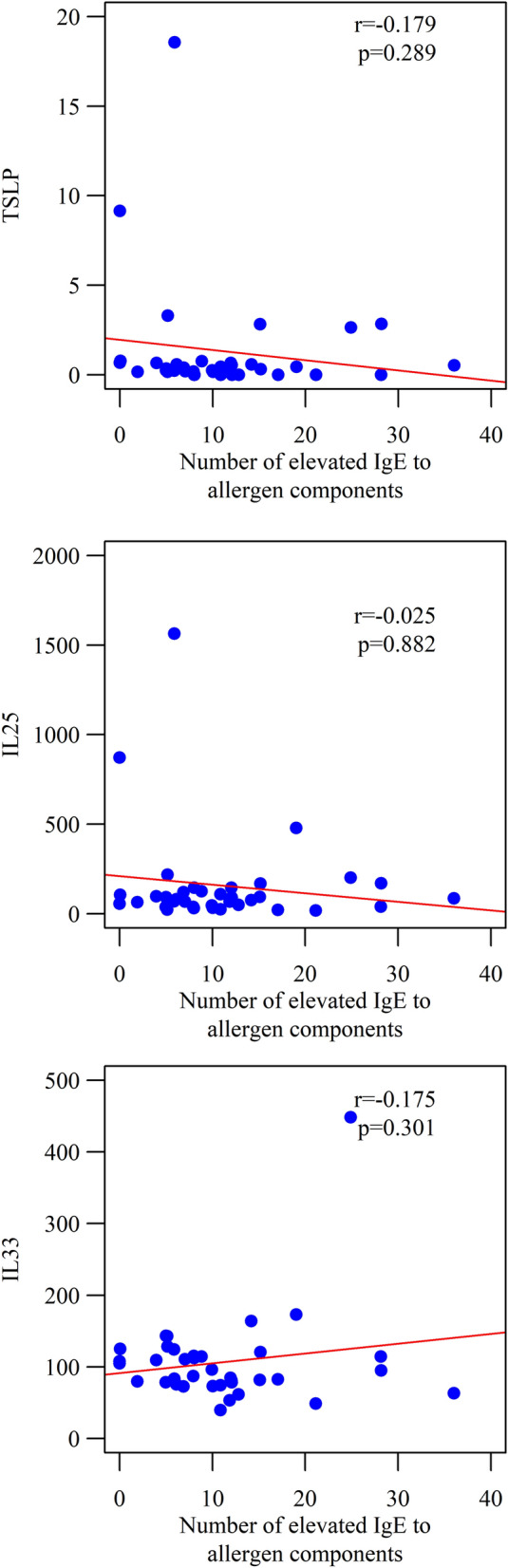
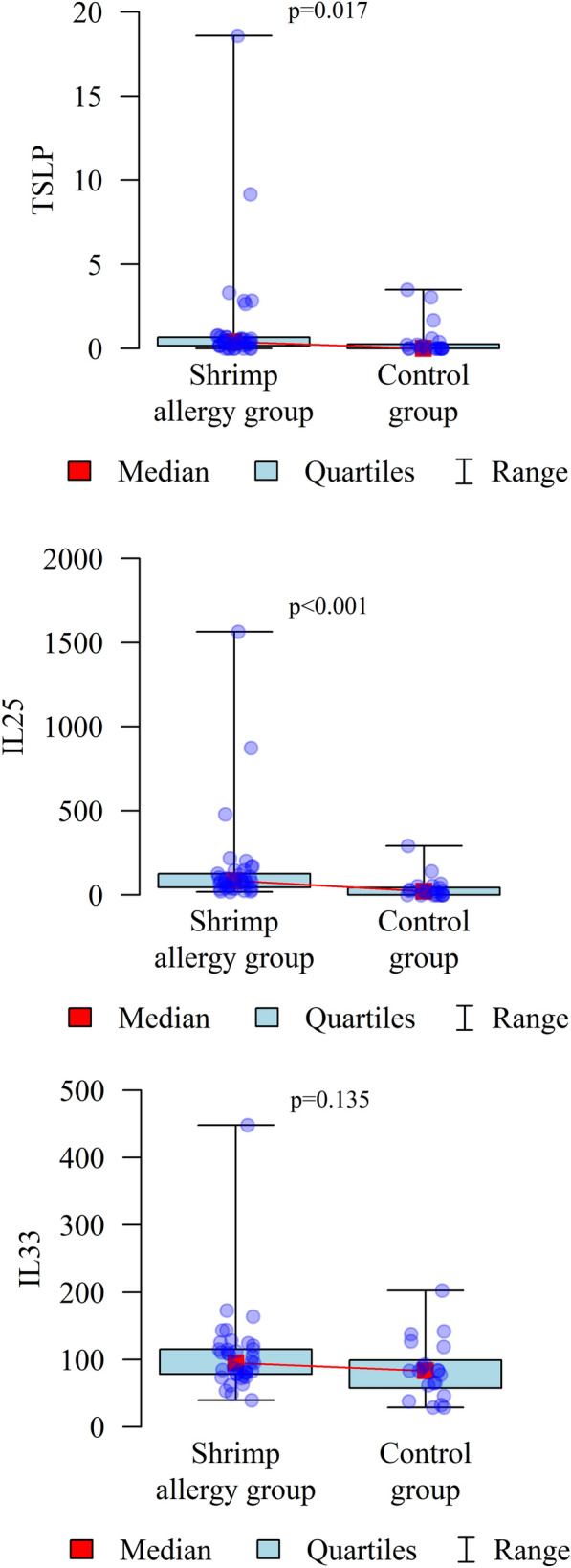
Among the 37 shrimp-allergic patients, ImmunoCap ISAC was identified the presence of sIgE to the available shrimp allergen components in only 14 cases (37.8%). TSLP and IL25 levels were significantly higher in the study group. No statistically significant correlation was found between the concentration of analyzed alarmins and the concentration of sIgE level to shrimp or HDM between the study and control groups. No statistically significant correlation was found between poly-sensitization occurring in patients and levels of TSLP, IL-25 and IL-33 .
In shrimp-allergic patients, the concentrations of TSLP and IL-25 were significantly higher than in the control group (1.33 vs. 0.49 and 157 vs. 39.36, respectively). There was no correlation between the concentrations of TSLP, IL-25 and IL-33 and the concentration of sIgE in the patients or the number of allergen components that the patients were sensitized to.
Bioethics Committee 147/2015, 11.03.2015.
虾过敏在欧洲人群中是一个日益严重的问题。胸腺基质淋巴细胞生成素(TSLP)、白细胞介素 - 25(IL - 25)和白细胞介素 - 33(IL - 33)参与包括哮喘和特应性皮炎在内的过敏性疾病的病理生理过程,因为它们激活依赖Th2的免疫反应。
选择37例有食用虾相关症状阳性病史的患者(18例男性和19例女性)。所有患者均采集血样,以评估对屋尘螨(HDM)和虾的过敏原特异性IgE(sIgE)浓度(采用截断值>0.35 kAU/L的单重、定量方法),以及使用免疫捕获ISAC方法(微阵列测试,半定量,截断值>0.3 ISU - E)评估过敏原成分水平。采用酶联免疫吸附测定法(ELISA,CUSABIO公司)评估患者血清中TSLP、IL - 25和IL - 33的浓度。20例过敏性疾病检测过敏史阴性的患者纳入对照组。
在37例虾过敏患者中,免疫捕获ISAC仅在14例(37.8%)中检测到对现有虾过敏原成分的sIgE存在。研究组中TSLP和IL - 25水平显著更高。在研究组和对照组之间,所分析的警报素浓度与对虾或HDM的sIgE水平浓度之间未发现统计学上的显著相关性。患者中发生的多敏化与TSLP、IL - 25和IL - 33水平之间未发现统计学上的显著相关性。
在虾过敏患者中,TSLP和IL - 25的浓度显著高于对照组(分别为1.33对0.49和157对39.36)。TSLP、IL - 25和IL - 33的浓度与患者体内sIgE的浓度或患者致敏的过敏原成分数量之间无相关性。
生物伦理委员会147/2015,2015年3月11日。