Department of Neurology, Massachusetts General Hospital, Harvard Medical School, Boston, MA, USA.
School of Medicine, Stanford University, Stanford, CA, USA.
Cerebellum. 2022 Jun;21(3):368-379. doi: 10.1007/s12311-021-01306-y. Epub 2021 Jul 24.
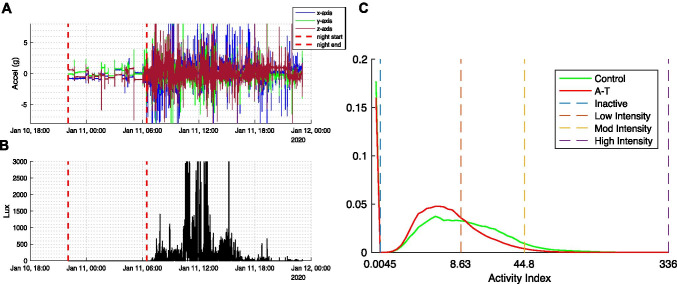
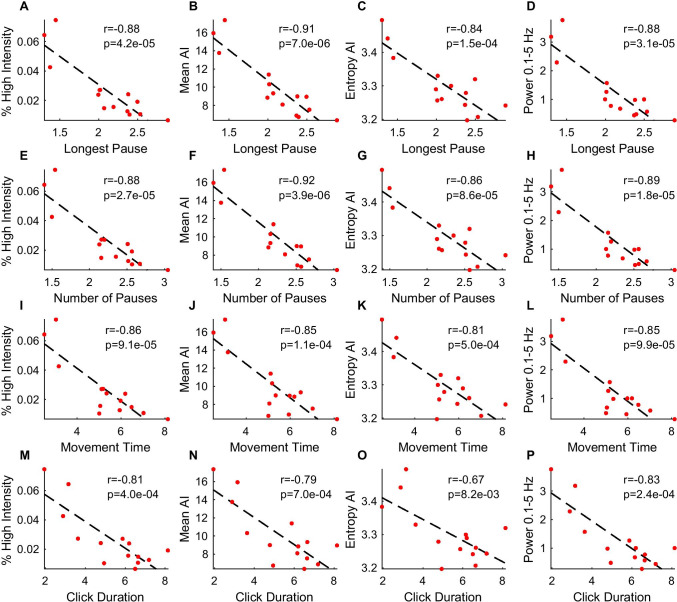
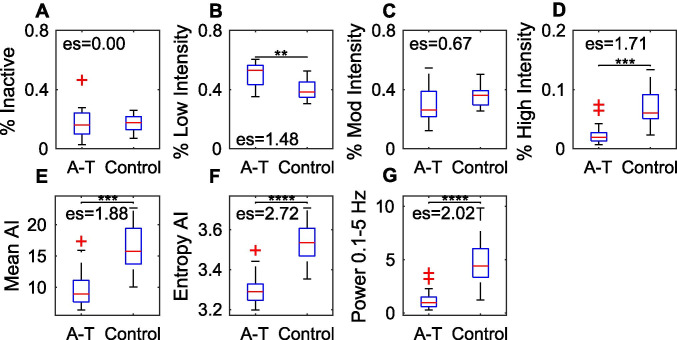
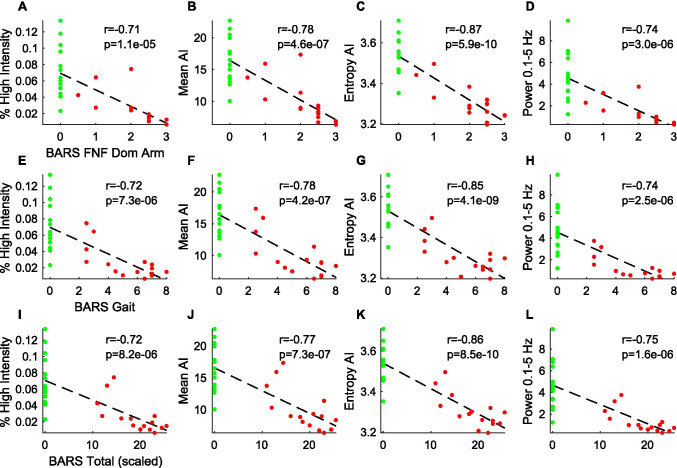
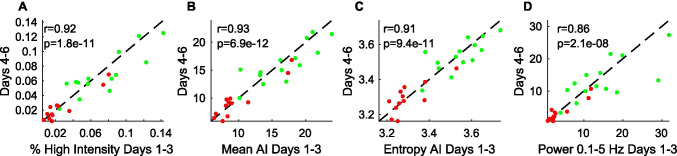
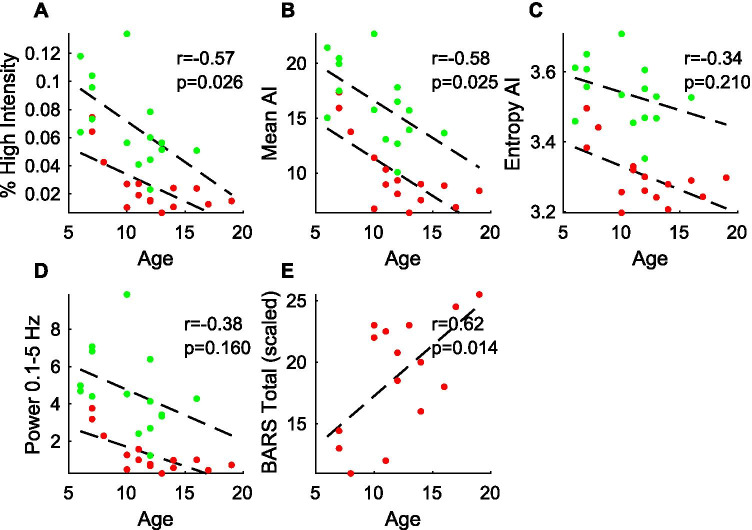
With disease-modifying approaches under evaluation in ataxia-telangiectasia and other ataxias, there is a need for objective and reliable biomarkers of free-living motor function. In this study, we test the hypothesis that metrics derived from a single wrist sensor worn at home provide accurate, reliable, and interpretable information about neurological disease severity in children with A-T.A total of 15 children with A-T and 15 age- and sex-matched controls wore a sensor with a triaxial accelerometer on their dominant wrist for 1 week at home. Activity intensity measures, derived from the sensor data, were compared with in-person neurological evaluation on the Brief Ataxia Rating Scale (BARS) and performance on a validated computer mouse task.Children with A-T were inactive the same proportion of each day as controls but produced more low intensity movements (p < 0.01; Cohen's d = 1.48) and fewer high intensity movements (p < 0.001; Cohen's d = 1.71). The range of activity intensities was markedly reduced in A-T compared to controls (p < 0.0001; Cohen's d = 2.72). The activity metrics correlated strongly with arm, gait, and total clinical severity (r: 0.71-0.87; p < 0.0001), correlated with specific computer task motor features (r: 0.67-0.92; p < 0.01), demonstrated high reliability (r: 0.86-0.93; p < 0.00001), and were not significantly influenced by age in the healthy control group.Motor activity metrics from a single, inexpensive wrist sensor during free-living behavior provide accurate and reliable information about diagnosis, neurological disease severity, and motor performance. These low-burden measurements are applicable independent of ambulatory status and are potential digital behavioral biomarkers in A-T.
在对共济失调毛细血管扩张症和其他共济失调症进行疾病修饰治疗的过程中,需要一种客观、可靠的自由运动功能生物标志物。在这项研究中,我们检验了一个假设,即从在家佩戴的单个腕部传感器中得出的指标可以提供有关 A-T 儿童神经疾病严重程度的准确、可靠和可解释的信息。共有 15 名 A-T 儿童和 15 名年龄和性别匹配的对照组在他们的优势手腕上佩戴带有三轴加速度计的传感器,在家中佩戴一周。从传感器数据中得出的活动强度指标与个人的神经学评估(Brief Ataxia Rating Scale,BARS)进行了比较,并与经过验证的计算机鼠标任务的性能进行了比较。A-T 儿童每天的活动量与对照组相同,但产生的低强度运动更多(p<0.01;Cohen's d=1.48),高强度运动更少(p<0.001;Cohen's d=1.71)。与对照组相比,A-T 儿童的活动强度范围明显缩小(p<0.0001;Cohen's d=2.72)。活动指标与手臂、步态和总体临床严重程度高度相关(r:0.71-0.87;p<0.0001),与特定计算机任务运动特征相关(r:0.67-0.92;p<0.01),具有高度可靠性(r:0.86-0.93;p<0.00001),并且在健康对照组中不受年龄的显著影响。在自由生活行为中,来自单个廉价腕部传感器的运动活动指标可提供有关诊断、神经疾病严重程度和运动表现的准确可靠信息。这些低负担的测量方法适用于独立的活动状态,并且是 A-T 中的潜在数字行为生物标志物。